

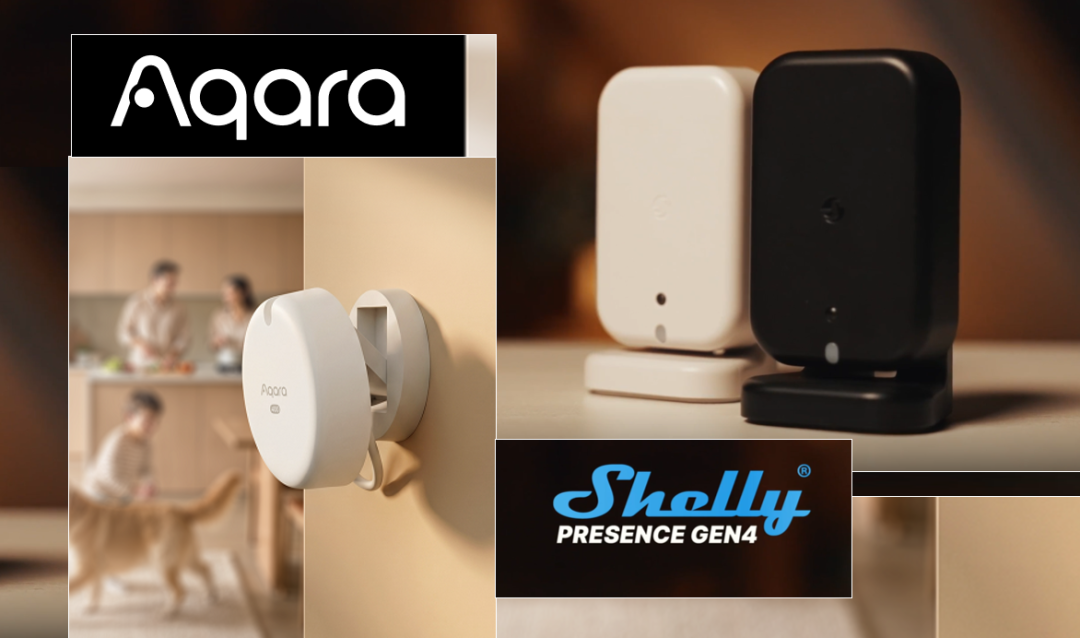
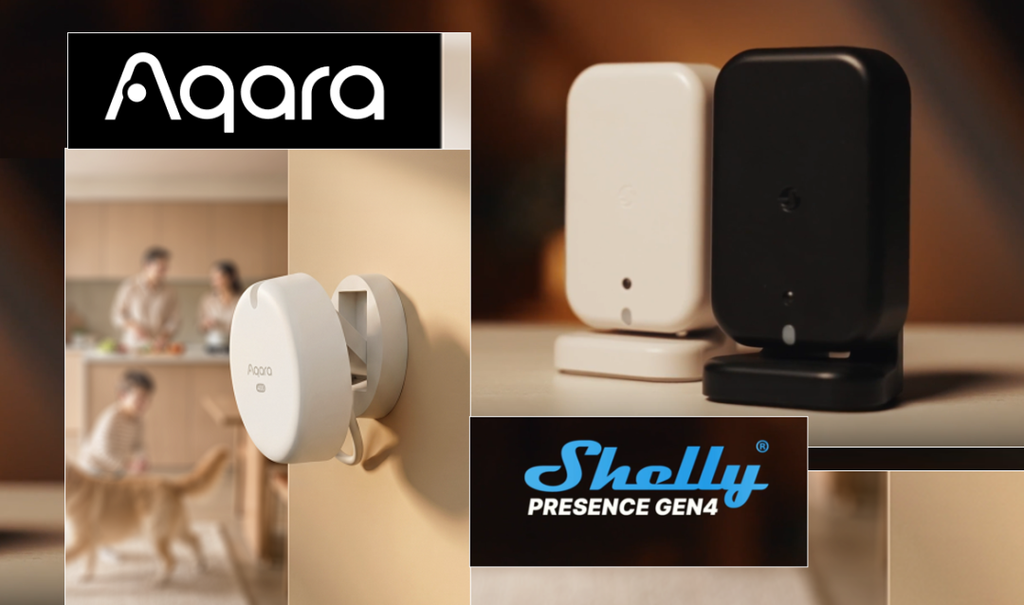
Shelly Group has launched its Presence Gen4 mmWave presence sensor, putting advanced radar-based human presence detection at the heart of the smart home.
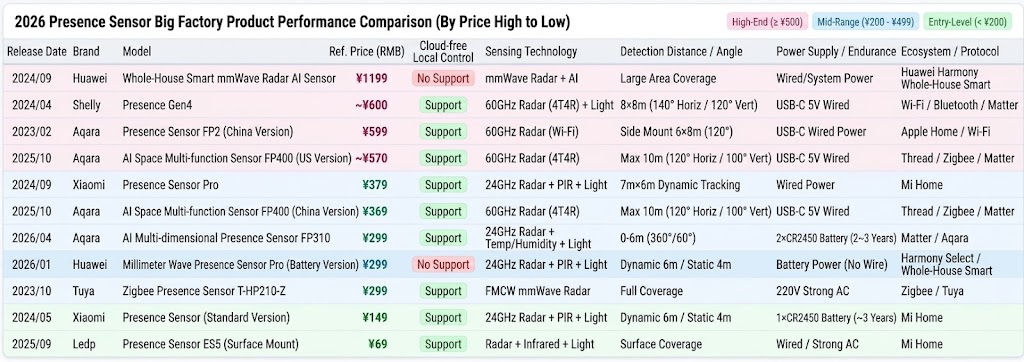
On October 15, 2026, Shelly Group launched the Presence Gen4, a new mmWave presence sensor designed to detect and track people within indoor spaces. The device is priced at $84.99 in North America, equivalent to approximately RMB 571.
Just weeks earlier, on September 26, Aqara launched the FP400, priced at $79.99 in North America (approximately RMB 538), putting the two products in almost exactly the same price bracket.
Although the two brands target very different audiences—Aqara focuses on mainstream consumers and the Apple ecosystem, while Shelly has traditionally appealed to tech enthusiasts, makers, and professional smart-home users—their latest mmWave sensing products are surprisingly close in terms of specifications, features, and positioning.
The bigger story is not simply a product comparison. mmWave radar-based presence sensing is moving beyond the world of smart-home enthusiasts and DIY installers and rapidly becoming a mainstream consumer technology.
Similar Hardware, Similar Price
On paper, the two sensors are remarkably close.
The Shelly Presence Gen4 uses 60–64 GHz mmWave radar, supports up to 10 customizable detection zones, can continuously track up to six people, and covers an area of approximately 42 m². Its static human detection range reaches up to 3 meters.
The Aqara FP400 offers similarly capable sensing. It can track up to 10 people in real time and supports multiple customizable detection zones, with broader zoning capabilities available when used with an Aqara hub.
Power and installation are also broadly comparable.
Both devices require continuous 5V USB-C power and support adhesive, drill-free installation. The FP400 additionally comes with a magnetic mounting base, allowing users to fine-tune the sensor’s detection angle after installation.
Where They Differ: Reducing False Triggers
The more significant difference lies in how the two products handle false presence detection.
The Aqara FP400 uses a 4T4R MIMO antenna array to capture point-cloud data and then applies AI-based recognition to distinguish people from other objects. This allows the sensor to filter out false triggers caused by pets.
However, the approach comes with a trade-off: small children or infants with body sizes similar to pets may also be incorrectly filtered out.
Shelly’s Presence Gen4 takes a more straightforward approach, relying heavily on height-based detection to distinguish people from other objects.
This can exclude pets, children, and even robot vacuum cleaners—but it is not necessarily foolproof. A pet jumping onto a sofa, for example, may reach the configured height threshold and still trigger a false presence event.
The difference highlights a broader challenge for mmWave sensing: detecting movement is relatively easy; accurately understanding what is moving is much harder.
Open Ecosystems vs. Brand-Centric Automation
The two products also differ significantly in their approach to smart-home ecosystems.
Shelly has long positioned itself toward technically sophisticated users, and the Presence Gen4 continues that philosophy. Its configuration and automation capabilities are designed to work without requiring users to rely heavily on the brand’s cloud ecosystem, giving advanced users greater control over local automation and third-party integrations.
Aqara, meanwhile, is more closely integrated with its broader smart-home ecosystem.
Under third-party Matter platforms, some FP400 zoning capabilities are more limited. More advanced zoning features in certain configurations may require an Aqara hub, adding another layer of hardware to the setup.
This distinction reflects the brands’ different customer bases:
Shelly → openness, local control, developer flexibility
Aqara → ecosystem integration, consumer convenience, mainstream smart-home adoption
Schneider Electric’s €1.2 Billion Bet on Shelly
The launch of Presence Gen4 comes at an important moment for Shelly.
Shelly Group is an IoT company headquartered in Bulgaria, best known for smart switches, sensors, energy-monitoring modules, and other connected devices designed around local control and multi-protocol compatibility.
Its core user base has historically consisted of technically sophisticated consumers, DIY installers, and smart-home enthusiasts who actively use platforms such as Home Assistant and Matter.
The United States has also become one of the company’s fastest-growing markets.
In September 2026, Schneider Electric signed an agreement to launch a voluntary public tender offer for Shelly at €70 per share, valuing the company at approximately €1.2 billion (around RMB 9.4 billion).
Shelly’s founders, who hold approximately 57% of the company’s shares, have indicated their support for the transaction. Closing is currently expected in Q1 2027, subject to the applicable conditions and approvals.
Why a Smart-Home Geek Brand Matters to an Industrial Giant
At first glance, Schneider Electric’s interest in a smart-home hardware company may seem unexpected.
But the strategic logic is clear.
Shelly has built a strong reputation around open protocols, local control, device interoperability, and a developer-oriented ecosystem.
According to Schneider Electric, these capabilities and Shelly’s developer ecosystem are among the key strategic assets behind the deal.
The acquisition points to a broader shift in the smart-building market.
Residential and small commercial buildings increasingly need technologies that can connect sensors, switches, energy systems, appliances, and automation platforms across multiple protocols and ecosystems.
That makes companies like Shelly valuable not simply because of the hardware they sell, but because of the connectivity layer and developer ecosystem they have built around that hardware.
From Presence Sensing to Physical AI
The evolution of mmWave presence sensing also reflects a larger technological trend.
Traditional smart-home sensors largely answered simple questions:
Is someone there?
The next generation is moving toward more complex questions:
Where are they?
How many people are present?
Are they moving or stationary?
Is the detected object a person, a pet, or another object?
What should the system do in response?
This is where sensing technology begins to intersect with Physical AI.
The combination of mmWave radar, computer vision, AI-based recognition, edge computing, and connected automation is gradually creating systems that can perceive and respond to the physical environment.
The sensor itself may not be a Physical AI system. But it can become an important perception layer within one.
The trajectory is increasingly clear:
Sense → Understand → Decide → Act
As smart-home and smart-building systems become more intelligent, presence sensing is evolving from a simple trigger into a foundational component of context-aware physical environments.
And the fact that both consumer-focused Aqara and enthusiast-oriented Shelly are now competing at similar price points suggests that advanced sensing is no longer limited to specialist markets.
mmWave presence sensing is moving from the hands of makers and smart-home enthusiasts into the mainstream—and the next step may be turning that sensing capability into actionable Physical AI.
Meet Shelly at IOTE
Want to learn more about the company behind Presence Gen4?
Explore Shelly, an IOTE exhibitor, and discover its company profile, core business, and IoT solutions.
Shelly — https://eng.iotexpo.com.cn/exhibitor/shelly
Explore Shelly’s Company Profile & Business Portfolio
Discover how Shelly is developing solutions across smart connectivity, intelligent sensing, energy management, and building automation, and explore the technologies shaping the next generation of connected environments.