

In the mining resource management sector of Jammu and Kashmir, India, the government is rolling out a regulatory innovation centered on RFID technology across the board.This is a key measure by the government to curb illegal mining and regulate industry order. RFID technology, in conjunction with GPS and electronic ticketing systems, is building a comprehensive, visualized monitoring network for mineral transportation. It is becoming a “technological barrier” protecting the sustainable development of the region’s mineral resources.
The Jammu and Kashmir government’s recently revised mining management regulations explicitly require all vehicles transporting RBM, mud, sand, clay, and other minerals to carry a unique RFID tag.Furthermore, vehicle owners must register this RFID tag with the mining department.This mandatory requirement is not simply a matter of adding technology. Rather, it uses the unique coding characteristics of RFID chips to give each mineral transport vehicle an “electronic ID card.” From the source of mineral extraction to the terminal transportation point, the vehicle information, mineral type, transportation route, and licensing qualifications carried by the RFID tags will become the core basis for regulatory authorities. They use this data to trace the flow of minerals. This fundamentally eliminates illegal activities such as unlicensed transportation and smuggling.
At the technology implementation level, the application of RFID technology has enabled more precise and efficient supervision of mineral transportation. Unlike traditional manual inspections, RFID tags can read information without human intervention. Law enforcement officers can quickly verify vehicle compliance using specialized equipment. This significantly improves roadside inspection efficiency. Furthermore, within the integrated mining monitoring platform that the government built in cooperation with the BISAG-N Institute, authorities deeply integrate RFID data with GPS tracking, weighbridge measurement, and electronic ticketing systems. This infrastructure constructs a closed-loop management mechanism of “real-time monitoring — alarm triggering — on-site handling.” To date, the system has generated 114 valid alarms using RFID and other technologies. This success includes verifying 14 cases of illegal mining, with total fines reaching 9 million rupees. It fully demonstrates the powerful effectiveness of RFID technology in law enforcement practice.
To ensure comprehensive technology coverage, the local mining department has completed pilot testing in the Samba region. They plan to extend RFID applications to all mining transport vehicles throughout the federal territory by January 26, 2026. The government is also implementing supporting measures robustly: it has equipped rapid response teams with modern equipment that supports RFID verification. This enables point-of-sale terminals to impose on-the-spot digital penalties for violations. Coded vouchers generated by the electronic invoice portal corroborate RFID tag information. They form a three-in-one regulatory system of “vehicle-goods-invoice.” This ensures that every link in mineral transportation is traceable and verifiable.
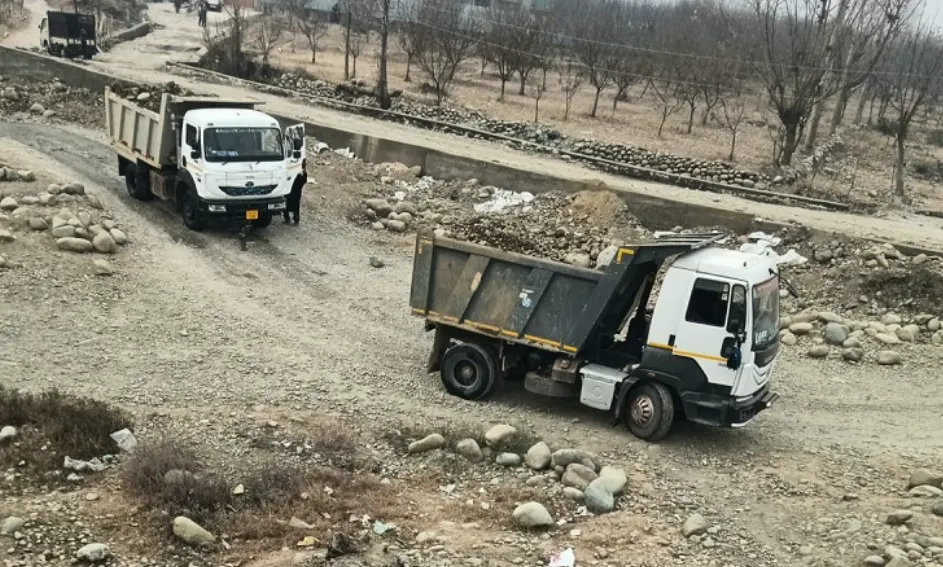
The comprehensive application of RFID technology has not only provided an efficient tool for mineral regulation in Jammu and Kashmir. It has also reshaped the industry’s development ecosystem. For legitimate businesses, RFID tags have become a “passport” to compliance. They simplify verification processes and reduce compliance costs. For regulatory authorities, RFID technology breaks down information barriers. Moreover, it enables a shift from “passive inspection” to “proactive early warning.” This significantly improves the accuracy and credibility of enforcement. As authorities deepen the implementation of this technology, the region is steadily achieving its annual fiscal revenue target of 3 billion rupees. In addition, the orderly development of mineral resources will inject lasting momentum into the region’s sustainable economic development.
In the context of the contemporary challenge of mineral resource protection and regulation, RFID technology has become a key tool. With its unique identification, tracking, and data collection capabilities, it addresses the problem of illegal mining in Jammu and Kashmir. This initiative not only provides a regulatory model for other parts of India. It also demonstrates the core value of technological innovation in natural resource management. Only by empowering regulation with technology can regulators create a virtuous cycle of resource protection and economic development.This safeguards the ecology and foundation for development of the region.