

A New Era in Pulmonary Health Assessment
For patients with respiratory diseases and those recovering from surgery, monitoring lung function is essential for evaluating health status and guiding rehabilitation. Now, new methods such as RFID offer alternatives to traditional approaches. Traditionally, this has relied on imaging technologies such as X-rays and CT scans—methods that are costly, equipment-dependent, and expose patients to repeated radiation. Because of these issues, continuous, long-term, at-home monitoring is difficult to achieve.
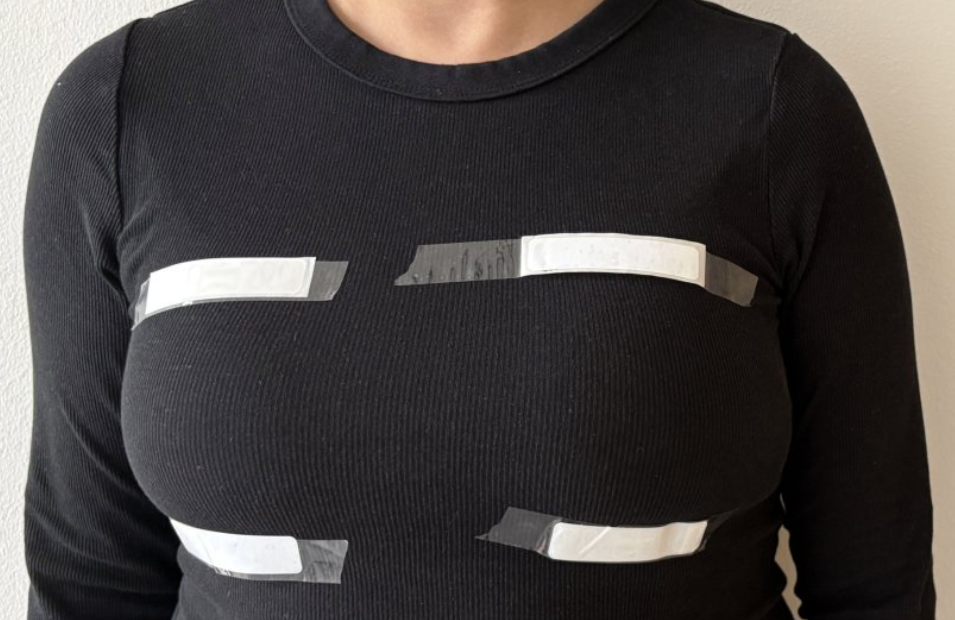
Now, a research collaboration between Chalmers University of Technology, Sahlgrenska University Hospital, and the University of Gothenburg in Sweden has introduced a potentially transformative solution. Specifically, they have created a wearable, plaster-like RFID respiratory monitoring tag. This innovation enables contactless, low-cost, and high-precision tracking of breathing patterns.
Advantages Over Conventional Methods
Compared with traditional approaches, RFID-based wearable sensors offer several compelling advantages. The technology eliminates the need for bulky medical equipment. Therefore, it is portable and easy to use in both clinical and home settings. Its radiation-free nature removes health risks associated with repeated imaging procedures.
Cost efficiency is another key benefit. By reducing reliance on expensive diagnostic tools, the technology can significantly lower healthcare expenses and ease pressure on medical resources. This aligns with the growing demand for flexible, scalable, and affordable monitoring solutions in modern healthcare systems.
Enabling Personalized and Continuous Care
For individuals with chronic respiratory conditions or those in post-operative recovery, this technology offers a new level of personalized care. Continuous at-home monitoring allows real-time tracking of lung function, enabling early detection of deterioration and timely medical intervention.
As home-based healthcare becomes an increasingly important component of global medical services, such innovations are poised to enhance disease management. In addition, they expand access to high-quality care beyond hospital environments.
From Concept to Clinical Reality
The technology has already completed proof-of-concept testing with promising results. The research team is now focused on developing customized prototypes. At the same time, they are refining signal processing and optimizing system design to meet the rigorous standards required for clinical trials.
According to project leaders, human clinical trials could begin within the next five years. This would mark a significant step toward real-world medical adoption.
Expanding the Role of RFID in Healthcare
RFID technology has long been used in logistics and tracking applications, from supply chains to pet identification. Its expansion into healthcare—particularly in non-invasive physiological monitoring—demonstrates its growing versatility and potential.
This wearable, contactless respiratory monitoring tag represents more than just a technological advancement. In fact, it introduces a new paradigm in pulmonary care, offering safer, more accessible, and more precise health monitoring. As the technology matures, it is expected to benefit a wide range of patients. Thus, it will usher in a new chapter in respiratory health management worldwide.

About the Exhibition
This development highlights the growing convergence of IoT, smart home technologies, and digital identity solutions—key themes at IOTE – The International Internet of Things Exhibition, a leading global platform for RFID, nfc, and IoT innovation.
The upcoming IOTE 2026 International Internet of Things Exhibition Shenzhen will take place in Shenzhen, bringing together industry leaders, technology providers, and solution innovators to showcase the latest advancements in smart homes, connected devices, and secure access technologies .