
Overview
Amid the ongoing restructuring of global supply chains and the acceleration of smart manufacturing, warehouse operations are undergoing a fundamental transformation—from manual, experience-driven management to intelligent, automated systems。An important solution in this transformation is AIWMS, which is increasingly being adopted by advanced logistics companies.
This article explores three defining trends shaping the next generation of warehousing:
AIWMS (AI-driven Warehouse Management Systems), Digital Product Passport (DPP) compliance, and tokenization of warehouse assets. Together, they are redefining how logistics infrastructure operates, scales, and creates value in a globalized economy.
1. Market Context: A Rapidly Expanding Global Opportunity
1.1 Strong Growth Across Global Markets
Driven by e-commerce, cross-border trade, and industrial automation, the global logistics sector continues to expand at an unprecedented pace. China alone processed over 174.5 billion parcels in 2024, maintaining its position as the world’s largest logistics market.
Globally, the smart warehousing market is projected to reach $288–312 billion by 2025, and exceed $1.15 trillion by 2035, with a compound annual growth rate (CAGR) of approximately 14.4%.
AI-driven warehouse systems and robotics solutions are expected to account for over 40% of market growth, making them the primary drivers of industry transformation.
1.2 Policy and Industrial Drivers
Governments worldwide are prioritizing digitalization, sustainability, and intelligent manufacturing. Warehousing, as the critical link between production and consumption, is emerging as a key implementation layer for these strategies.
2. Legacy Limitations: Why Traditional WMS + AGV Falls Short
2.1 Structural Inefficiencies
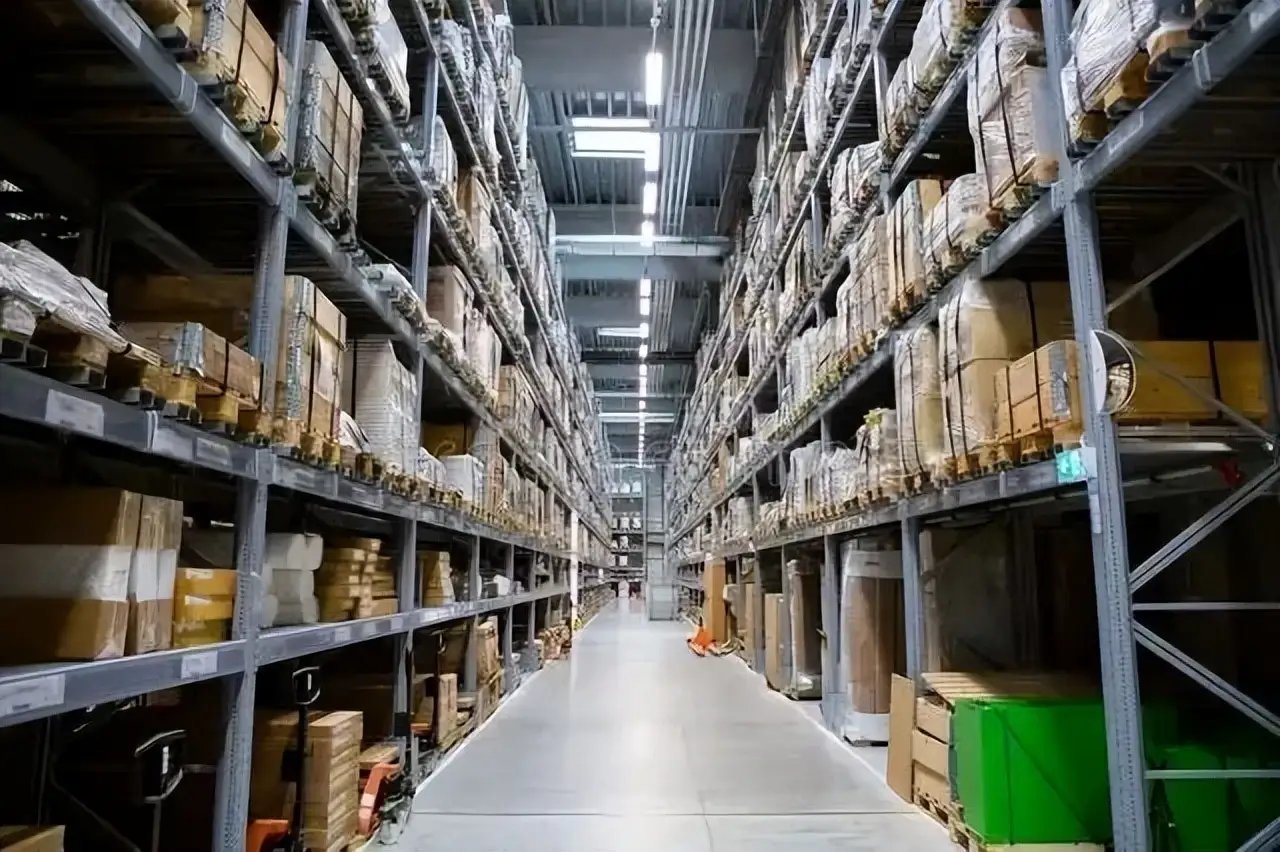
Conventional warehouse setups rely on WMS (Warehouse Management Systems) and AGVs (Automated Guided Vehicles), but these systems face inherent limitations:
- WMS functions primarily as a record-keeping system, lacking real-time intelligence
- AGVs depend on fixed routes, limiting flexibility
- Weak integration leads to low coordination efficiency
2.2 The “Automation Trap”
In manual environments, human adaptability compensates for system inefficiencies. However, once automation is introduced, these hidden inefficiencies become amplified.
Automation without intelligence doesn’t solve problems—it accelerates them.
3. AIWMS: From Passive Systems to Intelligent Decision Engines
3.1 Core Capabilities
AIWMS integrates machine learning, computer vision, and generative AI to transform warehouse operations:
- Predictive inventory management (accuracy >99.5%)
- Dynamic replenishment and slotting optimization
- Intelligent picking path and wave planning
- Natural language interaction (voice & chat-based commands)
- Early risk detection and anomaly analysis
- Automated DPP data generation for compliance
3.2 A Paradigm Shift
AIWMS enables four critical transitions:
- From reactive tracking → proactive prediction
- From experience-based → data-driven decisions
- From one-way control → real-time interaction
- From isolated systems → end-to-end orchestration
4. Intelligent Execution: The Evolution of Warehouse Robotics
4.1 From AGV to Autonomous Robotics
Modern warehouse robotics (wmsrobot) includes AMRs (Autonomous Mobile Robots), picking robots, and embodied AI systems capable of:
- Autonomous navigation and real-time obstacle avoidance
- Multi-agent collaboration
- Environmental perception and adaptive decision-making
4.2 The “Brain + Body” Architecture
AIWMS and robotics form a closed-loop system:
- AIWMS: planning, optimization, orchestration
- Robots: execution, sensing, feedback
This synergy marks the transition from automation to true intelligence.
5. DPP Compliance: A New Passport for Global Trade
5.1 What is DPP?
The Digital Product Passport (DPP) is a digital identity that records a product’s lifecycle data, including materials, carbon footprint, and compliance information.
It is becoming a mandatory requirement for entering key markets, particularly in the EU.
5.2 Regulatory Timeline
- 2027: Mandatory for batteries
- 2029: Detergents and chemicals
- 2030: Toys and consumer goods
The EU is also building a centralized DPP registry system, setting global compliance benchmarks.
5.3 The Role of AIWMS
AIWMS plays a critical role in enabling DPP compliance:
- Automated data capture via IoT sensors
- Data validation using AI algorithms
- Standardized API integration with regulatory platforms
- Automated compliance reporting
6. Tokenization: Unlocking the Financial Value of Warehouse Assets
6.1 From Inventory to Digital Assets
Tokenization leverages blockchain to convert physical warehouse assets into digital tokens, enabling:
- Ownership verification and traceability
- Secure and transparent transactions
- Privacy-preserving data sharing
6.2 Solving the Trade Finance Gap
Despite over $25 trillion in global trade annually, a significant portion of inventory remains financially illiquid.
Tokenization enables:
- Inventory-backed financing
- Reduction of approval time from days to hours
- Improved risk control and reduced default rates
6.3 Emerging Use Cases
Innovative platforms are already enabling real-time financing based on warehouse data, integrating logistics, finance, and digital infrastructure into a unified ecosystem.
7. Implementation Roadmap: A Phased Approach
7.1 Four Stages of Transformation
- System integration
- AI capability introduction
- Core process optimization
- End-to-end intelligent orchestration
7.2 Strategic Recommendations
For Enterprises:
- Start with high-impact use cases (e.g., inventory optimization)
- Integrate DPP compliance early
- Build a long-term AI roadmap
For Technology Providers:
- Deepen AI-WMS integration
- Develop open ecosystems
- Embed compliance capabilities into core products
8. Conclusion: Building the Next-Generation Warehouse
The convergence of four key elements is reshaping the industry:
- AIWMS as the intelligent brain
- Robotics as the execution layer
- DPP as the compliance gateway
- Tokenization as the value engine
Together, they form the foundation of next-generation warehousing.
In an era of rapid global change, intelligent warehousing is no longer optional—it is a strategic necessity.