

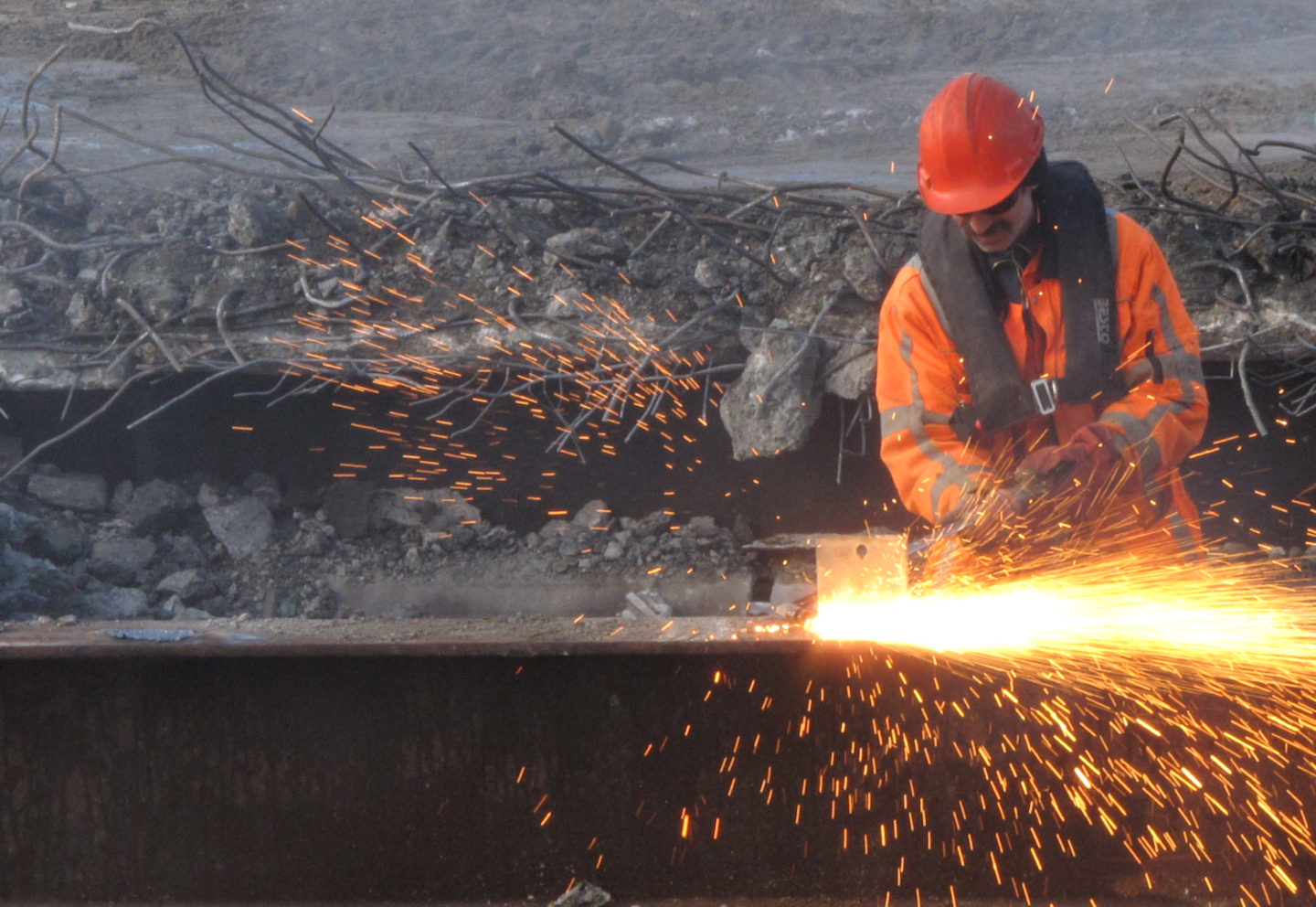
Artificial intelligence (AI) applications are transforming industries globally, accelerating operations and helping businesses streamline end-to-end processes. This technology is also being used to improve safety standards. In particular, safety standards are improving in the construction industry. This is important because safety hazards can emerge rapidly in complex construction site environments.
InHand Networks, an IoT solutions provider, is one such company adopting this approach, with its new edge-computing construction site safety management system. Leveraging on-site video analytics, the EC5000 series AI edge computers help teams identify risks faster and trigger alerts locally. As a result, teams no longer need to rely on cloud video streams.
Video surveillance has become standard on most large construction sites, but enhanced visibility alone doesn’t always prevent accidents. Relying solely on cloud video analytics presents a significant challenge — response latency. Valuable time is often wasted when videos require manual review before being reported to relevant departments. This reduces opportunities for intervention before incidents occur. Furthermore, poor network connectivity, bandwidth fluctuations, and varying camera angles can limit the availability of cloud video.
InHand’s latest edge-computing-based safety management system aims to overcome these obstacles, providing on-site video streams for real-time, rapid decision-making. Local AI analytics supports the detection of common security risks. For example, the analytics can detect unauthorized entry into restricted areas and non-compliance with personal protective equipment (PPE).
The hardware can also initiate appropriate actions based on on-site events and send notifications to mobile workflows and management dashboards. Event evidence is also stored after an incident for review and safety training.
The EC5000 demonstrates how advanced AI can transform construction workflows. It supports the daily operations of construction sites, promising to reduce reliance on continuous cloud streaming. Ultimately, the system helps achieve faster response times, greater operational resilience, and more flexible deployment. This in turn improves safety and operational efficiency across the industry.