

As living standards continue to improve and pets become increasingly integrated into everyday life, they are no longer simply “animals kept at home.” For millions of households around the world, pets have become valued members of the family—and the way people care for them is evolving accordingly.
This shift is fueling rapid growth in the global smart pet hardware market. Industry data suggests that the global smart pet hardware market is expected to exceed US$35 billion in 2025, with product penetration surpassing 50% in Europe and North America. Southeast Asia is also emerging as a high-potential market, driven by annual growth of around 30%.
At the same time, however, pet owners are facing a new set of everyday challenges. How can a free-roaming indoor cat enjoy access to the outdoors without disappearing into a hallway in the middle of the night? In multi-pet households, can a system allow only the dog into the yard while keeping the cat indoors? And when stray cats or dogs approach, how can owners prevent them from entering through a pet door?
These challenges all point toward the same evolution: access control is moving from manual supervision to technology-assisted management—and ultimately toward intelligent access control that can understand who is actually passing through the door.
A pet door is no longer just a physical passageway. It is becoming an important point of control for home security and more sophisticated pet management.
Where Is Smart Pet Access Control Falling Short?
Most pet access-control solutions currently on the market rely on RFID tags, Bluetooth collars, infrared triggers, passwords, or app-based remote controls for identity verification and access management.
While these approaches can deliver basic automation, they have clear limitations in real-world environments. If an RFID collar is lost or damaged, or if an implanted identification chip malfunctions, the entire identification mechanism can fail.
The limitations become even more apparent in multi-pet households. When several pets approach the access point simultaneously, traditional systems may struggle to distinguish individual animals, making it difficult to assign different access permissions to each pet.
Environmental conditions add another layer of complexity. Changes in lighting, rapid movement, and partial occlusion can all affect recognition performance, increasing false positives and missed detections and ultimately compromising the user experience.
Connectivity presents another challenge. Pet access-control devices are often installed around entrance doors, where metal doors, frames, and surrounding structures can weaken Wi-Fi signals. Yet opening the door requires extremely low latency. When a pet runs through the recognition zone, identity verification needs to happen within milliseconds to ensure a seamless experience.
If the network becomes unstable, cloud-based recognition can be interrupted. In a complete network outage, the door may even become unable to open normally.
Privacy is another increasingly important consideration. As data protection regulations become stricter worldwide—particularly in Europe and North America—consumers are becoming more cautious about uploading footage from cameras inside their homes or biometric data associated with their pets to the cloud.
Regulations such as the GDPR and CCPA are reinforcing this shift. Many so-called “AI pet door” solutions still rely on uploading captured video to cloud servers for processing, raising questions around data privacy and control.
These challenges are accelerating the transition toward on-device pet access control—systems that run recognition algorithms locally, do not depend on cloud computing, and continue operating even without an internet connection.
What was once an optional enhancement is quickly becoming a core requirement for next-generation smart pet products.
Kuaitong Technology, an innovator focused on proprietary AI vision algorithms and real-world applications, is accelerating development in this emerging segment with solutions designed to combine high recognition accuracy, low latency, and stronger privacy protection.
Accurate and Fast Without the Cloud | Kuaitong’s Edge AI Approach to Pet Recognition
At the heart of Kuaitong’s approach to edge AI for pets is an on-device identity recognition system that runs directly on the hardware.
A single inference cycle can be completed in under 100 milliseconds, while the system supports fully offline operation. Individual cats and dogs can be identified through facial biometric features, complemented by whole-body detection and body-shape recognition to further improve identification accuracy.
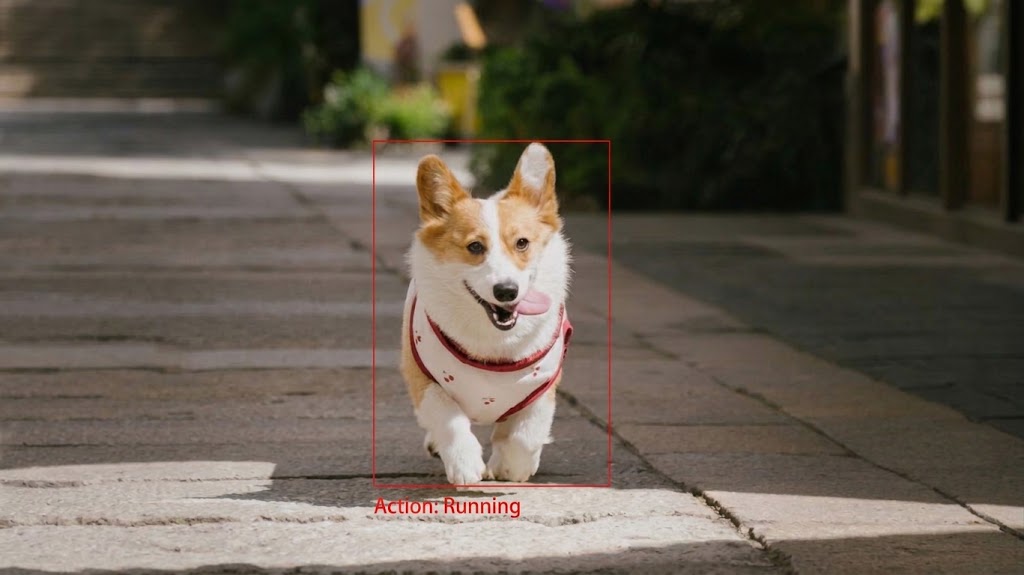
To accommodate the physiological differences between cats and dogs, Kuaitong has structured its pet recognition capabilities around three core recognition functions plus an auxiliary capability, with the recognition process optimized for different species.
• Face + Nose-Print Recognition:
For dogs, nose prints exhibit stable individual characteristics comparable in some respects to human fingerprints, making them an important biometric identifier. Facial recognition can quickly locate the target from a distance, while nose-print recognition provides a more precise final identity check. Together, they create a two-stage process: locate first, verify second.
For cats, the system uses an optimized cat-face recognition algorithm to locate the facial region and extract individual biometric features. For products designed to support both cats and dogs, the recognition workflow can automatically classify the species and apply the appropriate recognition logic.
• Body-Feature Recognition:
The system also extracts individual characteristics such as body shape and fur patterns. These features serve as additional verification dimensions alongside facial or nose-print recognition, helping improve overall accuracy in complex environments.
• Behavior Recognition:
Computer vision algorithms can identify what a pet is doing at a given moment—including eating, drinking, using the litter box, or resting. This provides a direct answer to a critical question: What is the pet doing right now? Such behavioral data can also support future pet-health data platforms by enabling frequency and activity tracking.
• Pet Profiling and Attribute Recognition:
During the pet enrollment process, the system can identify and record basic information such as breed, coat color, and body type. Once linked with facial or nose-print features, these attributes form a persistent digital identity profile that can be accessed over time.
The solution also extends beyond identity recognition to include capabilities such as feces detection and vomit detection, expanding the technology from simple identification into a broader pet health-sensing system.
In addition, dynamic video-stream tracking enables the system to maintain a target lock when cats or dogs are running, turning their heads, or becoming partially occluded—helping maintain reliable identity recognition even when the animal is moving.
According to Kuaitong’s published figures, its canine nose-print recognition accuracy reaches 99.7%, while the false-match rate for 1:1 verification is below 1%. The technology can also support large-scale 1 database searches, including scenarios involving pets with highly similar coat colors and appearances.
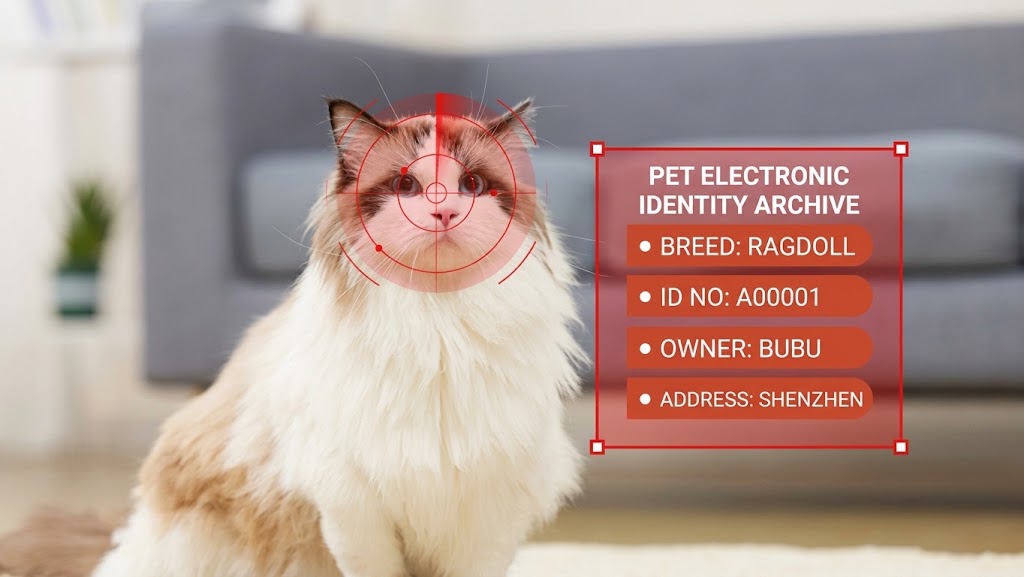
More importantly, the solution runs directly on the edge. Recognition is completed locally with millisecond-level response times, meeting the requirements of real-time monitoring while keeping sensitive data on the device.
This approach reduces dependence on network connectivity and high-performance cloud infrastructure while supporting stronger requirements for data security and privacy. Kuaitong’s official materials also describe encrypted storage and transmission of biometric data, with identity matching based on feature vectors rather than the original images.
To make edge deployment practical on resource-constrained hardware, Kuaitong applies model quantization and pruning to image-quality assessment, object detection, and identity matching models, while optimizing operators for specific chips.
The technology has been adapted to dozens of low-power chip platforms, including Tsing Micro, Ingenic, and Rockchip. During the hardware selection stage, Kuaitong can also provide reference hardware designs, reducing the trial-and-error involved in determining whether a particular chip has sufficient computing capacity.
Beyond edge computing itself, the solution incorporates data-compliance measures throughout the processing chain. Biometric data can be encrypted for storage and transmission, while identity matching uses feature vectors rather than original images. The solution also supports fully private deployment, enabling organizations to keep core data within their own security domain.
From Algorithm to Test Version | A Lower-Barrier Path to Deployment
For smart pet hardware manufacturers, the key questions during product development are straightforward: Can the algorithm run reliably on the selected chip? And can it achieve the required recognition accuracy in real homes and commercial environments?
Kuaitong delivers more than an algorithm. It provides an integrated deployment approach designed to lower the barriers to testing, integration, and commercialization.
For development teams with different technical capabilities, Kuaitong offers three integration models covering everything from deep customization to rapid product deployment:
• SDK Integration:
Designed for manufacturers with their own computer-vision teams that want to continuously iterate and deeply customize the algorithm. This model provides the highest level of development flexibility and allows manufacturers to control the entire integration process.
• Integrated AI Module:
The algorithm and hardware are pre-integrated into a ready-to-deploy module. This option is designed for manufacturers without dedicated algorithm teams or those seeking to accelerate product development and commercialization, significantly lowering the technical barrier to entry.
• Hardware Reference Design:
A complete reference design covering circuit and structural components, intended for customized projects that require modifications to product electronics, industrial design, or mechanical structures.
To help manufacturers move beyond testing based solely on standardized reference samples, Kuaitong also provides a lightweight integration pathway through the Kuaitong AI Open Platform. After registration, manufacturers can access free testing credits and use the platform’s open APIs for online debugging and performance validation before integration.
Kuaitong has also developed an ecosystem spanning the broader AIoT supply chain, working with AI chip manufacturers, leading IoT cloud platforms, ODMs, and consumer brands. By using edge AI pet recognition as a core capability, the company connects chips, hardware, cloud platforms, and end-user products to accelerate real-world deployment.
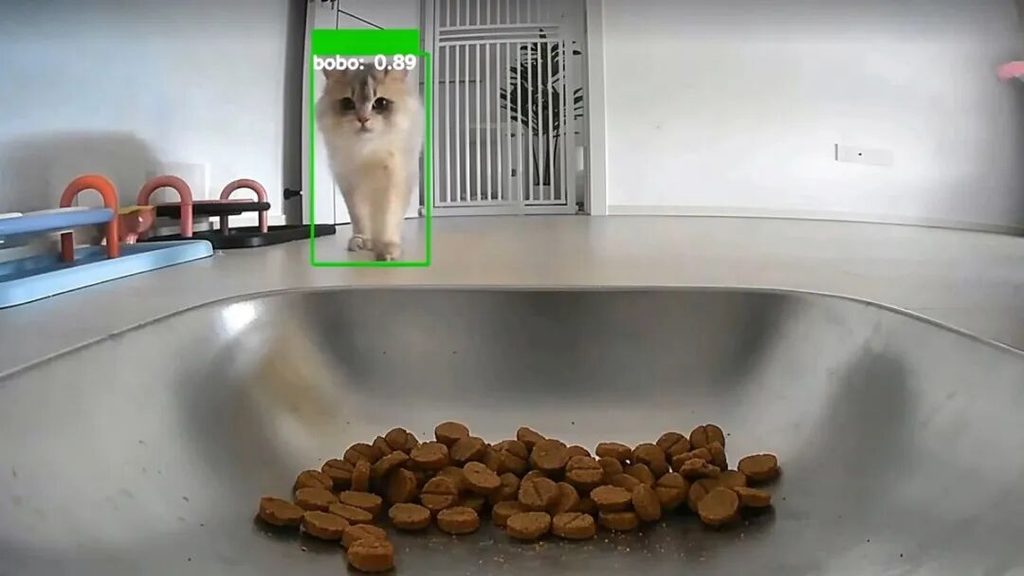
Several leading smart pet hardware brands have already adopted Kuaitong’s edge AI solutions. For example, homerunPET has integrated an edge AI module into its smart pet feeder.
The Bigger Picture | From Pet Access Control to a Distributed Edge AI Ecosystem
The competitive threshold for smart pet access control is not simply whether a system can distinguish between a cat and a dog. The more important challenges often occur earlier in the recognition pipeline: reliable object detection under backlighting, occlusion, and low-quality imaging, as well as maintaining a seamless user experience when networks disconnect or cloud processing introduces latency.
Kuaitong addresses these challenges by bringing pet identity recognition directly onto the device. Its combination of nose-print, facial, and body-feature recognition, together with model quantization, pruning, and low-power chip optimization, targets the core technical challenges facing smart access control and the broader smart pet hardware market.
Pet access control is only one application of this technology.
As smart feeders, litter boxes, water fountains, interactive pet robots, and other connected pet devices gain independent edge AI capabilities, they can identify, understand, and respond to individual pets without continuously sending sensitive data to the cloud.
The result could be a new generation of distributed pet intelligence—an ecosystem in which smart devices can locally “understand” each individual pet and respond to its identity, behavior, and needs.
That shift could turn edge AI from an underlying technology into a practical intelligence layer for the next generation of smart pet homes.