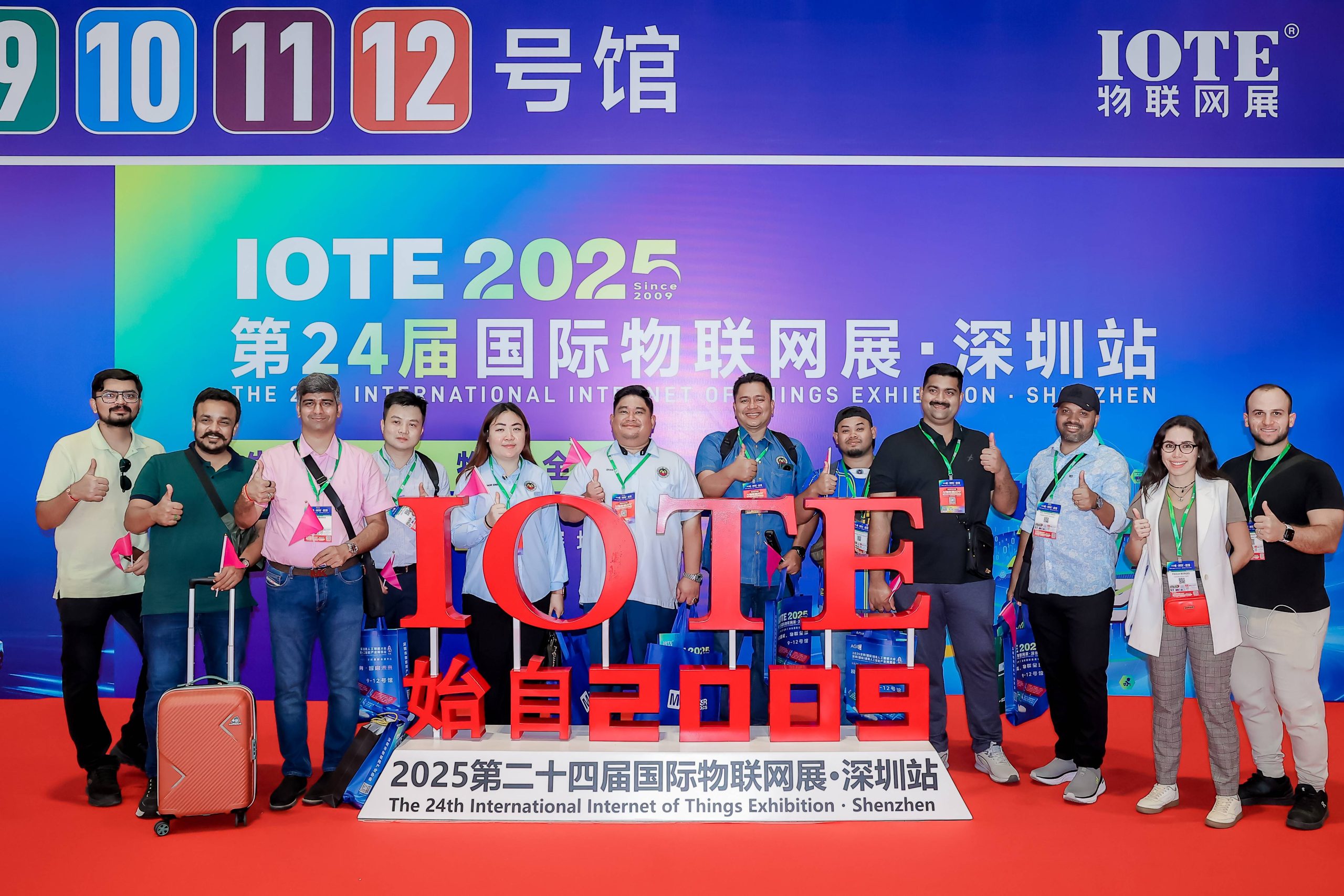
Recently, the 2026 Matter Developer Conference was held in Shenzhen. The event was jointly organized by the Connectivity Standards Alliance China Member Group (CMGC) and the Shenzhen IoT Industry Association.
The conference brought together technology experts from across the Matter ecosystem, including Silicon Labs, STMicroelectronics, Nordic Semiconductor, TÜV Rheinland, and Snowball Technology, who shared insights into the latest Matter specification updates, chip solutions, development tools, certification, and commercial-scale deployment.
More than 94 alliance members and tens of thousands of developers from 45 countries and regions around the world are working together to advance the development of Matter as an open standard for smart home connectivity.
01
Matter 1.5 & 1.6: Cameras, NFC Commissioning, and New Device Types Take Center Stage
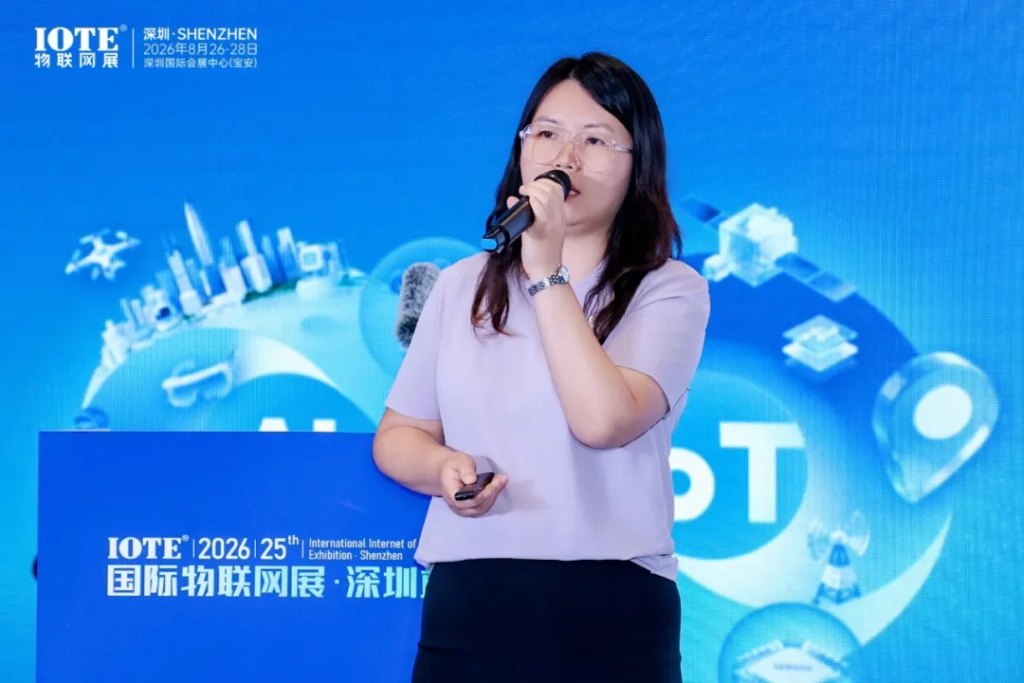
▲ Amanda Yang, Solutions Architect, Asia-Pacific Region, Connectivity Standards Alliance
In the opening presentation, Amanda Yang, Solutions Architect for the Asia-Pacific region at the Connectivity Standards Alliance, provided an in-depth overview of the key enhancements introduced in Matter 1.5 and Matter 1.6.
One of the most significant developments in Matter 1.5 is the introduction of cameras as a new device type. Cameras play an increasingly important role in smart home environments and represent a major expansion of Matter’s device ecosystem.
Matter-enabled cameras support features including live viewing, video recording, two-way audio, pan-tilt-zoom (PTZ) control, and privacy-zone configuration. Storage can be handled locally or in the cloud, and the first certified products have already entered the market.
Matter 1.5 also expands support for closure devices, including garage doors, awnings, and blinds, while introducing soil sensors. Energy management capabilities have been enhanced with metering and tariff functions, enabling devices to better support grid-responsive applications.
Matter 1.6 focuses on further improving the user experience, with NFC-based commissioning emerging as one of the most closely watched features. Users can simply tap a smartphone against a device to transfer commissioning information. Once powered on, the device can automatically join the network, eliminating the conventional process of scanning QR codes and waiting for configuration to complete.
The update also introduces mechanisms for shared network access across multiple ecosystems, while the Thermostat Suggested Setpoint feature enables devices to make more intelligent decisions based on user preferences. Partitioned management of certificate revocation lists further strengthens the security foundation of the Matter ecosystem.
02
Chipmakers Expand Their Matter Portfolios | Higher Performance, Lower Power, and AI-Assisted Development
Leading semiconductor companies showcased comprehensive solutions designed to accelerate Matter development and deployment.
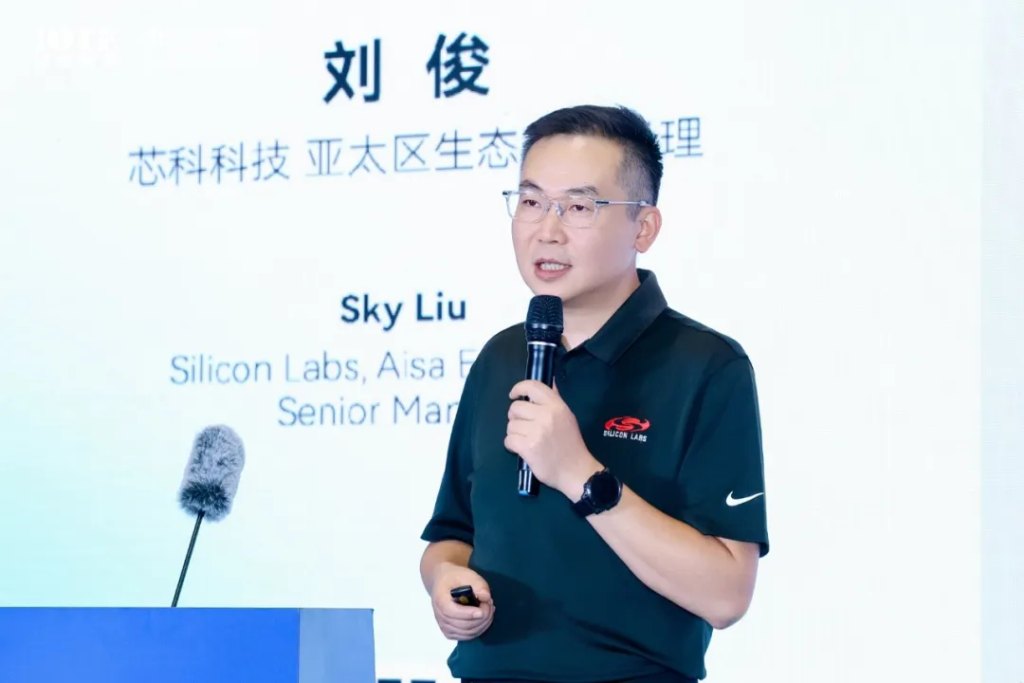
▲ Sky Liu, Ecosystem Senior Manager, Asia-Pacific Region, Silicon Labs
Sky Liu, Ecosystem Senior Manager for the Asia-Pacific region at Silicon Labs, introduced the new Series 3 MG301 platform.
Built on a 22 nm process, the chip features up to 4 MB of Flash memory and an integrated AI hardware accelerator, delivering up to six times higher performance. It also achieves PSA Level 4 security certification.
The platform supports both Zigbee and Matter, allowing devices to connect seamlessly across different gateway environments.
Silicon Labs has also launched its AI Assistant Alpha Program, enabling developers to access natural-language-driven coding assistance through a VS Code extension, significantly lowering the barrier to embedded development.
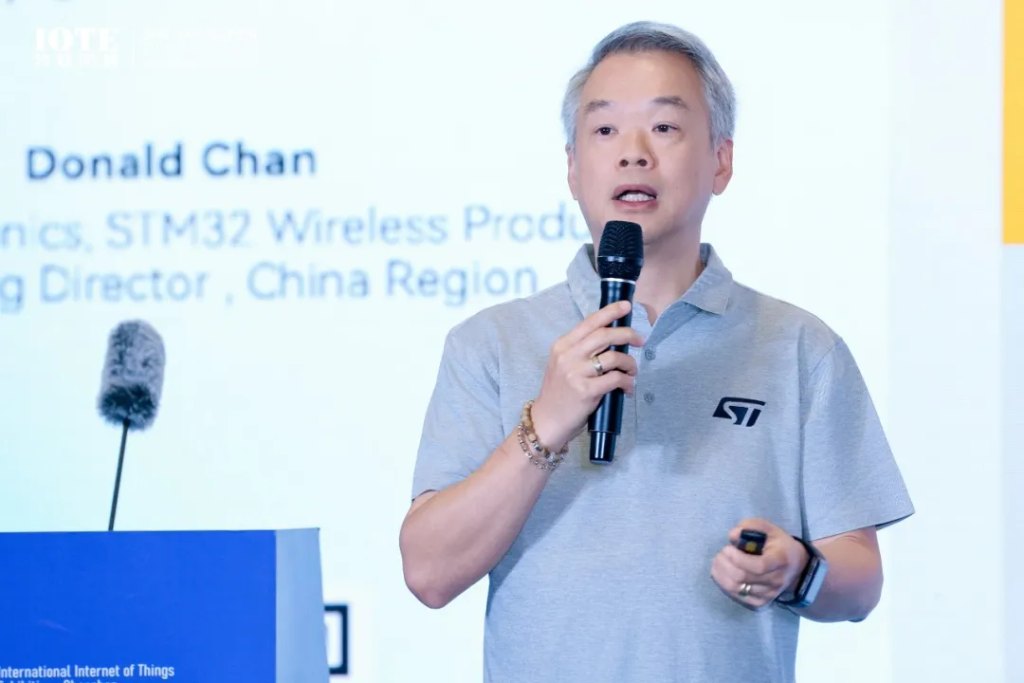
▲ Donald Chan, STM32 Wireless Products Marketing Director, China Region, STMicroelectronics
Donald Chan, STM32 Wireless Products Marketing Director for the China region at STMicroelectronics, introduced the ST25DA-C secure element, specifically designed for NFC-based Matter commissioning.
The chip integrates secure storage and cryptographic algorithms and supports pre-provisioning of DAC certificates, enabling unique credentials for individual devices while keeping private keys securely within the chip.
Chan highlighted that the ST25DA-C can provision credentials even when the device is powered off. Once the device is powered on, commissioning can proceed automatically. Mass production is scheduled for Q4, with the corresponding development kit already available.
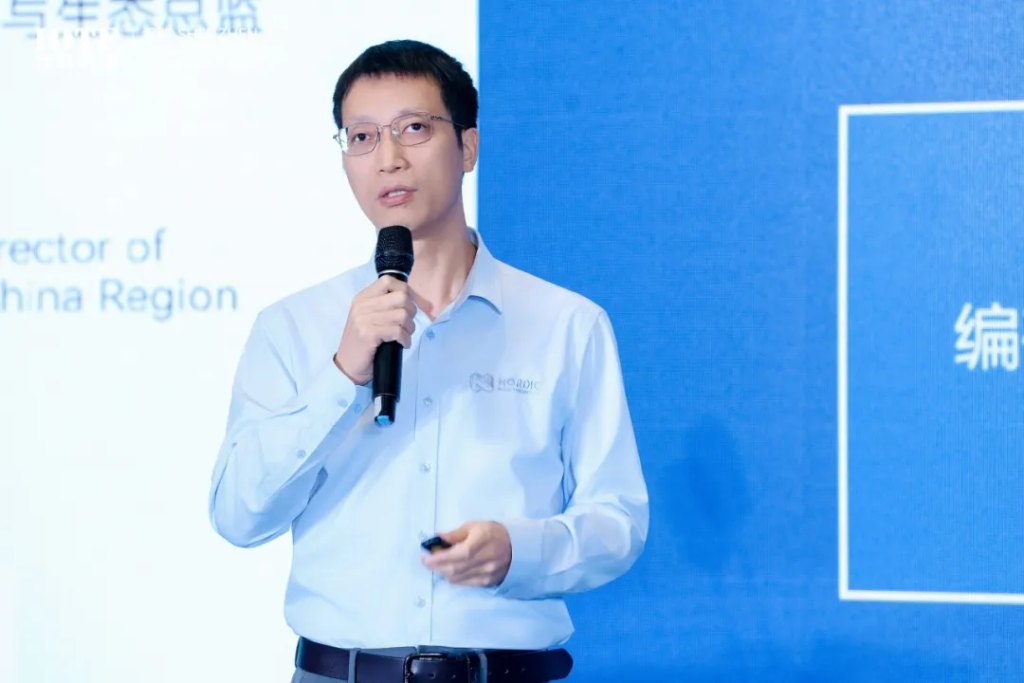
▲ Kevin Ai, Director of Standards and Ecosystems, China Region, Nordic Semiconductor
Kevin Ai, Director of Standards and Ecosystems for the China region at Nordic Semiconductor, presented a new development workflow combining the nRF Connect SDK with AI assistance.
Nordic’s 54 Series devices require only 674 KB of Flash in Matter over Thread applications, while standby power consumption is less than half that of competing solutions.
Ai also introduced a smart-lock reference application integrating Matter with Aliro, the digital key standard, with support for a combination of UWB, Bluetooth Low Energy (BLE), and NFC technologies.
03
Certification Evolves | Platform-Level Certification and Enhanced Testing Improve Efficiency
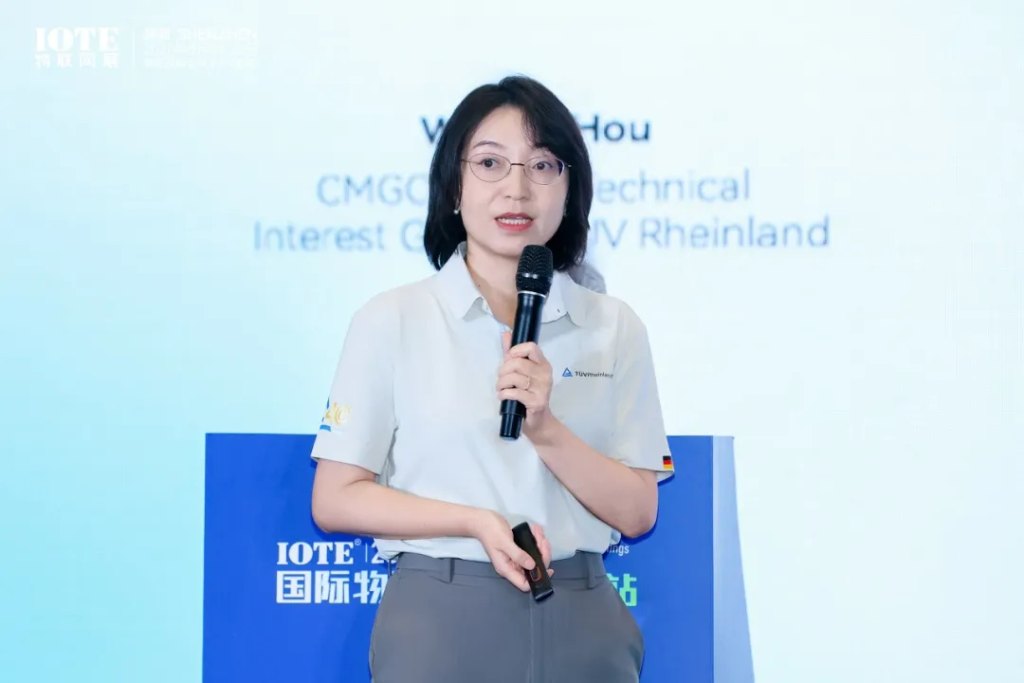
▲ Winnie Hou, Matter Technical Interest Group, CMGC / TÜV Rheinland
Winnie Hou, a member of the Matter Technical Interest Group and representative of TÜV Rheinland, provided an in-depth overview of the latest developments in the Matter certification program.
Matter Platform Certification enables common device capabilities to be certified at the chip-platform level in advance. For derivative products, manufacturers only need to test newly added functions, significantly reducing redundant certification work.
The Connectivity Standards Alliance’s PICS tool now supports the automatic generation of test-skip lists, while the testing tool has added a command-line interface (CLI) to better support automated testing in production environments.
Hou also explained Matter’s “Sunset Rules.” Versions 1.0 through 1.3 have entered their sunset phase, meaning new product certifications for these versions are closed. However, recertification of existing products remains possible, helping manufacturers maintain products that are already on the market.
04
Tackling Mass-Production Challenges | From Secure DAC Provisioning to Code-Free Commissioning
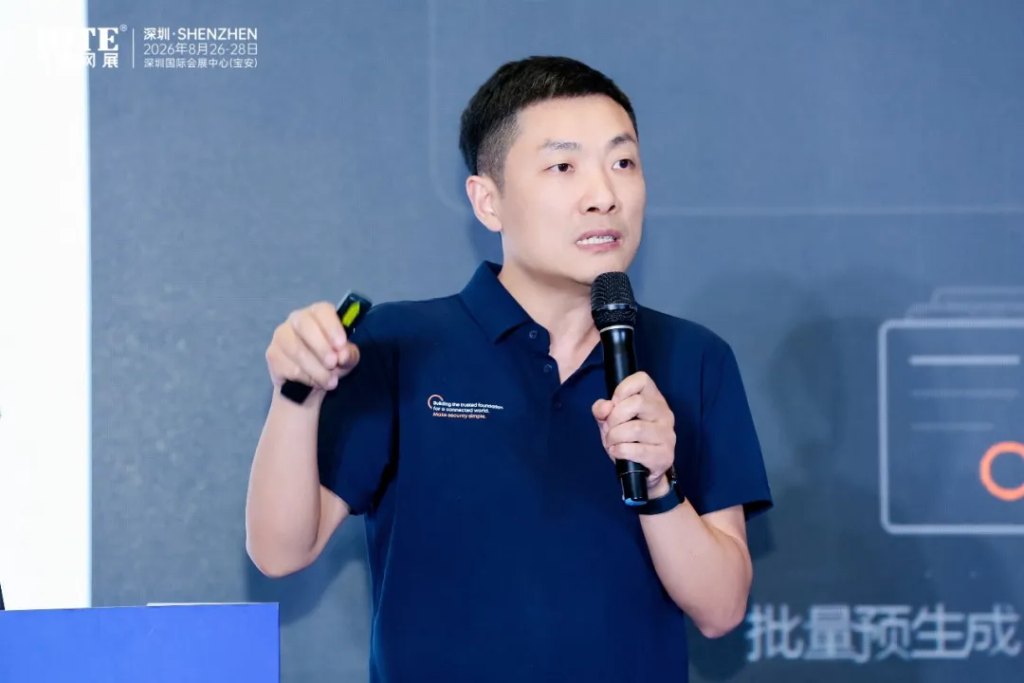
▲ Bob Jiang, President, Snowball Technology
Bob Jiang, President of Snowball Technology, addressed several of the key challenges manufacturers face when bringing Matter devices into mass production.
Traditional production workflows can be affected by QR-code printing errors, risks associated with exiting factory mode, and the loss of commissioning QR codes during after-sales service, making device onboarding and maintenance more complicated.
Snowball Technology’s OnBoard™ IoT Security (OBIS) platform provides centralized cloud management of DAC certificates and keys, while factory-edge cryptographic systems can issue certificates in real time without exposing private keys. Automated provisioning stations can also perform commissioning tests and QR-code printing, creating an end-to-end automated workflow—from secure provisioning to testing.
The approach has already been deployed in mass-production environments across multiple global factories, with zero rework reported. It is also designed to support compliance with the EU Cyber Resilience Act (CRA).
Snowball Technology’s official Matter solution integrates DAC issuance, secure factory provisioning, and device identity management into a unified trust chain through OBIS.
05
A Developer-Friendly Approach | Raspberry Pi MVP Reference Design Moves Toward “Certification Ready”
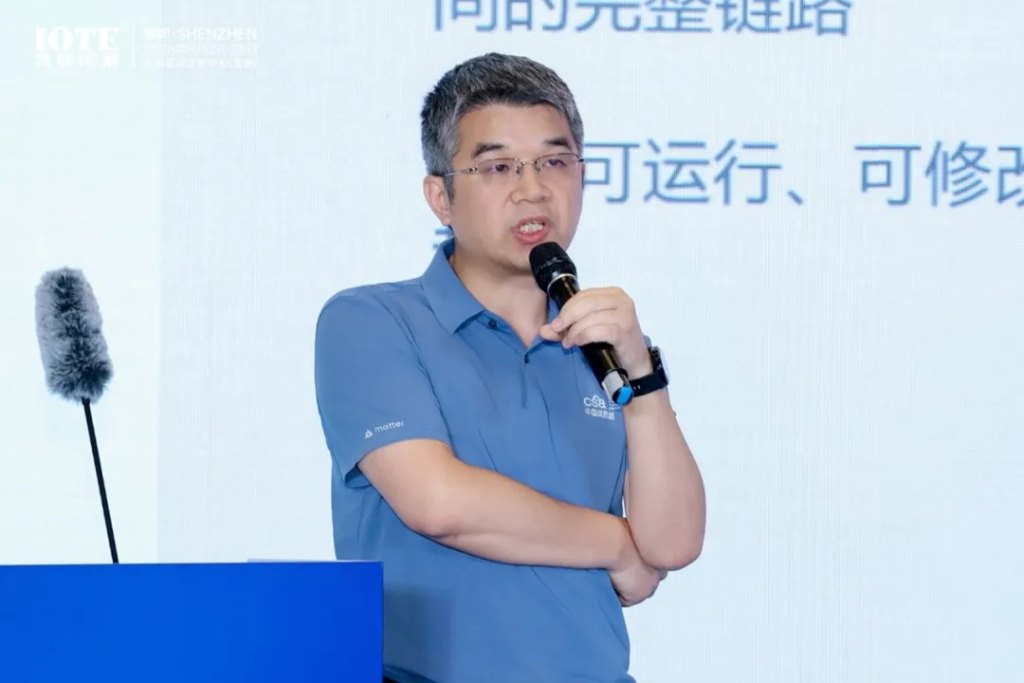
▲ Andy Liu, Vice Chair, CMGC Matter Technical Interest Group / HooRii
Andy Liu, Vice Chair of the CMGC Matter Technical Interest Group and representative of HooRii Technology, introduced a Raspberry Pi-based Matter MVP reference design.
Built on the official Matter SDK, the solution provides two reference implementations covering Wi-Fi lighting and Thread sensors. The source code is planned for release on GitHub, with the project targeting a Matter 1.6 “Certification Ready” status—meaning it has successfully completed formal testing by a certification laboratory.
Developers can directly use Raspberry Pi 3 or Raspberry Pi 4 hardware for learning and validation, significantly shortening the path from initial development to prototype verification.
HooRii Technology is an established participant in the Matter ecosystem, with its English company name listed as HooRii Technology.
06
Seamless Access Comes to the Smart Home | Matter + Aliro Smart-Lock Solutions
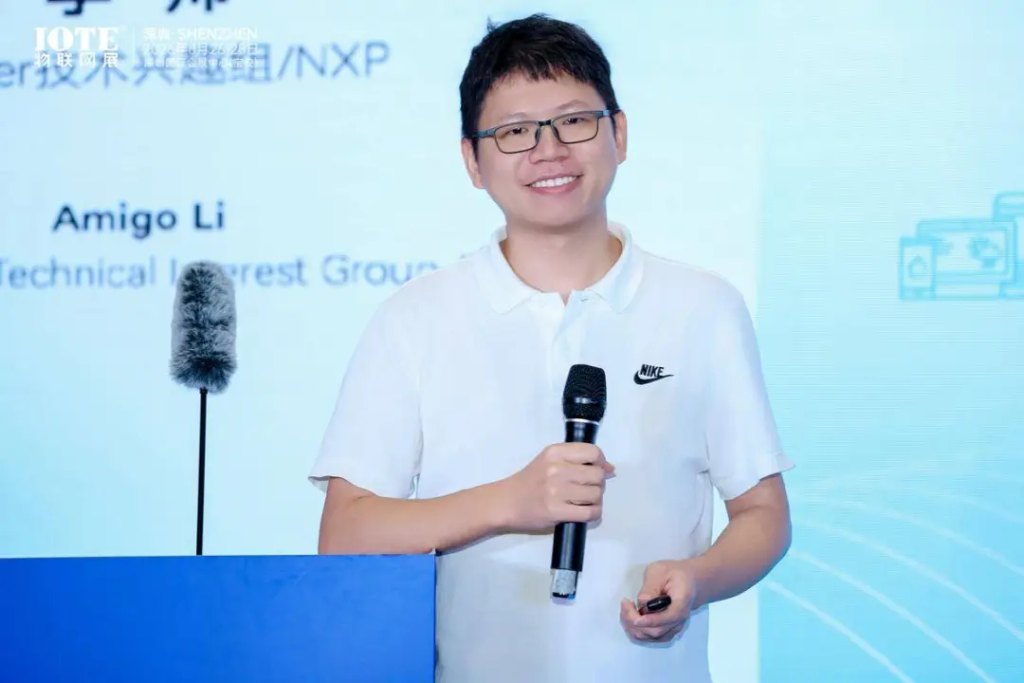
▲ Amigo Li, Matter Technical Interest Group, CMGC / NXP
Amigo Li, a member of the CMGC Matter Technical Interest Group and representative of NXP, demonstrated a dual-chip smart-lock architecture combining Matter and Aliro.
The indoor chip handles Matter connectivity and motor control, while the outdoor chip manages smartphone interaction through BLE, UWB, and NFC. The two chips communicate via UART, providing physical security isolation while allowing each side to be independently certified.
When a user approaches the front door with a smartphone, BLE detects and establishes the connection. Once the UWB ranging distance reaches the predefined threshold, the door can unlock automatically—without requiring the user to take out or unlock their phone.
The solution supports simultaneous ranging for multiple users and incorporates low-power optimization, with battery life potentially exceeding six months.
Conclusion
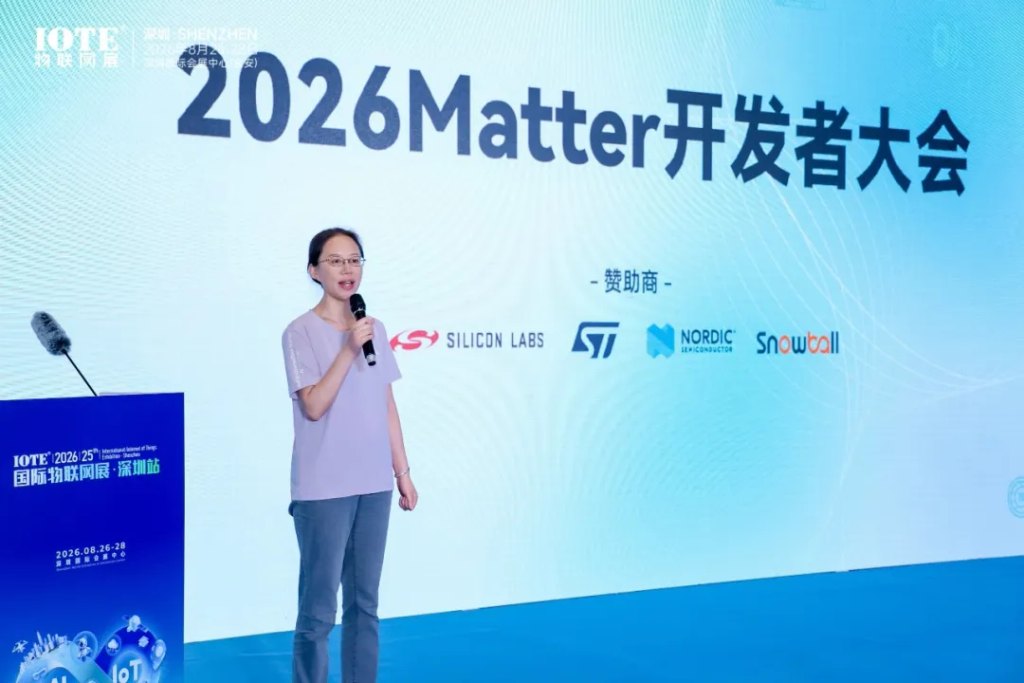
▲ Shang Ruiyun, China Representative, Connectivity Standards Alliance
From the evolution of the Matter 1.5 and 1.6 specifications, advances in chip performance and AI-assisted development tools, to more efficient certification, automated production workflows, and new applications such as hands-free smart locks, the 2026 Matter Developer Conference offered a comprehensive look at the growing maturity and momentum of the Matter ecosystem.
Shang Ruiyun, China Representative of the Connectivity Standards Alliance, said that the Connectivity Standards Alliance and CMGC will continue working closely with Chinese member companies and developers around the world to accelerate the large-scale commercialization of Matter in the smart home sector and drive continued innovation across the ecosystem.