
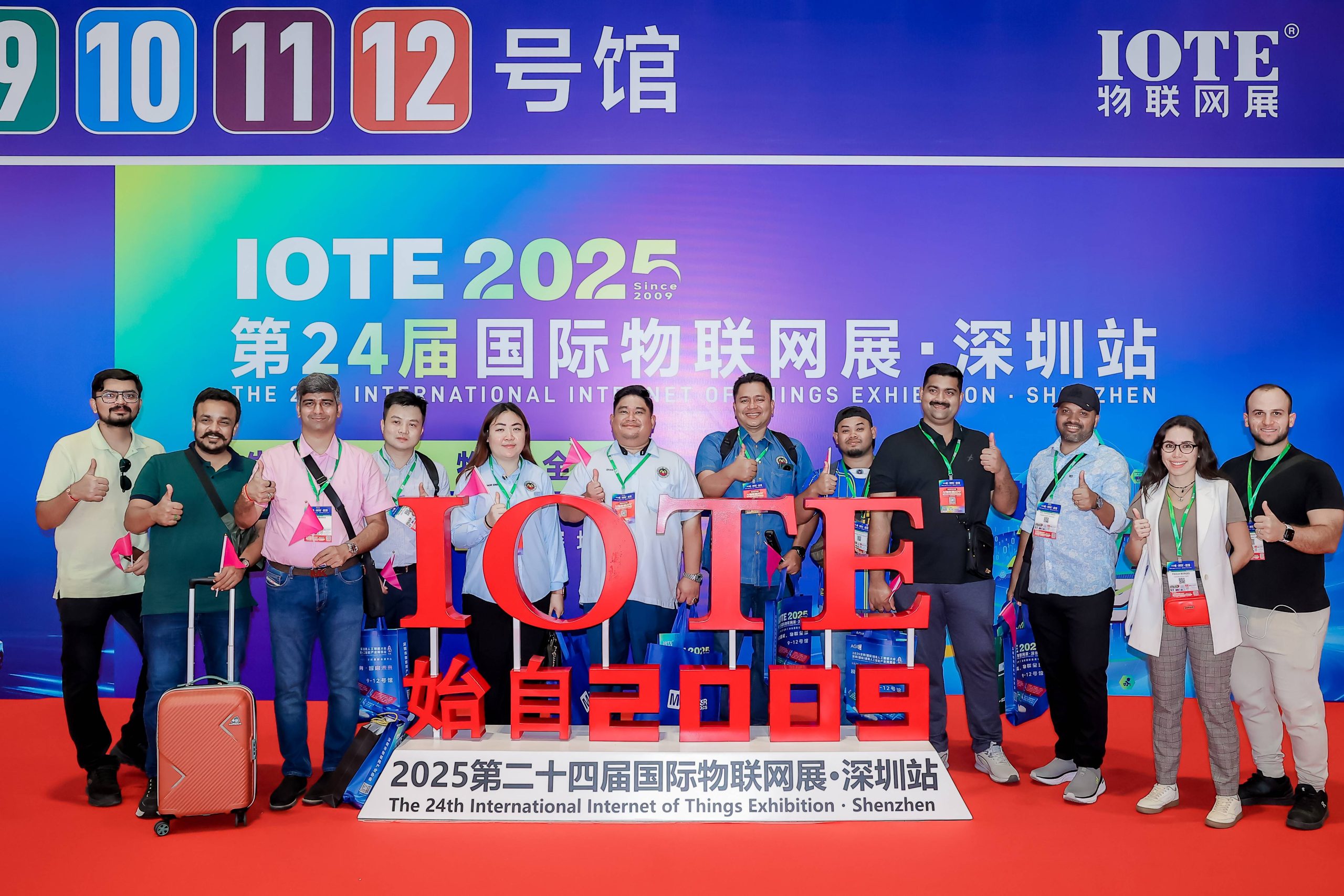
Held on the morning of August 27, 2026, the AI + Embodied Intelligence Industry Ecosystem Forum, themed “Full-Stack Manufacturing, Ecosystem-Wide Collaboration,” was successfully held as a featured forum of the 2026 Shenzhen International General Artificial Intelligence Industry Expo and Global Embodied Intelligence Robotics Expo (AGIC 2026).
The forum was jointly hosted by the Shenzhen Artificial Intelligence Industry Association and Ulink Media Co., Ltd., and organized by the Zhanjiang Association of Artificial Intelligence and Robotics. It brought together experts from universities and research institutions, robot manufacturers, core component suppliers, large-model and algorithm developers, application operators, and investment institutions.
Discussions focused on key issues shaping the industry’s development, including technological innovation, product engineering and mass production, and ecosystem-wide collaboration. Participants explored practical pathways for advancing Embodied Intelligence toward large-scale commercial deployment and supporting the industry’s high-quality development.
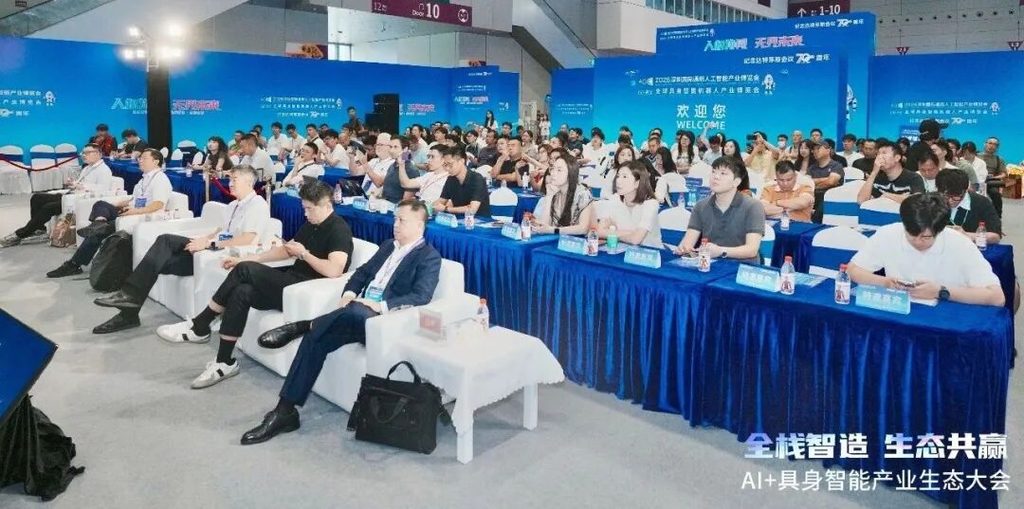
Building a Collaborative Ecosystem | Connecting the Entire Industry Value Chain
Embodied Intelligence has emerged as a strategically important future industry in China, with strong momentum driven by technological innovation and policy support.
A series of policy initiatives—including the Outline of the 15th Five-Year Plan for National Economic and Social Development of the People’s Republic of China, the State Council’s Opinions on Deepening the Implementation of the “AI Plus” Initiative, the Ministry of Industry and Information Technology’s special initiative on real-world training for humanoid robots and Embodied Intelligence, and supporting industrial policies introduced by Guangdong Province and Shenzhen—are providing a stronger policy and institutional foundation for the industry’s development.
Against this backdrop, the forum aimed to establish an efficient matchmaking platform connecting four key groups: component suppliers, complete robot manufacturers, application operators, and investment institutions.
The program featured keynote presentations and open networking sessions, covering critical areas across the industry value chain, including industry–academia–research collaboration and commercialization, international market experience, tactile intelligence technologies, dexterous manipulation, industrial applications, and AI safety governance.
By facilitating more precise connections between industry demand and technology supply, the forum sought to encourage cross-sector innovation and accelerate the commercialization of research and technological achievements.
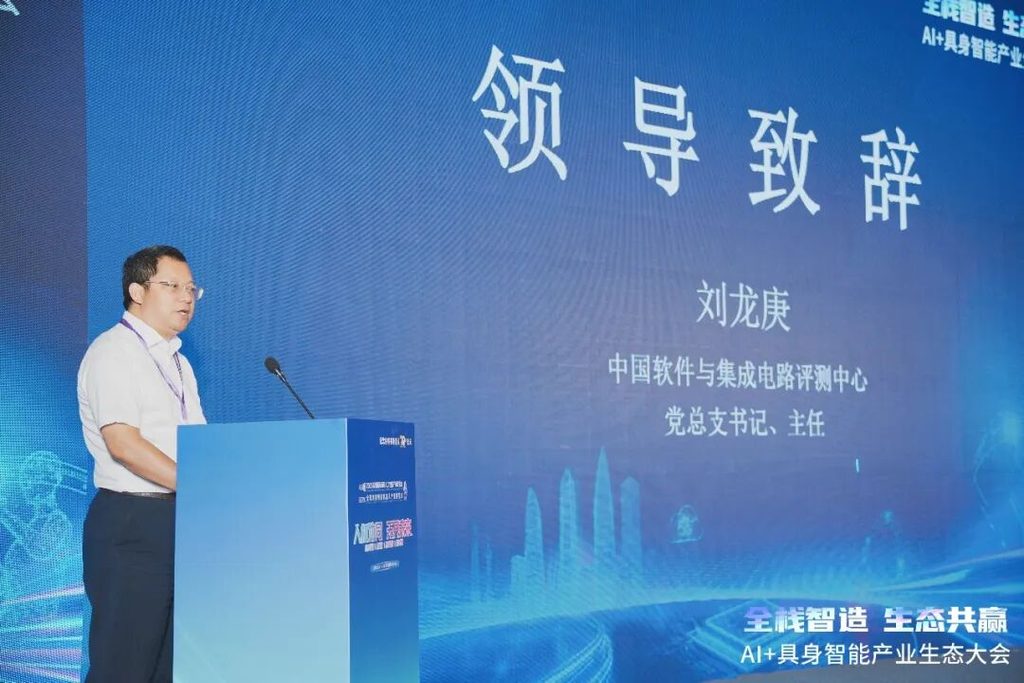
The forum opened with remarks by Liu Longgeng, Party General Branch Secretary and Director of the China Software and Integrated Circuit Evaluation Center. Drawing on national industrial policy priorities, he highlighted the strategic importance of Embodied Intelligence as a future industry. He called on stakeholders across the Greater Bay Area to strengthen collaboration, build a coordinated industrial ecosystem, and accelerate the translation of technological breakthroughs into practical applications.
From Research to Industrial Deployment | Turning Industrial AI into Scalable Solutions
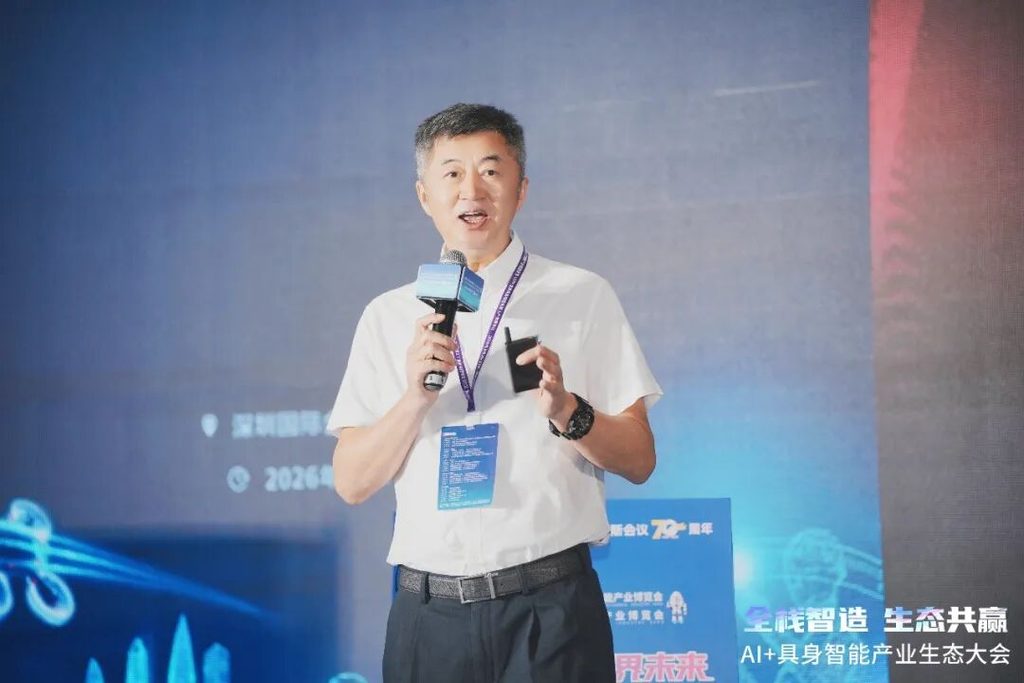
Ji Tongkai, Dean of a college at Zhejiang University of Technology, opened the keynote session with a presentation titled “From Industry–Academia–Research Collaboration to Scalable Deployment: How Can Industrial AI Move from Technology Prototypes to Real-World Applications?”
The commercialization of research outcomes is a critical step in bringing Industrial AI out of laboratories and into real production environments. Drawing on his experience in industry–academia–research collaboration, Ji examined the challenges involved in moving from technology prototypes to engineering implementation.
He also shared practical examples of industrial quality inspection projects in the ceramics and e-cigarette cartridge industries. By applying technologies such as few-shot transfer learning and adversarial generative data augmentation, these projects have enabled faster production-line deployment and improved operational efficiency.
His presentation offered valuable insights into how Industrial AI technologies related to Embodied Intelligence can be continuously refined and deployed at scale.
Understanding International Demand | Practical Insights from the European Market
Denis Sakhaylov, Co-Founder of GenAI Europe, delivered a presentation titled “Putting ‘AI Plus’ into Practice: Real-World Needs Across European Industries.”
Drawing on his experience in international markets, he shared insights into the practical requirements of European customers for Embodied Intelligence products.
He noted that European industries place greater emphasis on a solution’s ability to integrate with local business systems and meet regulatory and compliance requirements than on model performance alone. He also shared real-world examples of Chinese robotics companies expanding into Europe, offering valuable references for Chinese enterprises pursuing international growth and cross-border technology partnerships.
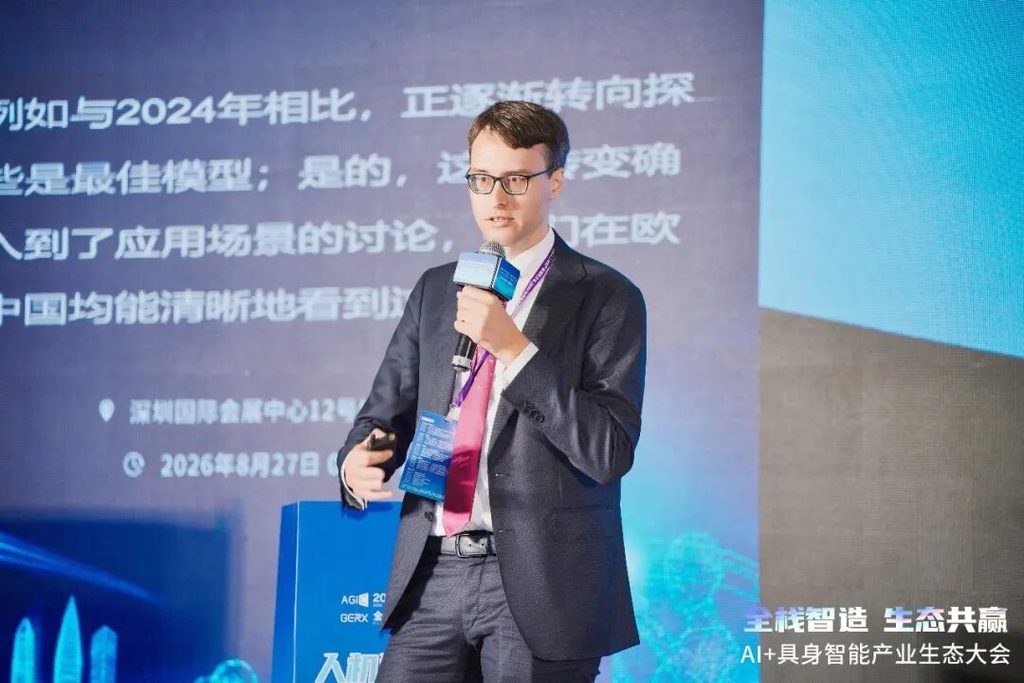
Tactile Intelligence | Building the Foundation for Physical AGI
Zhang Dong, Partner and Chief Commercial Officer (CCO) of Daimon (Shenzhen) Robotics Technology Co., Ltd., delivered a presentation titled “Building a General-Purpose Tactile Intelligence Foundation to Accelerate the Arrival of Physical AGI.”
Focusing on tactile perception as a fundamental capability for interacting with the physical world, Zhang explored the development of a general-purpose tactile intelligence foundation.
He introduced an approach that uses tactile perception to anchor world models and build a robot’s “physical interaction brain,” supported by three core capabilities: physical cognition, predictive reasoning and decision-making, and real-time manipulation.
By improving robots’ stability and generalization capabilities in complex contact-based tasks, these technologies could help accelerate progress toward Physical AGI.
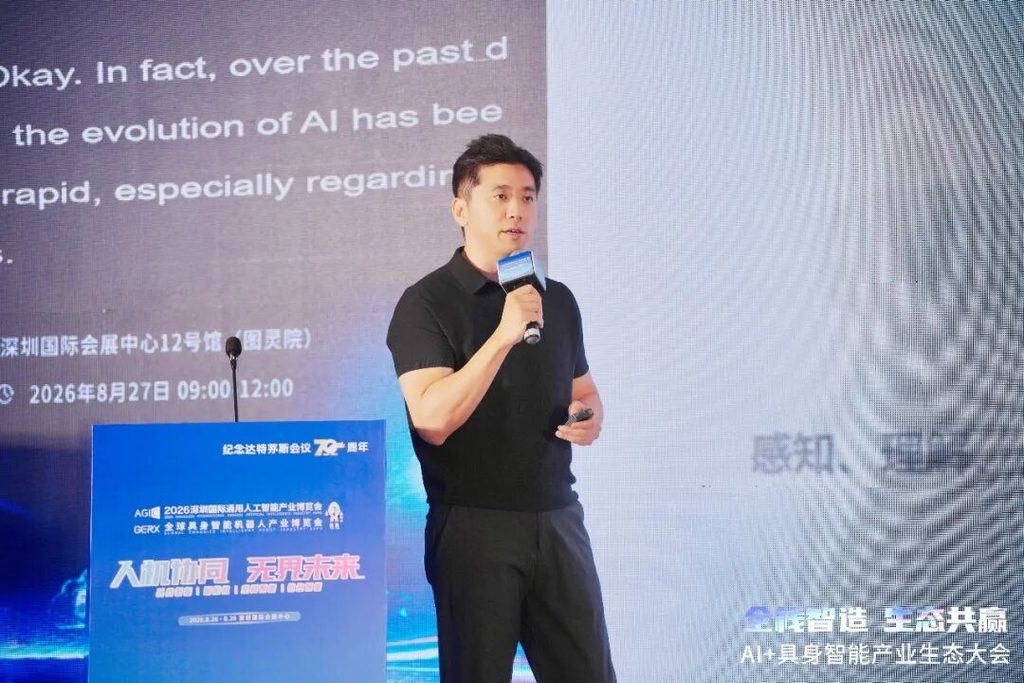
Dexterous Manipulation | Bridging the Gap Between Generalization and Reliability
Wang Baitang, Vice President of DH-Robotics Technology Co., Ltd., delivered a presentation titled “Bringing Industrial Dexterous Manipulation into Practice: Bridging the Gap Between Generalization and Reliability.”
Focusing on the challenges of deploying dexterous robotic hands in industrial environments, Wang examined current limitations in versatility and operational stability.
He introduced DH-Robotics’ self-developed dexterous hand solutions, which combine high payload capacity with adaptive grasping capabilities. Through an integrated hardware and software approach, these solutions can accommodate different types of workpieces while maintaining reliable performance under complex operating conditions.
His presentation demonstrated how dexterous manipulation technologies can be adapted to the practical demands of industrial operations.
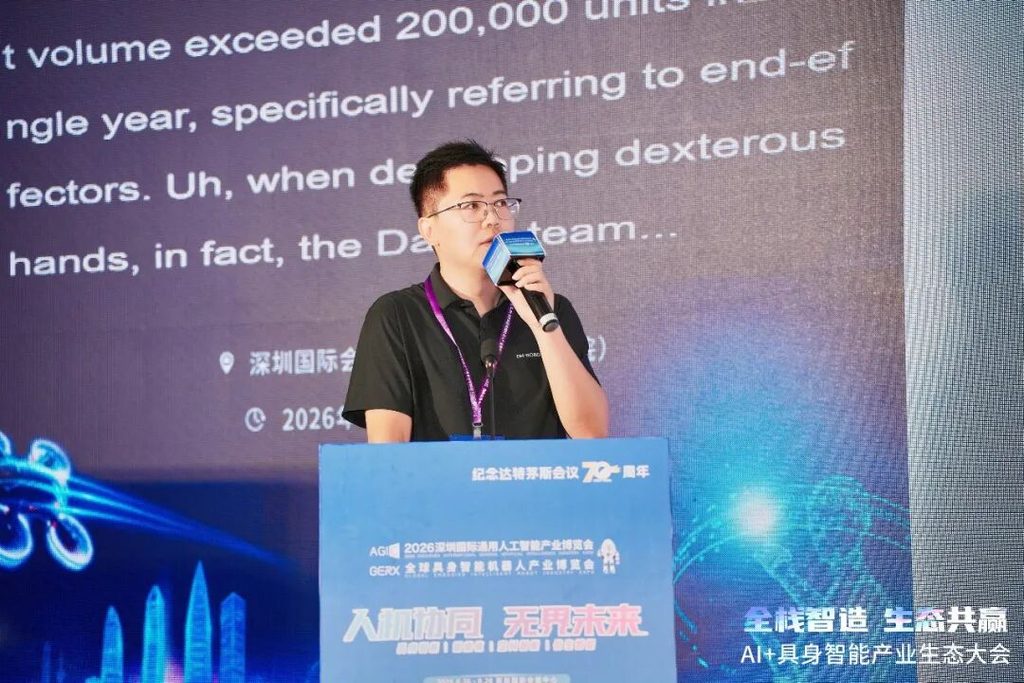
From Demonstration to Production | Bringing Embodied Robots onto the Factory Floor
Wu Jiyang, Product Manager at LaborX, delivered a presentation titled “From Demonstration to Production: How Can Embodied Robots Truly Enter Industrial Environments?”
Addressing the challenges of moving robots beyond demonstration prototypes and into real production environments, Wu introduced the company’s full-stack technical approach, integrating large models, force control, and mobility into a unified system.
By combining self-developed hardware with an industrial operating system, the solution is designed to enable rapid production-line adaptation within seven days while addressing key barriers to industrial deployment, including reliability and cost.
His presentation shared practical experience in bringing Embodied Intelligence technologies into real manufacturing environments.
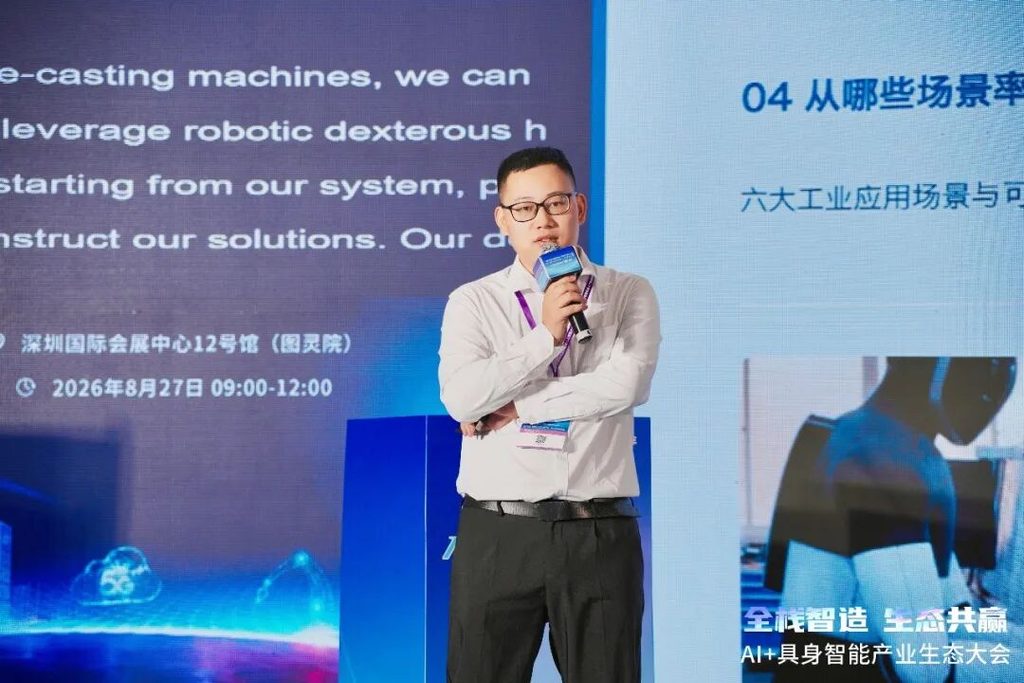
AI Safety and Governance | Managing Risks Throughout the AI Lifecycle
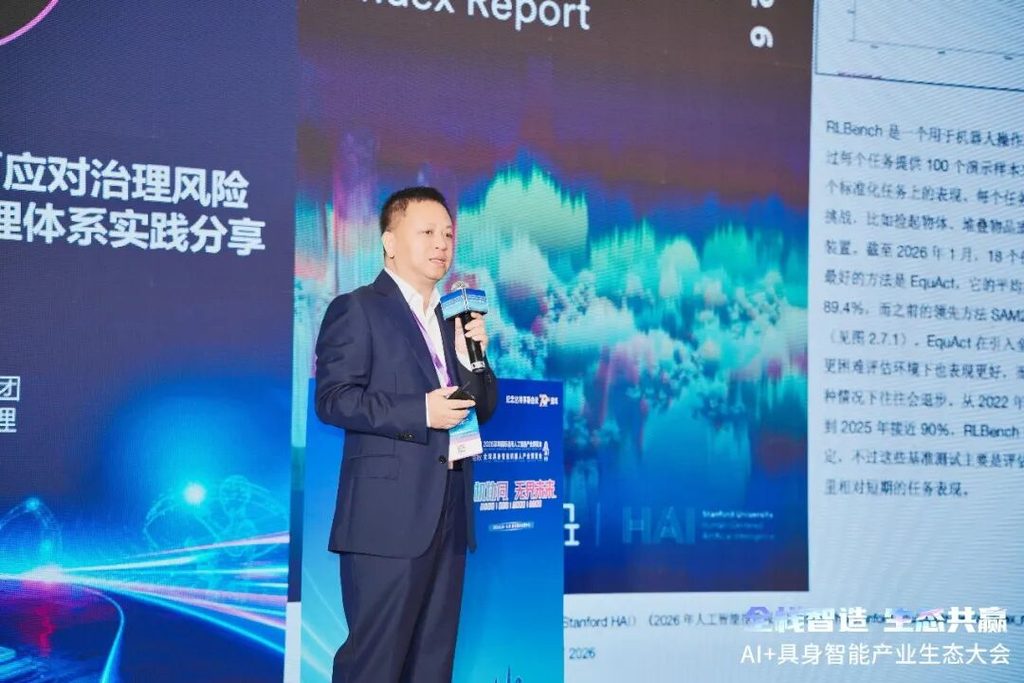
Ren Hui, China Regional Sales General Manager at DNV, delivered a presentation titled “Managing AI Risks in the Age of AI: Practical Approaches to AI Governance and Management Systems for Embodied Intelligence.”
From the perspective of industrial safety and governance, Ren examined the risks associated with deploying Embodied Intelligence, including physical safety, cyberattacks, data privacy, and accountability.
Drawing on global AI regulatory developments and the ISO/IEC 42001 AI Management System standard, he shared practical approaches to establishing governance and management frameworks across the entire AI lifecycle—from risk identification and assessment to mitigation, regulatory compliance, and operational implementation.
The presentation highlighted the importance of responsible AI governance in supporting the safe and sustainable adoption of Embodied Intelligence technologies.
Strengthening the Ecosystem | Accelerating the Commercialization of Embodied Intelligence
The successful forum marked an important step in implementing national, provincial, and municipal policies for the Embodied Intelligence industry and promoting deeper integration between AI and advanced manufacturing.
By addressing fragmentation across the industry value chain and building consensus among key stakeholders, the forum helped strengthen collaboration and accelerate the transformation of emerging technologies into commercial products and real-world applications.
Looking ahead, participating organizations will continue to deepen collaboration across the entire industry value chain, advance the large-scale commercial deployment of Embodied Intelligence, and contribute to the development of a trillion-yuan-level industry.
Through stronger ecosystem partnerships and practical industrial innovation, the Greater Bay Area is poised to play an increasingly important role in shaping the future of Embodied Intelligence and advanced manufacturing, while contributing valuable experience to China’s development of future industries.