
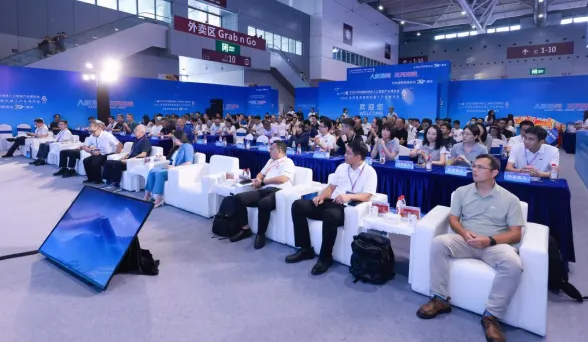
On the afternoon of August 26, 2026, the Marine Application Scenario Innovation & Development Conference, themed “Digital Intelligence for the Blue Ocean | Integrating Innovation with Real-World Applications,” was successfully held as a featured forum of the 2026 Shenzhen International General Artificial Intelligence Industry Expo & Global Embodied Intelligence & Robotics Industry Expo (AGIC 2026).
Building on the AI + Ocean Collaborative Development Consensus—China’s first cross-regional collaborative framework for AI + Ocean development—and a series of marine application demand lists released earlier that morning at the Zhuhai–Zhanjiang AI + Ocean Industry Collaboration & Development Conference, the afternoon event brought together more than 100 representatives from across the industry. Participants included academicians and experts, universities and research institutions, marine equipment manufacturers, telecommunications and technology providers, fisheries technology companies, and financial and insurance institutions. Focusing on technological innovation, equipment upgrades, and real-world industrial deployment, the conference featured case studies and in-depth discussions on a key industry question: How can marine AI move beyond isolated pilot projects and achieve large-scale commercial deployment?
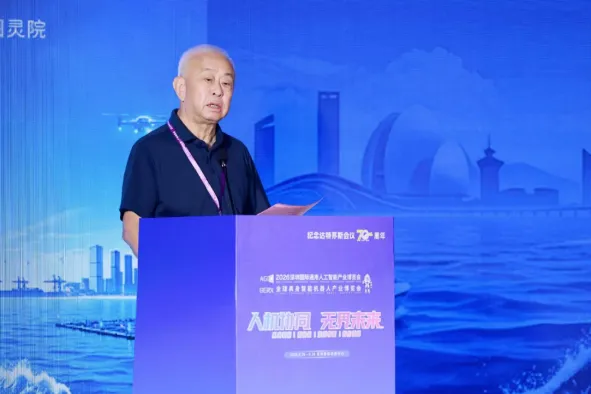
Opening Remarks | Seizing New Opportunities in AI-Driven Marine Development
The conference opened with remarks from Jing Xiaobo, former Inspector of the Operations Monitoring and Coordination Bureau of China’s Ministry of Industry and Information Technology (MIIT).
Jing noted that 2026 marks the opening year of China’s 15th Five-Year Plan (2026–2030). The continued implementation of the national “AI Plus” initiative is creating significant strategic opportunities for the digital and intelligent transformation of the marine industry.
While China’s marine intelligent technology sector is developing steadily, its progress remains constrained by the challenges of complex marine environments and demanding operating conditions. He expressed hope that the conference would serve as a platform for closer, practical collaboration among government, industry, academia, research institutions, end users, and financial organizations. By working together to address critical industry challenges and accelerate the commercialization of innovation, these stakeholders can deepen the integration of artificial intelligence with the marine economy.
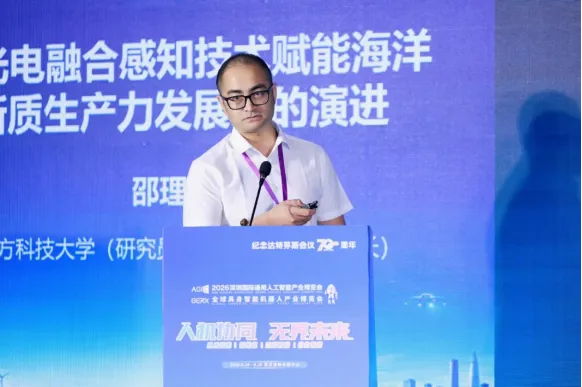
AI-Enabled Integrated Optoelectronic Sensing | Empowering the Marine Economy
Shao Liyang, Corresponding Fellow of the American National Academy of Artificial Intelligence and Associate Dean of the School of Innovation and Entrepreneurship at Southern University of Science and Technology, delivered a keynote presentation titled “AI-Enabled Integrated Optoelectronic Sensing for New Drivers of Growth in the Marine Economy.”
Marine sensing is a fundamental building block of intelligent marine development. In his presentation, Shao explored the capabilities of AI-enabled integrated optoelectronic sensing, explaining how advances in next-generation sensing technologies can strengthen underlying technological capabilities and provide essential support for the development of new drivers of growth and innovation in the marine economy.
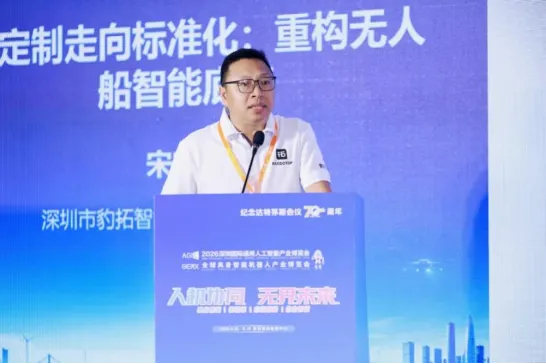
From Customization to Standardization | Building the Intelligent Foundation for Unmanned Surface Vessels
Song Yifang, President of Shenzhen Baotuo Intelligent Technology Co., Ltd., presented “From Customization to Standardization | Rebuilding the Intelligent Foundation for Unmanned Surface Vessels.”
Addressing common industry challenges such as high customization costs and difficulties in replicating and scaling project-based solutions, Song shared the company’s approach to developing a standardized, general-purpose intelligent foundation for unmanned surface vessels.
He emphasized that standardization can lower development barriers, improve solution scalability, and accelerate the large-scale deployment of unmanned surface systems.
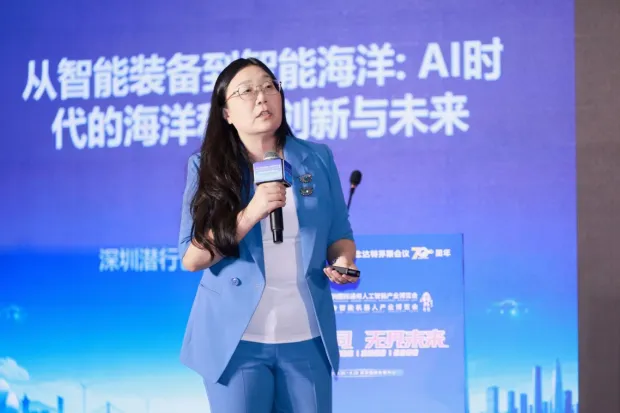
From Intelligent Equipment to Smart Oceans | Marine Technology Innovation in the AI Era
Zhang Ying, Vice President of CHASING Innovation Technology, delivered a presentation titled “From Intelligent Equipment to Smart Oceans | Marine Technology Innovation and the Future in the AI Era.”
Drawing on the demanding operating conditions of deep-sea environments, Zhang shared practical experience in the development and application of intelligent marine equipment. She also outlined a vision for the industry’s evolution—from the intelligent upgrading of individual equipment systems toward a more integrated and coordinated smart ocean ecosystem.
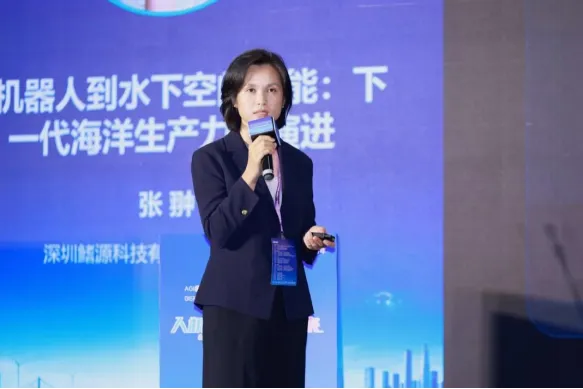
From Robotics to Underwater Spatial Intelligence | The Next Evolution of Marine Productivity
Zhang Chong, CEO of Shenzhen QYSEA Technology Co., Ltd., delivered a keynote presentation titled “From Robotics to Underwater Spatial Intelligence | The Evolution of Next-Generation Marine Productivity.”
His presentation explored emerging directions in underwater spatial intelligence and examined how intelligent underwater systems could transform marine operations, creating new opportunities to enhance productivity and expand the capabilities of marine industries.
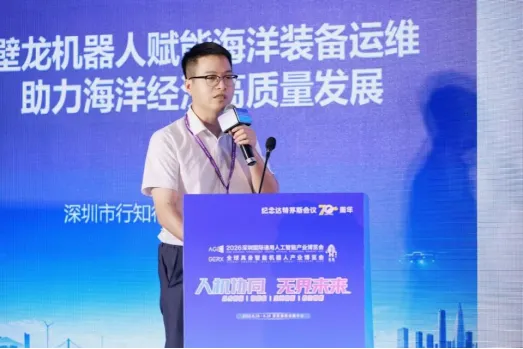
WallHiker Robots for Marine Equipment Maintenance | Supporting High-Quality Marine Industry Development
Cai Jiannan, R&D Director of SHENZHEN AKA ROBOTICS TECHNOLOGY CO., LTD., presented “WallHiker Robots for Marine Equipment Maintenance | Supporting the High-Quality Development of the Marine Economy.”
Addressing the practical maintenance requirements of marine equipment, Cai introduced the technical applications of WallHiker robots. These solutions offer new equipment-based approaches to marine infrastructure inspection and maintenance, helping improve operational efficiency and support the high-quality development of the marine economy.
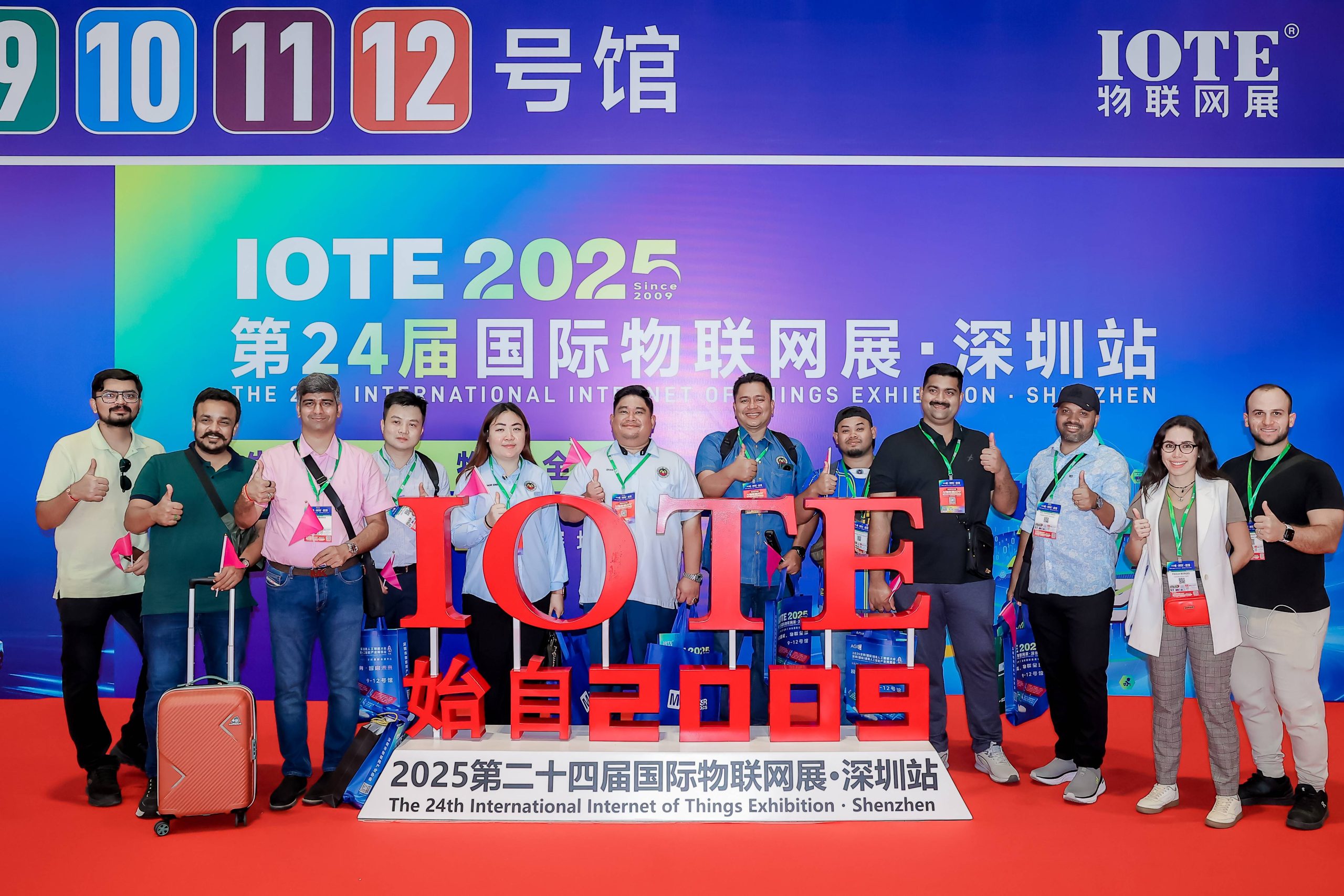
From Technology Development to Real-World Marine Applications
The discussion then shifted from equipment R&D and technological innovation to practical applications across the marine industry.
Yuan Wentian, Chairman of Zhuhai Kunyu Intelligent Technology Co., Ltd., delivered “From Experience-Based Fish Farming to Data-Driven Operations | How Physical AI Is Transforming Marine Ranching.”
Traditional offshore and deep-sea aquaculture operations rely heavily on human experience. Yuan introduced practical applications of Physical AI in marine ranching, demonstrating how intelligent technologies can help transform fisheries from experience-driven practices toward more data-driven, scientific, and efficient operations.
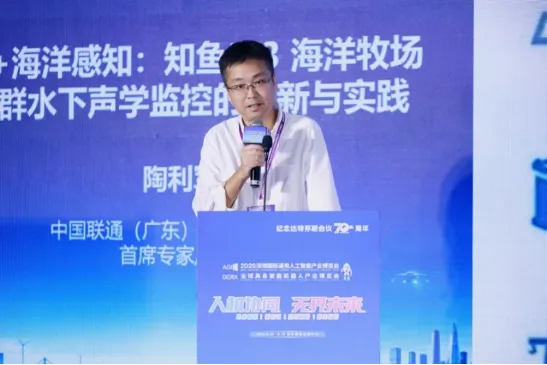
Dr. Tao Lijun, Chief Expert of the Smart Ocean Business Unit at China Unicom (Guangdong), presented “AI + Marine Sensing | Innovation and Applications of the Zhiyu M3 Underwater Acoustic Monitoring System for Fish Schools in Marine Ranches.”
The presentation demonstrated the practical application of underwater acoustic monitoring in marine ranching. By strengthening underwater sensing capabilities, the technology helps address a critical gap in the digital infrastructure required for intelligent marine ranch management.
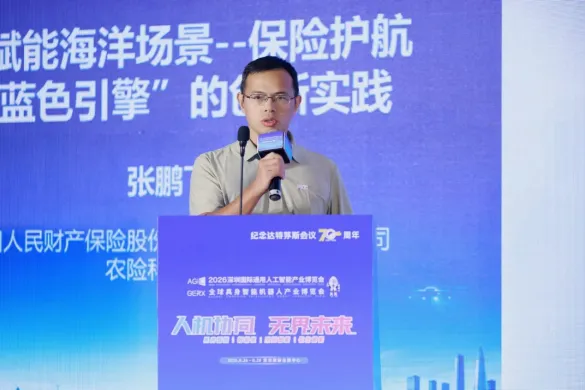
Zhang Pengfei, Chief Agricultural Insurance Technology Specialist at the Guangdong Branch of PICC Property and Casualty Company Limited, delivered “AI-Powered Marine Applications | Innovative Insurance Solutions Supporting the Blue Economy.”
From the perspective of risk management and financial protection, Zhang explored how insurance providers can integrate AI technologies into marine industry services to better identify and manage operational risks. Such innovations can strengthen the industry’s risk protection framework and provide a more secure foundation for the development of the blue economy.
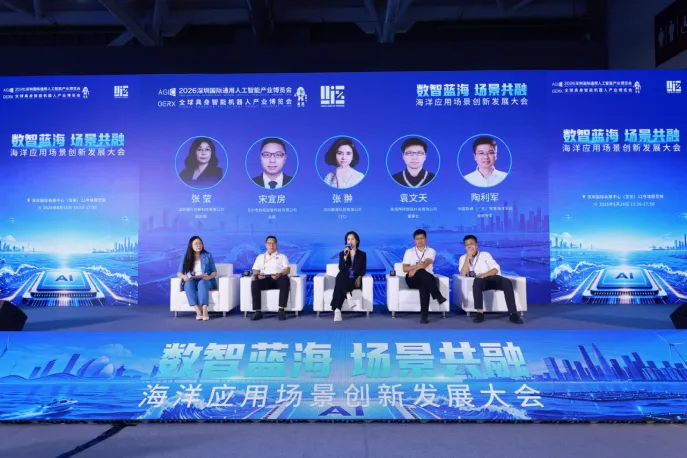
Roundtable Discussion | Moving Marine AI from Pilot Projects to Large-Scale Deployment
The conference concluded with a roundtable discussion on “From Pilot Projects to Large-Scale Deployment | Key Challenges and Pathways for Marine AI to Reach Its Industrialization Breakthrough.”
Research experts, equipment manufacturers, application operators, and telecommunications technology providers engaged in an in-depth exchange, bringing perspectives from across the marine industry value chain.
The discussion addressed key barriers to commercialization, including technology standardization, access to and sharing of application scenarios, cross-industry collaboration, and the development of viable business models. Through practical discussions and the exchange of industry experience, participants explored potential pathways for overcoming these challenges and accelerating the industrial adoption of marine AI.
Building a Collaborative Ecosystem for the Future of Marine AI
The AI + Ocean initiatives held on August 26 represent an important step in advancing China’s national AI Plus initiative, its maritime development strategy, and Guangdong’s ambition to become a leading marine province. They also form part of the Greater Bay Area’s broader efforts to foster new drivers of growth and innovation in the marine economy.
The morning conference released the AI + Ocean Collaborative Development Consensus and the AI + Ocean Application Scenario Demand List, establishing a framework for cross-regional industrial collaboration. The afternoon forum then focused on the practical challenges of technology deployment, creating a high-level platform for dialogue and collaborative innovation among government, industry, academia, research institutions, end users, and financial organizations.
Together, the two events helped build industry consensus, strengthen pathways for technology commercialization, and advance the development of a more integrated marine AI ecosystem—bringing fresh momentum to the high-quality development of the Guangdong–Hong Kong–Macao Greater Bay Area’s marine economy.
Looking ahead, participating organizations will use these two outcomes as a framework for action, deepening technological exchange and industrial collaboration across the Greater Bay Area. Through regular initiatives for opening application scenarios, matching supply with demand, and conducting joint R&D, stakeholders will work toward an integrated ecosystem connecting industry, academia, research, application, and finance.
The long-term objective is to accelerate the transition of marine AI from pilot demonstrations to large-scale applications, cultivate competitive marine AI industry clusters, and establish the Greater Bay Area as a leading model for developing new drivers of growth and innovation in China’s marine economy—contributing to the country’s broader maritime development goals.