
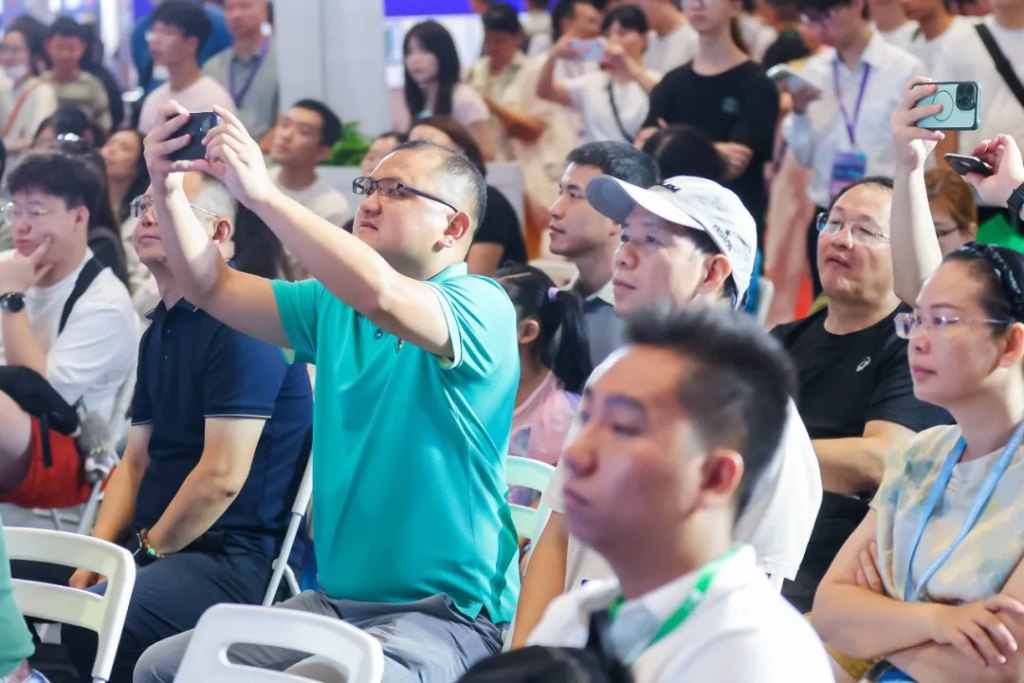
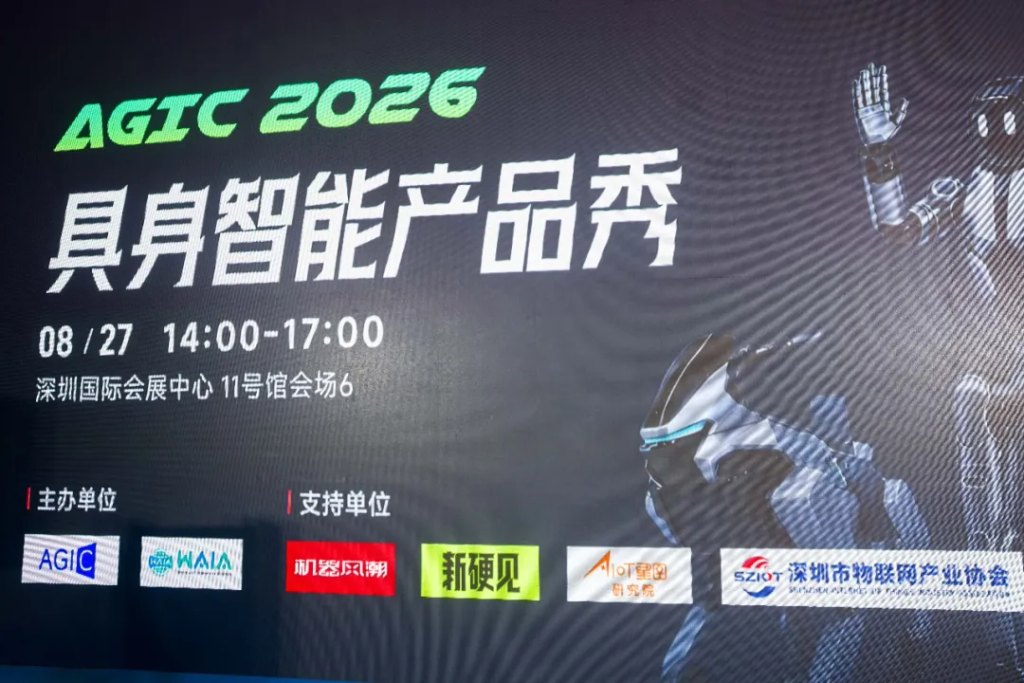
On the afternoon of August 27, 2026, the AGIC 2026 Embodied Intelligence Showcase took place at the Shenzhen World Exhibition & Convention Center (Bao’an). Organized by AGIC and the World AI and IoT Innovation Alliance (WAIA), with support from Machine Trend, New Hardware Insight, AIoT Star Map Research Institute, and the Shenzhen Internet of Things Industry Association, the event brought together approximately 200 industry professionals, business representatives, and ecosystem partners.
Participants explored the latest developments in embodied robotics, focusing on technological innovation, product design, commercial applications, and the evolution of the industry value chain.
The presentations covered a wide range of topics—from international market expansion and service robots in elderly care to multi-robot collaboration, industrial manufacturing, core robotics technologies, and intelligent management platforms. Rather than focusing solely on what robots might be capable of in the future, the showcase addressed a more practical question: As embodied intelligence moves into industry and the marketplace, how can robots find the right applications, deliver measurable value, and achieve scalable deployment?
Nine presentations from companies and experts across different segments of the domestic and international embodied intelligence ecosystem explored these challenges. Together, they offered a snapshot of an industry moving rapidly from technological development toward real-world applications.


Expert Insights and Industry Perspectives
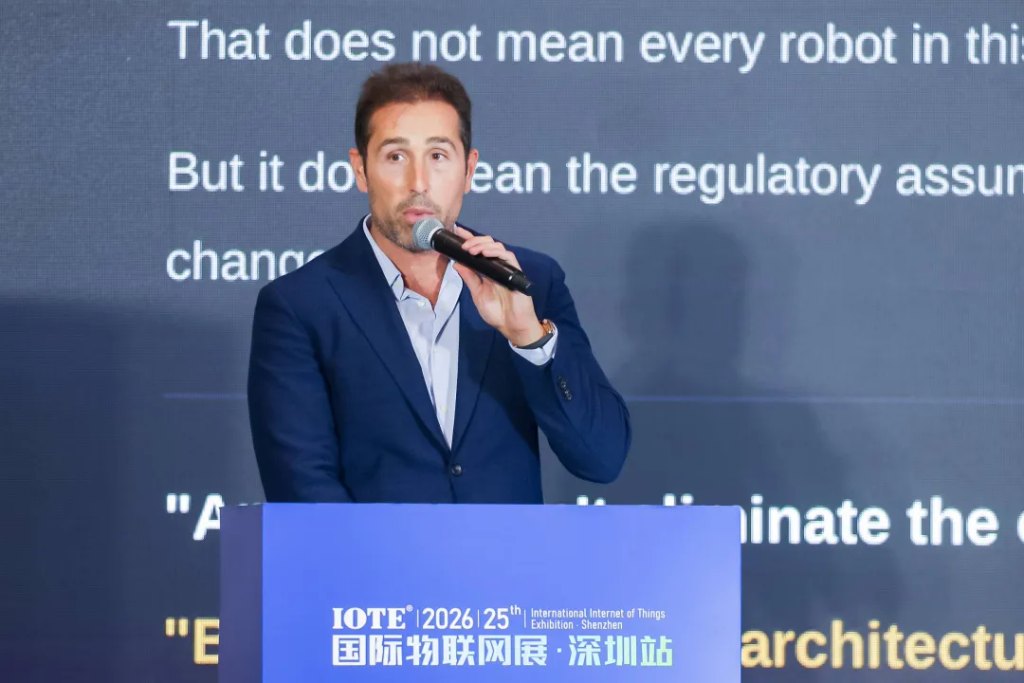
Presentation 1 | Entering the U.S. Market: What Chinese Robotics Companies Need to Know
Speaker: Joey Laham, Founder & CEO, Robotics & Companies Inc.
Joey Laham, a U.S.-based robotics industry professional, has long focused on the robotics sector, technology commercialization, and business collaboration between the Chinese and U.S. technology markets.
He noted that recent changes in U.S. regulatory requirements concerning advanced foreign-manufactured robotic equipment have made market entry more complex for Chinese robotics companies. The challenge is no longer simply about exporting products; it is about understanding and navigating the broader requirements of entering the U.S. market.
Chinese companies have significant strengths in hardware development, engineering, manufacturing scale, and supply chain capabilities. However, these advantages alone do not guarantee success in the United States. American customers are not simply buying robots—they are investing in solutions that address specific operational challenges, deliver measurable returns, and perform reliably over the long term.
Joey recommended that Chinese companies begin with local customer needs rather than their own product specifications. Potential opportunities include labor shortages, elderly care, healthcare, logistics, and hazardous industrial operations. He also emphasized the importance of demonstrating return on investment (ROI) rather than relying solely on technical specifications. Customers need to understand how much a robot can save them and how quickly the investment can pay for itself.
Localization is another critical factor. Companies need to adapt not only their products and websites, but also their software, documentation, pricing, contracts, customer service, and communication practices. The objective is to give U.S. customers the confidence that they are working with a company capable of serving them locally.
He also introduced the principle of the “first 10 robots”: rather than immediately pursuing sales of 1,000 units, companies should first deploy 10 robots in the most suitable customer environments. By building real-world case studies, demonstrating measurable ROI, and establishing reference customers, they can create a foundation for subsequent expansion.
In his view, China brings strong robotics manufacturing and supply chain capabilities, while the United States offers substantial market demand, capital, and an established enterprise customer base. The Chinese robotics companies most likely to succeed in the U.S. market will not necessarily be those with the most eye-catching robots, but those that understand customer needs, demonstrate business value, build trust, and provide effective local support.
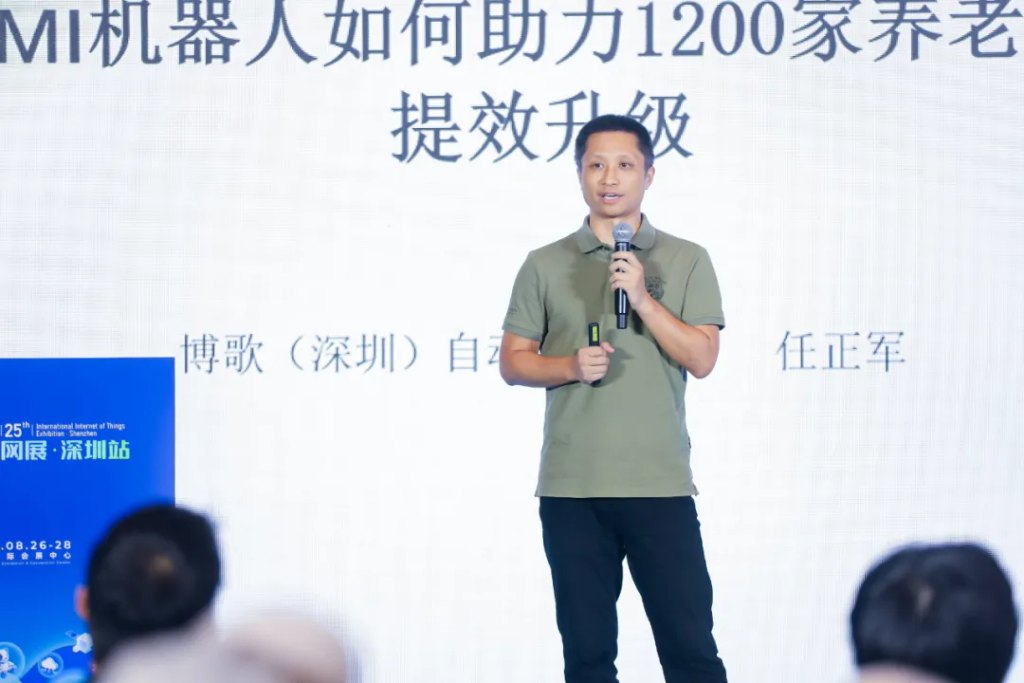
Presentation 2 | How temi Robots Are Helping 1,200 Senior Care Facilities Improve Operational Efficiency
Speaker: Ren Zhengjun, Vice President, ROBOCORE (SHENZHEN) AUTOMATION LIMITED
ROBOCORE focuses on general-purpose service robots, supporting software solutions, and customized services. Its applications span healthcare and elderly care, smart offices, cultural tourism, and education, with healthcare and elderly care representing key areas of deployment.
Ren Zhengjun shared ROBOCORE’s experience in deploying temi robots in healthcare and senior care environments. According to his presentation, the robots have been introduced to approximately 1,200 senior care facilities, with around 2,500 units deployed. Their applications continue to expand across healthcare and elderly care settings worldwide.
He argued that robots should not be burdened with unrealistic science-fiction expectations at the current stage of development. Rather than positioning them as companions or replacements for human caregivers, it is more practical to view them as intelligent automation tools that support institutions by taking on frequent and repetitive tasks.
In senior care facilities, temi robots can use autonomous navigation and visual perception to conduct fall checks, scheduled patrols, bed-exit monitoring, environmental monitoring, and remote visits.
For example, a robot can autonomously patrol different rooms and beds, identify potential falls through computer vision, and upload images of the scene for staff review. It can also periodically monitor environmental indicators such as ammonia and hydrogen sulfide, sending alerts to facility managers when abnormal readings are detected.
By performing these specific and measurable tasks, robots are moving beyond being demonstration devices for smart elderly care. They are increasingly becoming practical tools that contribute to the day-to-day operations of care facilities.
Presentation 3 | World Model-Driven Multi-Robot Collaboration: From Embodied Intelligence to Swarm Intelligence
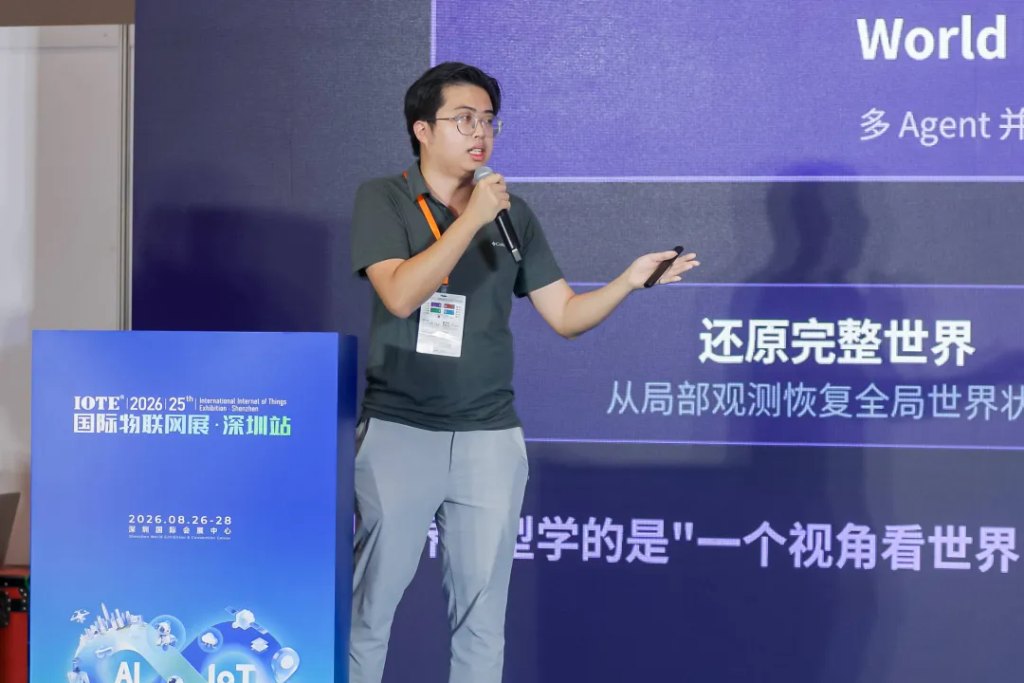
Speaker: Zheng Yongbin, Co-Founder, Superbrain Future (Shenzhen) Technology Co., Ltd.
Zheng Yongbin argued that the prevailing “one robot, one brain” approach has significant limitations. Each individual robot can only perceive part of its environment, while multiple robots must continuously exchange information through high-frequency communications. This can create isolated intelligence systems and drive up computing and communication costs as the number of robots increases.
Superbrain Future aims to address these challenges through a shared world model. By feeding multiple robots’ visual observations, status information, task instructions, and movement trajectories into a unified model, the system enables robots to share a common representation of the world. This shifts collaboration from constant information exchange toward more coordinated and intuitive cooperation.
Under this architecture, information observed by one robot can help another understand areas outside its direct field of view. Multiple robots can also use a shared representation of their environment to predict one another’s next actions.
According to the presentation, Superbrain Future has developed a swarm world-action model and achieved leading results in robotics manipulation-related evaluations, covering tasks such as grasping, object organization, and complex long-horizon operations.
Zheng further suggested that the future value of robotics lies not only in making individual robots smarter, but also in building a “robot network” that connects large numbers of machines. Data generated by different robots can be shared and used for mutual learning. As the number of connected robots grows, the amount of physical-world data available for model training can also increase, supporting continuous improvements in model capabilities.
Beyond terrestrial applications, Superbrain Future is also exploring the use of world models in space, with potential applications including satellite capture, payload assembly, in-orbit refueling, and the maintenance of space infrastructure.
Presentation 4 | The Cost Advantages and Mass-Production Potential of Tendon-Driven AI Robots
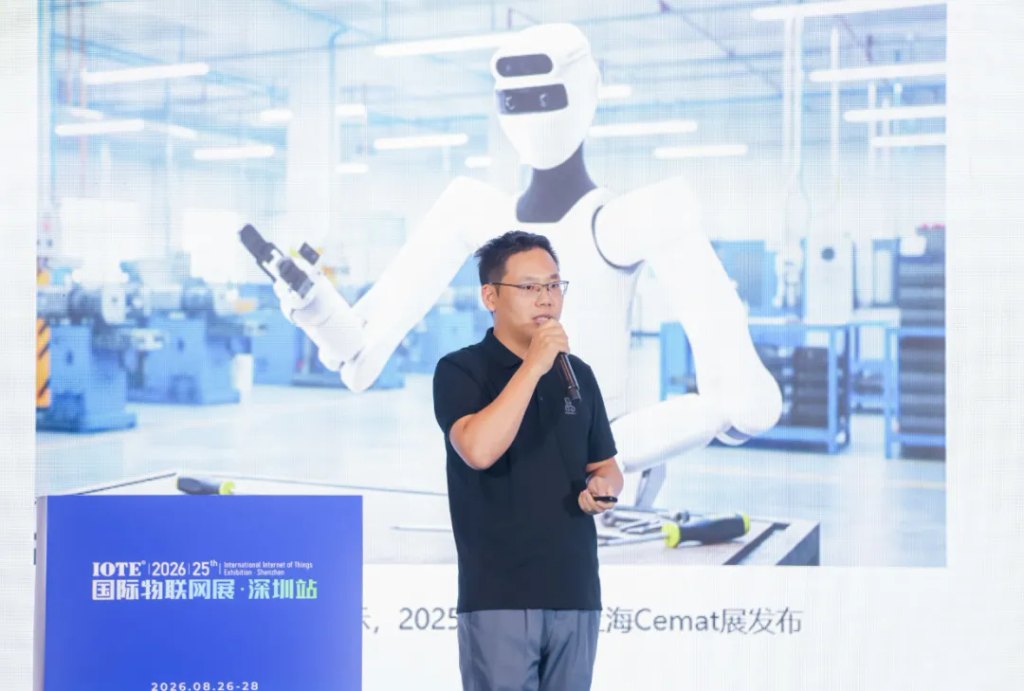
Speaker: Li Ziying, Sales Director, Astribot (Shenzhen) Artificial Intelligence Technology Co., Ltd.
One of Astribot’s key differentiators is its use of tendon-driven transmission systems in robot design. Compared with conventional joint-driven mechanisms, tendon-driven structures offer advantages in lightweight construction, compliance, and flexibility. When interacting with people, robots can use force sensing and other technologies to respond more gently, making this approach particularly relevant to human-robot interaction in homes, elderly care facilities, and retail environments.
More importantly, tendon-driven designs may also offer a new path toward reducing manufacturing costs and enabling mass production.
Li Ziying stated that Astribot achieved small-batch production of its tendon-driven robots in June 2025. The company has also established manufacturing facilities in Shenzhen and Jiangsu, with plans for production capacity at the tens-of-thousands-of-units level.
Its products are being introduced into industrial applications, unmanned retail, university research, data collection, and elderly care, with partnerships established across multiple industries.
Li emphasized that successful commercialization depends on more than what a robot can do. Customers also want to know what practical tasks it can perform after purchase and whether the economics make sense compared with human labor.
On the software side, Astribot has introduced Agent OS, which connects robots through interfaces such as voice, VR, WeChat, and Feishu. Combined with a “brain-plus-cerebellum” architecture, the system supports a complete workflow from task understanding and planning to action execution.
Robots continuously collect data while performing tasks such as making coffee, preparing breakfast, folding clothes, and providing retail services. This data can then be used to improve model training.
Li believes that as individual skills accumulate and become increasingly integrated, robots will progress from performing single tasks to executing more complex, long-horizon activities. Mass production and continuous data feedback will be essential to bringing AI robots into commercial use at scale.
Presentation 5 | Real-World Applications of Intelligent Care Robots
Speaker: Liu Jiang, Channel Business Director, Zuowei Technology (Shenzhen) Co., Ltd.
Liu Jiang noted that as China’s population continues to age, the care needs of older adults who are fully or partially dependent on assistance are becoming an increasingly pressing social issue.
Zuowei Technology focuses on this specialized market. Its product portfolio addresses six frequent care needs: toileting, bathing, transfers, walking, eating, and getting in and out of bed. The company has developed a range of intelligent care products spanning consumer-grade devices, medical-grade products, and medical devices.
Its intelligent toileting and hygiene care robots can automate processes for bedridden users, including waste collection, cleaning, warm-air drying, and disinfection. These functions help reduce the amount of time caregivers need to spend on routine personal care.
Its portable bathing equipment uses a negative-pressure water recovery system, allowing bedridden users to bathe without being transferred to a bathroom. Other products include multifunctional transfer machines, intelligent walking-assistance robots, exoskeletons, and intelligent feeding robots, designed to support people with different levels of care needs.
Notably, Zuowei Technology is not treating each robot as an isolated product. Instead, it is working toward an integrated ecosystem combining smart hardware, care robots, and an AI-powered elderly care and health platform.
In June this year, the company also unveiled two humanoid care robots, TianShu and TianJi, with the aim of enabling greater coordination between different care devices.
According to Liu, Zuowei’s intelligent care equipment has been introduced into more than 300 elderly care facilities and nearly 100 hospitals across China. The company has also worked with nearly 500 universities and colleges on training facilities and vocational education programs.
He believes that as demand for elderly care continues to grow, intelligent care equipment will evolve from individual products into integrated solutions serving institutions, households, and healthcare environments.
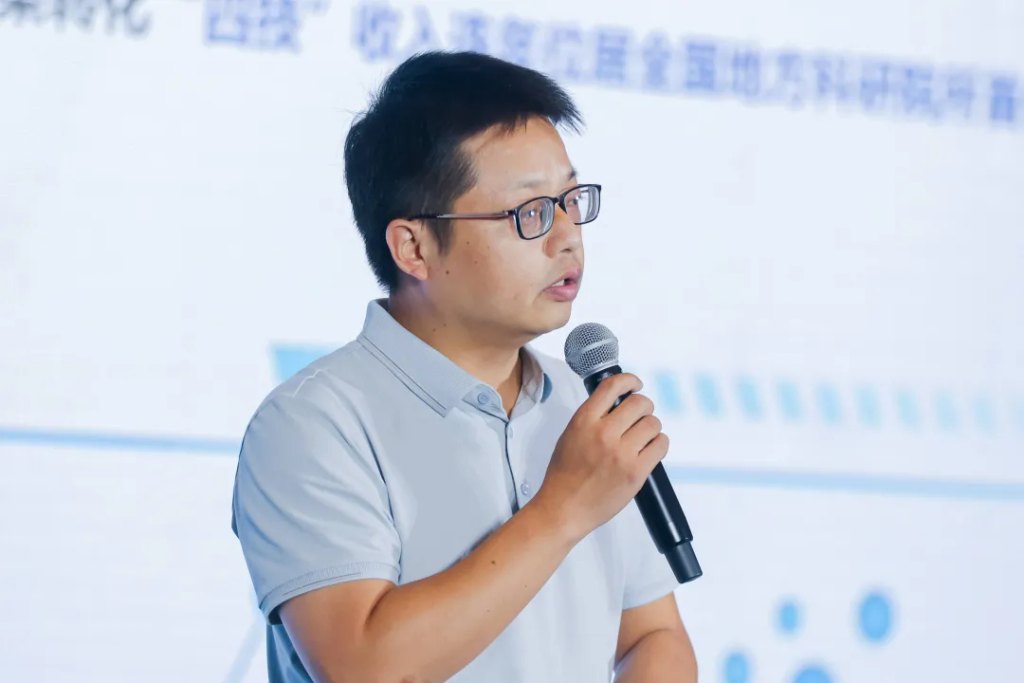
Presentation 6 | Core Technology R&D and Applications Across the Embodied Robotics Industry Chain
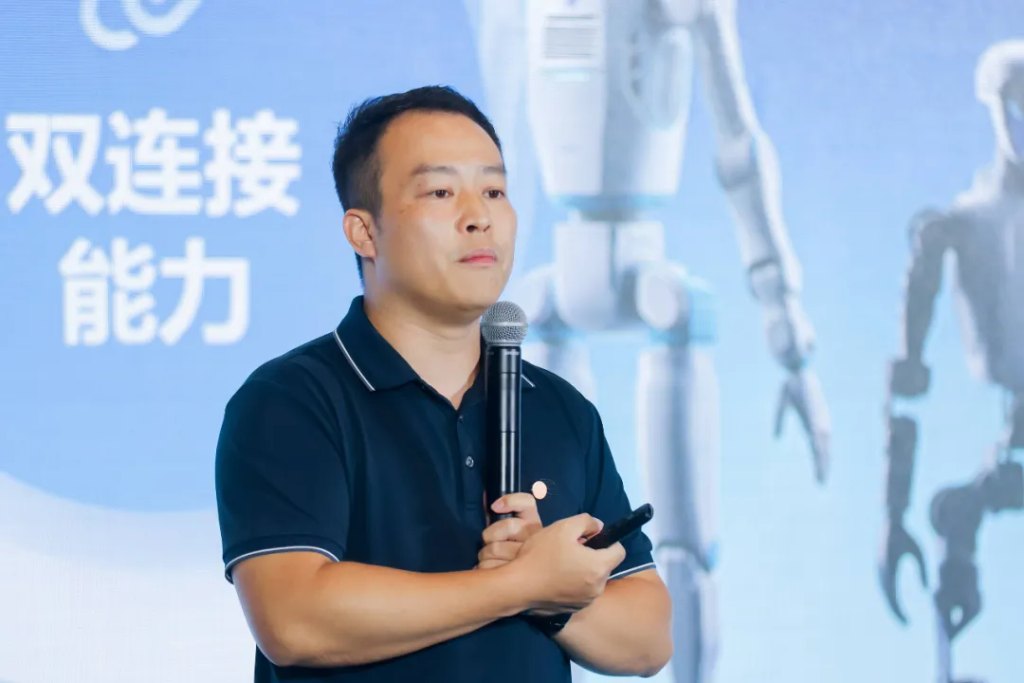
Speaker: Chen Junfu, Professor-Level Senior Engineer, Foshan Industrial Technology Research Institute, Guangdong Academy of Sciences
Chen Junfu explained that the Foshan Industrial Technology Research Institute goes beyond conventional laboratory research. It has developed an integrated commercialization model covering R&D, pilot-scale testing, incubation, investment, and industrialization, using market demand to guide technology development.
The institute is extending its work across the upstream robotics supply chain, covering materials, motors, reducers, sensors, controllers, joint modules, and complete robotic systems.
In materials, the institute is focusing on advanced materials such as silicon steel, amorphous alloys, and nanocrystalline materials to reduce motor losses and improve energy efficiency.
For drive systems, it is developing specialized motors, including coreless motors and frameless torque motors. Some of its ultra-high-speed coreless motor designs can reach speeds of up to 160,000 revolutions per minute.
The institute is also working on key robotic joint components, including harmonic and planetary reducers. Through parametric design and finite element analysis, its teams are optimizing gear structures, load-bearing capacity, and service life.
In terms of industrialization, the institute has incubated several robotics companies. Huanyu Intelligent focuses on robotic heads and emotional interaction, exploring applications in companionship and elderly care. Sangong Intelligent develops multi-degree-of-freedom robots for industrial production, including robotic systems for spot welding in automotive parts manufacturing. Some of its products have already entered real production workstations.
Chen emphasized that competition in the robotics industry will not be determined by complete machines alone. Core components and underlying technologies will be equally important.
The Foshan Industrial Technology Research Institute aims to provide robotics companies with integrated technical support, from materials and motors to key components and complete-system development, leveraging its presence across the industry value chain.
Presentation 7 | The Industrial Embodied Intelligence Brain: Bringing Embodied Robots into Factories at Scale
Speaker: Lu Yu, Co-Founder, TengenX.AI
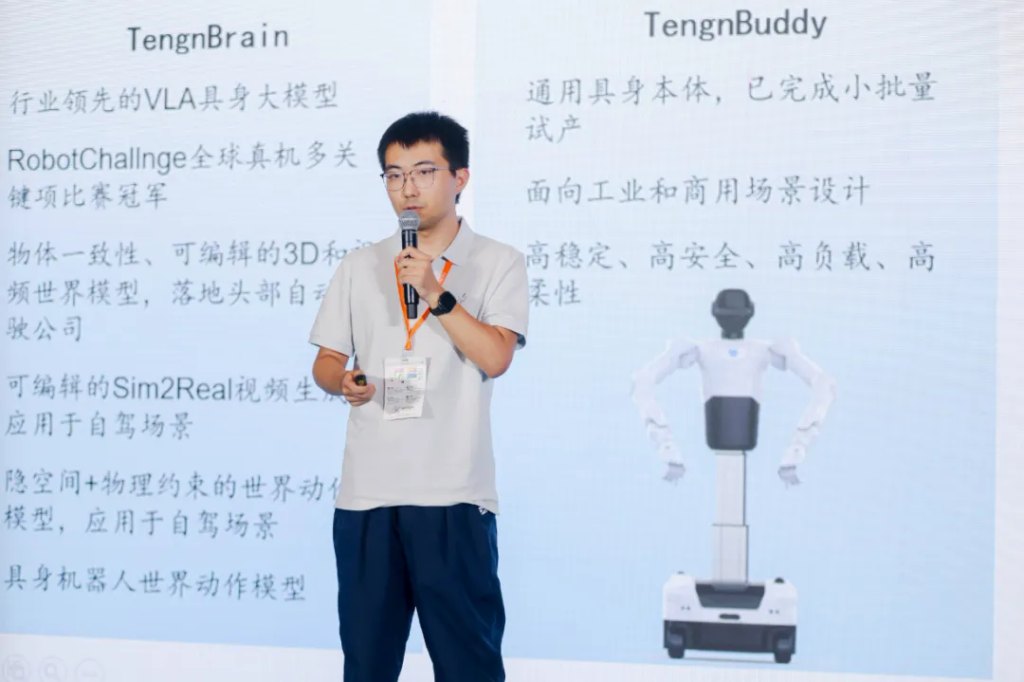
Lu Yu introduced Tianyuanxing Technology’s focus on industrial applications and its product strategy built around two key components: the embodied intelligence brain and the robotic platform.
Drawing on years of experience in industrial applications, the company has developed a technical workflow connecting data, models, and real-world deployment.
Its proprietary technologies include self-feedback VLA, Memory-VLA, world models, and world-action models. The self-feedback mechanism enables robots to retry or reset tasks when deviations occur, improving task success rates in complex environments. Memory-VLA incorporates memory capabilities to help robots understand task progress and reduce perceptual confusion in recurring scenarios.
For industrial applications, Tianyuanxing is focusing on flexible material handling and precision assembly, while expanding into active quality inspection and equipment patrols.
The company has reportedly established partnerships with major customers including CATL, Sunwoda, and China State Railway Group, and is conducting real-world testing in applications such as precision adhesive application, flexible material handling, and automotive component inspection.
Lu also presented the company’s fully self-developed TX01 industrial embodied robot. It features a four-wheel-drive, high-payload mobile platform with a maximum payload capacity of 150 kg. Supporting omnidirectional movement and coordinated dual-arm operation, the robot also uses replaceable batteries and an onboard high-performance computing controller to support 24/7 factory operations and deployment in private industrial network environments.
Lu believes that as data accumulation, model capabilities, and industrial applications reinforce one another, embodied intelligence will move beyond the limitations of conventional automation equipment. Robots will increasingly progress from executing fixed actions to understanding tasks and making autonomous decisions, accelerating their adoption across a wider range of factories.
Presentation 8 | Embodied Intelligence Collaboration and Management Platforms
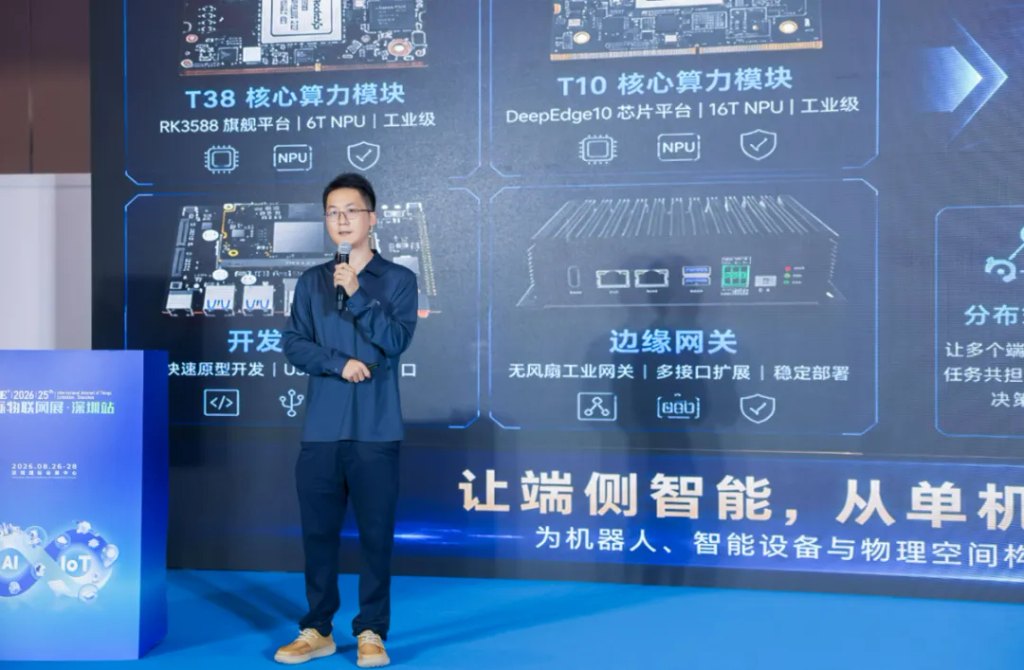
Speaker: Liu Shijun, CTO, Zhongyi Group
Liu Shijun argued that the future of embodied intelligence will extend across four interconnected layers: models, robotic platforms, physical environments, and organizational collaboration.
Robots need capabilities in computer vision, multimodal AI, and vision-language-action (VLA) models. They must also interact with IoT infrastructure such as access-control systems, elevators, and cameras, while coordinating with people and other robots according to the requirements of each task. Only then can a complete task-execution loop be established.
Drawing on years of experience in the IoT sector, Zhongyi Group aims to move beyond conventional device connectivity toward intelligent connectivity. Under this approach, cameras can serve as perception modules for robots, while different robots and smart devices within a physical space can be managed and coordinated through a unified system.
The company has reportedly established partnerships with more than 300 robotics companies and developed products covering multi-robot orchestration, spatial management, and capability discovery.
In practical applications, Zhongyi Group has participated in projects including the Beijing E-Town Humanoid Robot Innovation Center, cultural tourism applications in Hangzhou’s Wensan Street area, and building-related projects in Shanghai. These projects provide unified collaboration and dispatching capabilities for different types of robots.
Liu believes that as robots enter more industries, the market will need more than individual machines operating independently. It will require an “organizational intelligence” platform that enables different robots, smart devices, and people to work together efficiently—taking embodied intelligence from isolated capabilities toward coordinated, large-scale deployment.
From Robotics Innovation to Real-World Value
Whether in service applications such as elderly care and healthcare, industrial embodied intelligence on factory floors, multi-robot collaboration powered by world models, or the cost and production advantages of tendon-driven robots, companies across the industry are working to answer the same fundamental question: How can robots enter the real world and deliver lasting value?
From technological breakthroughs to commercial products, from single-robot intelligence to swarm collaboration, and from validating individual applications to scaling deployment across homes, care facilities, and factories, the embodied intelligence industry is evolving rapidly.
The AGIC 2026 Embodied Intelligence Showcase offered a glimpse into this transformation. Robots are moving beyond the realm of future-facing concepts and becoming practical products that can be seen, used, tested, and evaluated in real-world environments.
As the industry continues to mature, the ability to connect technology with real application needs—and turn innovation into measurable business value—will be central to the next stage of embodied intelligence development.