
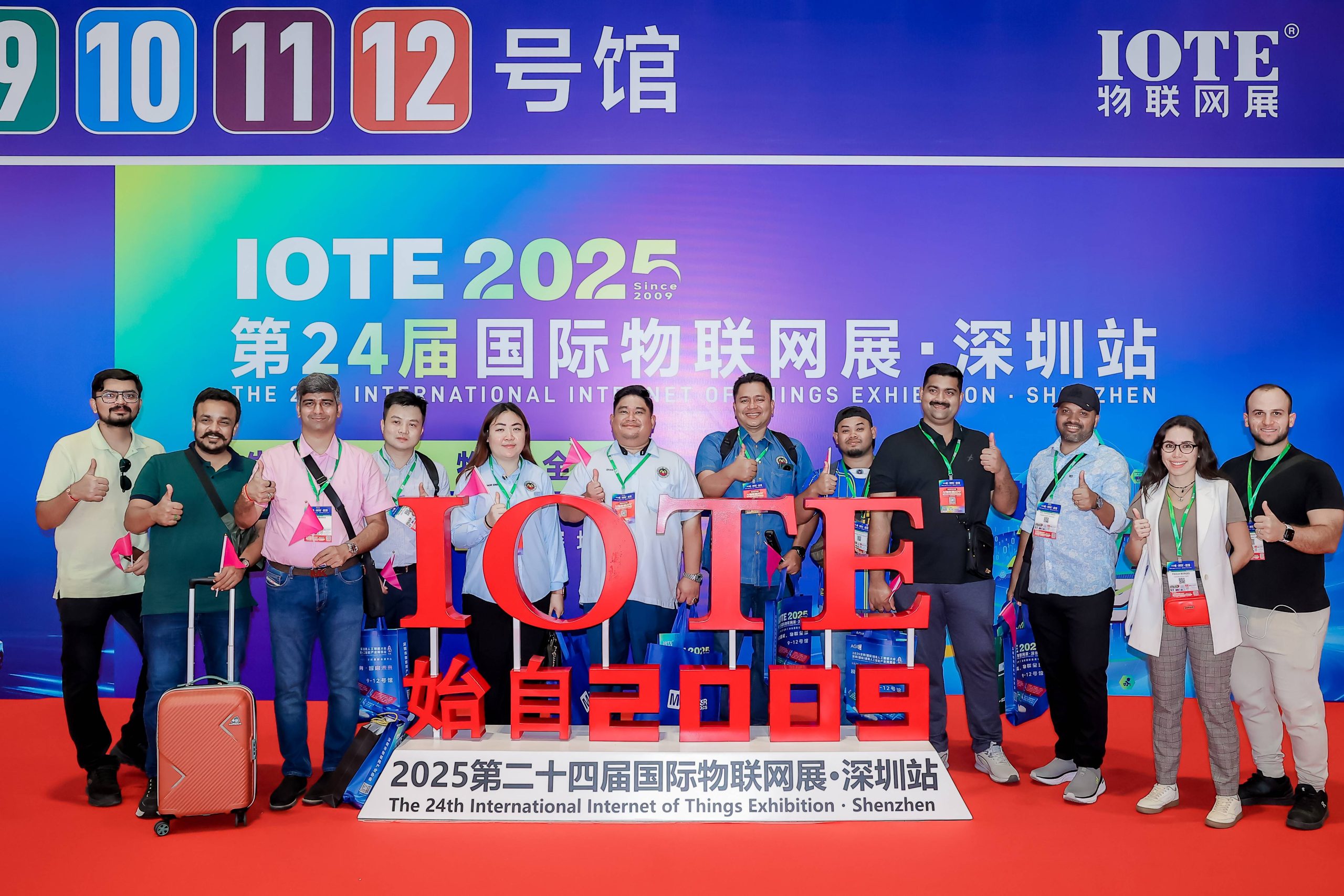
From “Computing Power Competition” to “Token-Based Measurement” | Global AI Moves Toward a More Inclusive, Distributed and Sustainable Model
On the afternoon of August 26, the 2026 Token Economy Development Forum was held at the Mangrove Hall of the Shenzhen World Exhibition & Convention Center (Bao’an). Centered on the theme “Reshaping AI Business Models through the Token Economy,” the conference featured two major sessions—the Token Economy Innovation & Development Forum and the Token Industry Collaboration & Development Forum—bringing together academicians, experts, business leaders, and industry representatives from China and around the world to explore the pathways for the Token economy to move from concept to large-scale adoption.
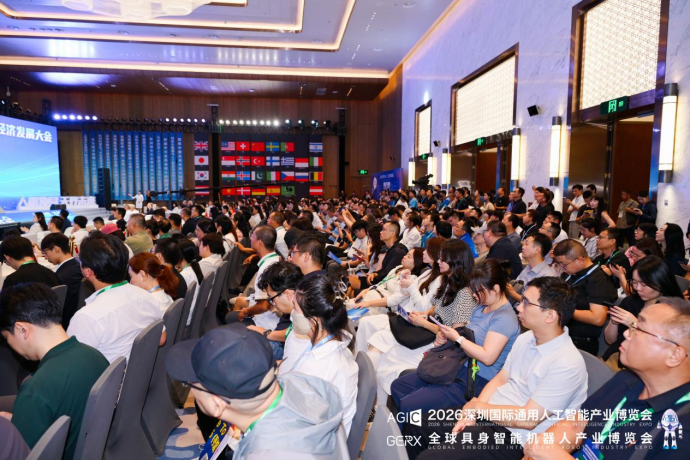
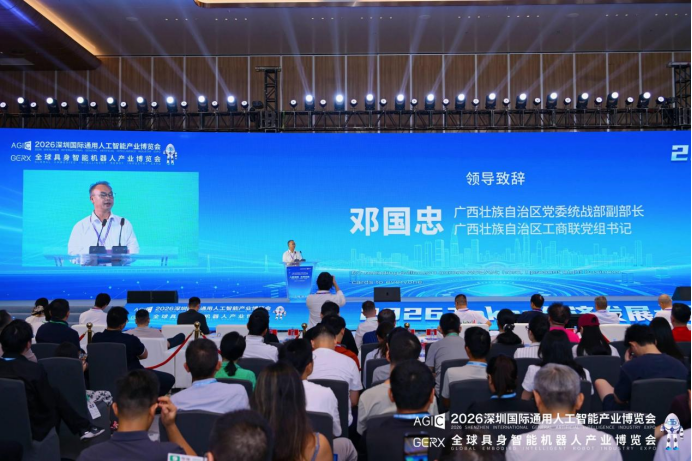
Opening Remarks | A New Chapter for the Token Economy
Le Yucheng, former Vice Minister of the National Radio and Television Administration, and Deng Guozhong, Deputy Director of the United Front Work Department of the CPC Guangxi Zhuang Autonomous Region Committee and Secretary of the Party Leadership Group of the Guangxi Federation of Industry and Commerce, delivered opening remarks.
They shared perspectives on the healthy development of the Token economy from the angles of international communication and open collaboration, as well as regional coordination and industrial enablement, setting the stage for deeper exploration of the emerging AI economic model.
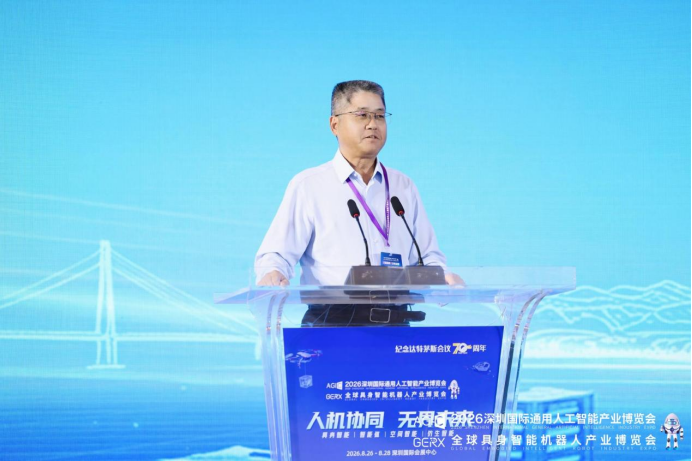
Session One | Token Economy Innovation & Development — From Chip Foundations to Accessible AI
Yang Jiesheng, Member of the Singapore Academy of Engineering, Fellow of the Singapore National Academy of Sciences, and Chair Professor at Tianjin University, delivered a keynote titled “AI × Integrated Circuits | The Next Industrial Revolution,” examining how the deep convergence of AI and semiconductors is reshaping the technology landscape.
Li Congzhi, General Manager of Tencent Cloud Enterprise Business in Shenzhen and Hainan, presented “AGI in Action | Tencent AI Accelerating Digital and Intelligent Transformation Across Industries,” showcasing how Tencent’s full-stack AI capabilities are being deployed at scale across government services, healthcare, manufacturing, and other sectors.
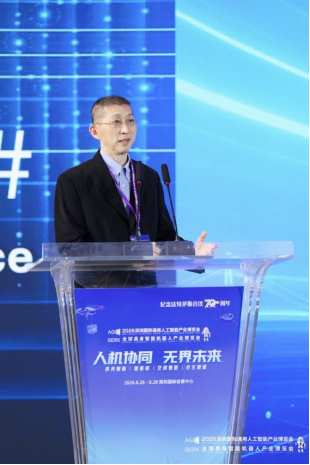
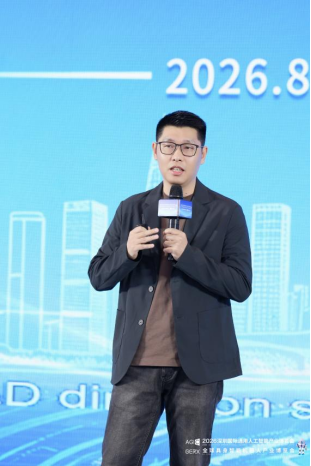
Pang Xiaogang, Vice President of Strategic Development at Alibaba Cloud Intelligence, presented “The Rise of the Token Economy | Alibaba Cloud’s Full-Stack Approach in Practice,” outlining Alibaba Cloud’s full-stack Token economy strategy, spanning computing infrastructure and model services to Tongyi large models and industry-specific AI agents.
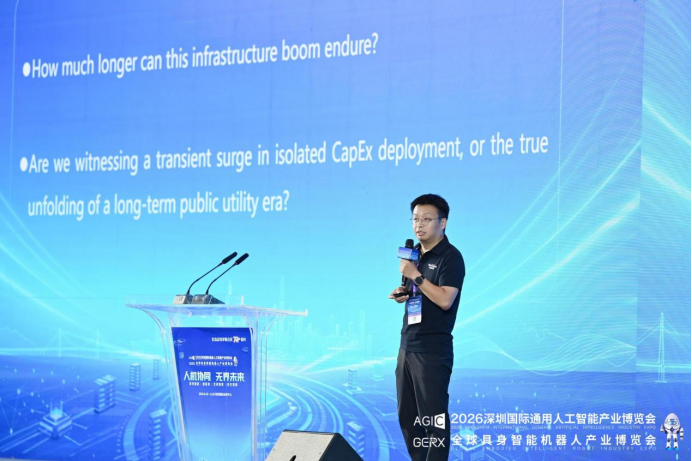
Huang Li’ang, Co-Founder and CPO of Shenzhen Gongji Technology Co., Ltd., shared “The Future of Token Infrastructure | Cyberpunk or a Commons for All?”, offering insights into the company’s work in Token infrastructure and computing resource orchestration.
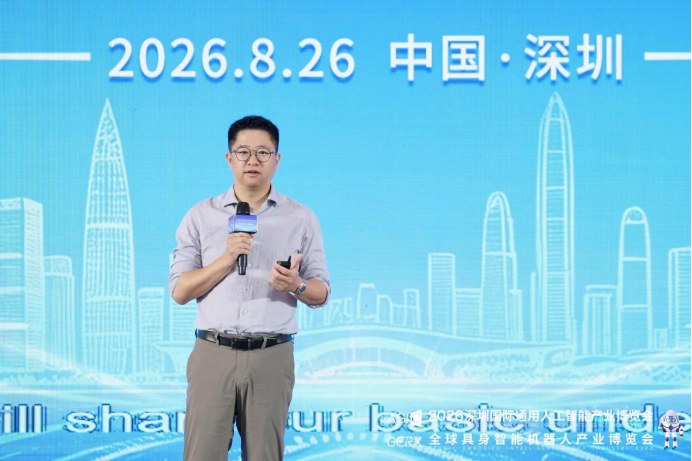
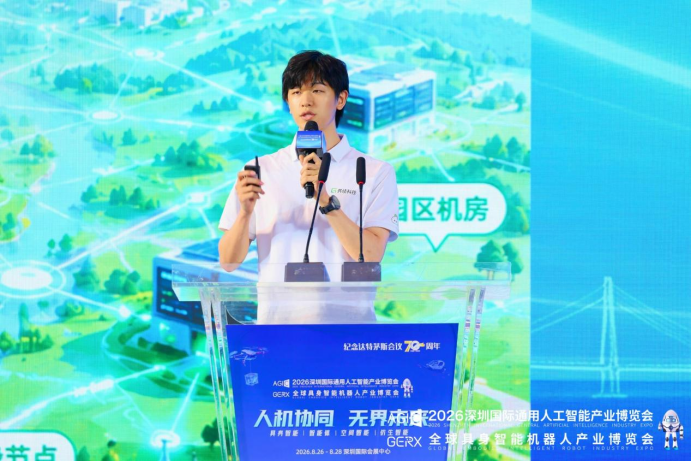
Duan Fengyuan, Chairman & CEO of AIKE Intelligence Group, concluded the first session with “From Human API to JovaAI Nomos | Collective Intelligence Moves Toward Distributed AGI,” outlining the evolution of distributed collective intelligence from a conceptual vision toward engineering implementation.
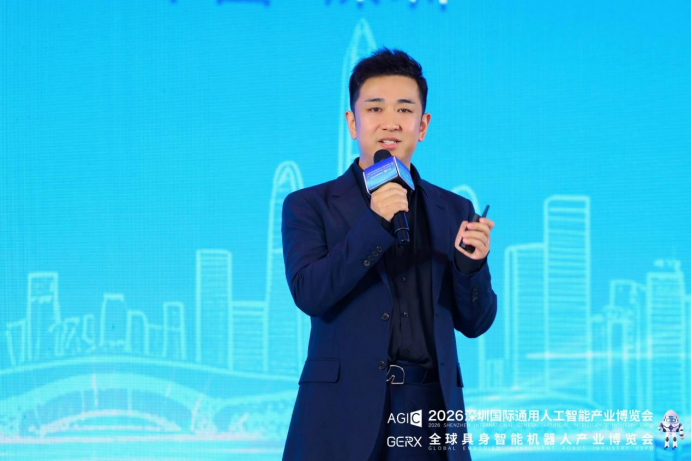
Session Two | Token Industry Collaboration & Development — From Green Infrastructure to Global AI Infrastructure
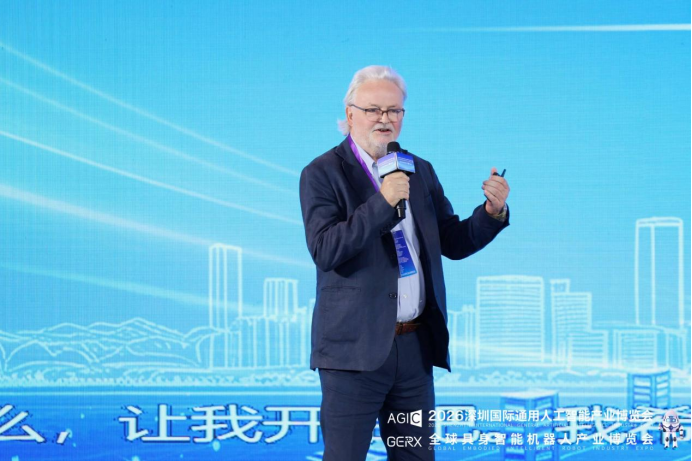
The Token Industry Collaboration & Development Conference opened with a keynote by Dr. Daniel Stauffacher, President of the Foundation for Peaceful Use of Information Technology and former Swiss Ambassador. His presentation, “Artificial Intelligence and Its Threats to Sustainable Development and an Era of Peace,” examined the dual impact of AI from the perspective of global governance.
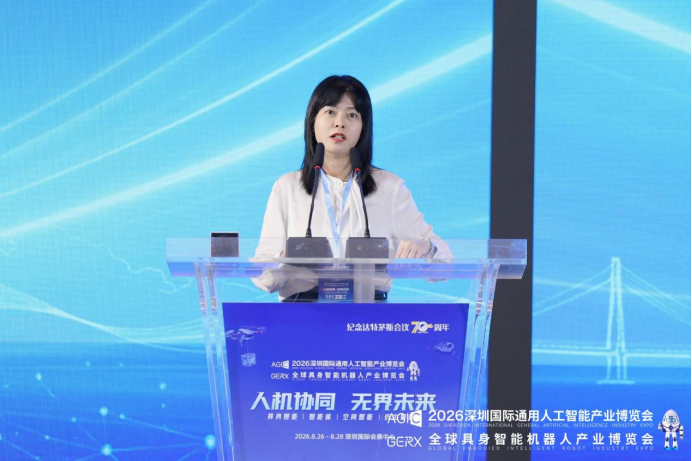
Huang Ying, Vice President of the Token Business Group at Runjian Co., Ltd., presented “Green Computing as the Foundation, Token as the Engine | Reshaping AI Service Delivery with Full-Stack Capabilities,” proposing a new AI service model built on green computing infrastructure and Token-based resource allocation.
Xu Jiang, Head of International Business at Beijing Sugon Information Industry Co., Ltd., presented “Token as the Unit of Measurement | New Global Infrastructure for the AI Era,” exploring the significance of Token as a common unit of measurement in the AI economy and sharing insights from Sugon’s global expansion.
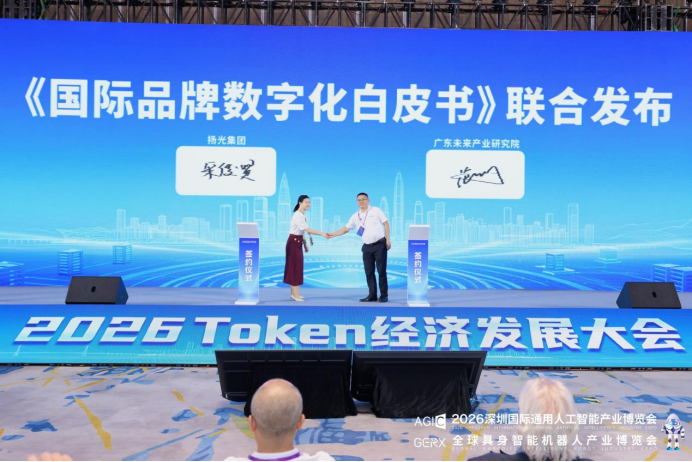
Song Junxian, Chairman of Yangguang Group, unveiled the Digitalization White Paper for International Brands and participated in a signing ceremony, providing a standardized framework for deeper integration between the Token economy and the global expansion of brands.

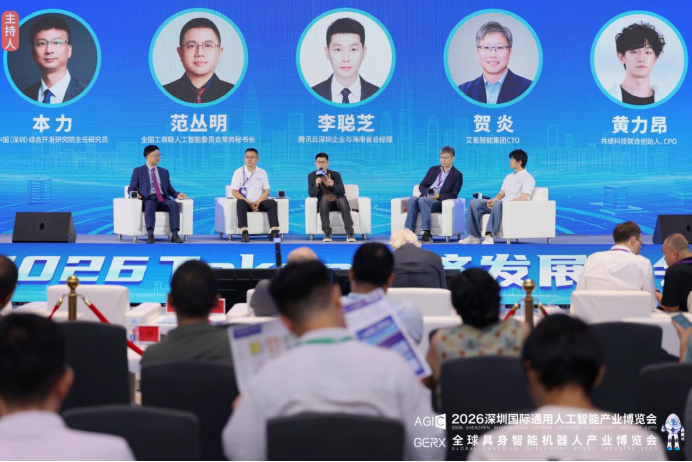
Roundtable | How the Token Economy Is Reshaping AI Business Models
The conference concluded with a roundtable discussion moderated by Ben Li, Chief Researcher at the China Development Institute (Shenzhen).
Fan Congming, Executive Secretary-General of the AI Committee of the All-China Federation of Industry and Commerce and Executive Vice Chairman of the Shenzhen Artificial Intelligence Industry Association; Li Congzhi, General Manager of Tencent Cloud Enterprise Business in Shenzhen and Hainan; He Yan, CTO of AIKE Interconnect Intelligent Technology (Shenzhen) Co., Ltd.; and Huang Li’ang, Founder & CPO of Shenzhen Gongji Technology Co., Ltd., engaged in an in-depth discussion on “How the Token Economy Is Reshaping the Value of AI Infrastructure and Creating New Industrial Business Models.”
The discussion provided a comprehensive roadmap for the Token economy as it evolves from a “laboratory concept” into an industrial-scale business model.
From “Competing on Computing Power” to “Measuring Intelligence in Tokens”
At the heart of the Token economy is a fundamental shift in how AI value is measured—from competing on FLOPS to evaluating the cost and efficiency of each Token.
The conference presented a comprehensive picture of the Token economy across six dimensions: chip infrastructure, orchestration algorithms, green computing, distributed intelligence, global infrastructure, and brand digitalization.
As Tokens increasingly become a common language for the AI economy, every unit of computing resources—from inference and resource allocation to AI interactions—can be measured more precisely, allocated more fairly, and utilized more efficiently.
This transition marks a broader shift in the AI industry: from simply expanding computing capacity to building a more measurable, efficient, sustainable, and globally connected AI economy.