
Against the backdrop of China’s national strategy to deepen the integration of the digital and real economies, AI and IoT technologies are advancing at an unprecedented pace, while cross-industry convergence continues to accelerate.
China’s AIoT industry has moved well beyond its early stage of isolated technology pilots and fragmented deployments. It is now entering a critical phase of high-quality transformation, characterized by the restructuring of technology architectures, the reshaping of industry ecosystems, and the large-scale adoption of intelligent applications.
The industry’s focus is shifting from basic device connectivity and data collection toward a new stage defined by cloud-edge-device collaboration, integrated air-space-ground networking, and the deployment of cognitive intelligence. AIoT is evolving toward deeper intelligence, three-dimensional connectivity, and greater impact on the physical economy.
At the same time, deeper structural barriers to large-scale and high-quality growth are becoming increasingly visible. Limitations in underlying communications technologies, imbalances between computing demand and supply, constraints on edge deployment, fragmented ecosystems across brands and application scenarios, high implementation costs, and unclear paths to commercialization continue to challenge the industry. These issues are compounded by fragmented standards, highly diverse application scenarios, and data-security barriers, significantly slowing the transition of AIoT innovations from laboratories to large-scale industrial deployment.
On August 26, the 2026 Global AI & IoT Innovation Summit, the main concurrent summit of IOTE 2026 – the 25th International Internet of Things Exhibition, successfully concluded at the Shenzhen World Exhibition & Convention Center. Focusing on the deep convergence of AI and IoT, the summit brought together experts and practitioners from industry, academia, research, and application. Through in-depth discussions across nine core industry topics, the event delivered forward-looking perspectives, technology solutions, and real-world implementation insights to the AIoT industry at a pivotal moment of transformation.
The discussions spanned the entire value chain—from underlying technologies and next-generation terminals to commercial applications and space-based connectivity—creating a comprehensive exchange of ideas across the AIoT ecosystem.
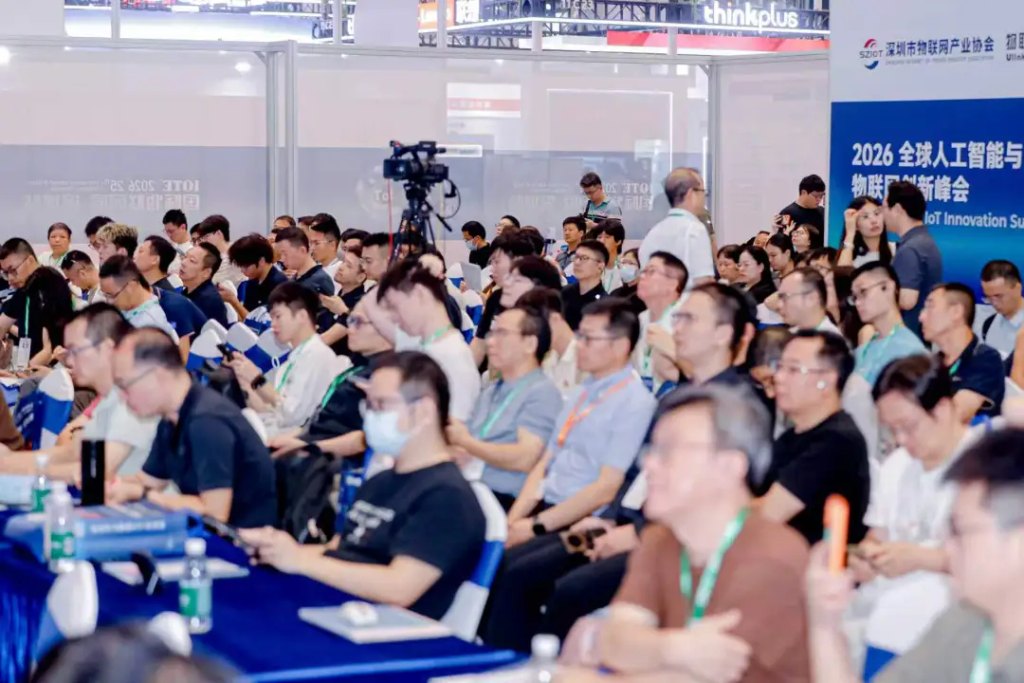
The forum was hosted by the Shenzhen Internet of Things Industry Association (SZIOT) and the IOTE International IoT Exhibition Organizing Committee, and organized by Ulink Media. The event was strongly supported by Diamond Sponsor Ant Digital Technologies, Gold Sponsor Guangzhou Techphant Technology Co., Ltd., and Special Sponsors ZKTeco, TE Connectivity, and Beijing Guodian High-Tech Technology Co., Ltd.
More than 500 senior executives from leading companies, academic and research experts, and industry practitioners attended the summit. With a strong focus on real-world industry challenges, the event balanced technological foresight with commercial applicability, creating a high-value platform for dialogue, knowledge exchange, and business connections aimed at addressing industry bottlenecks and identifying emerging opportunities.
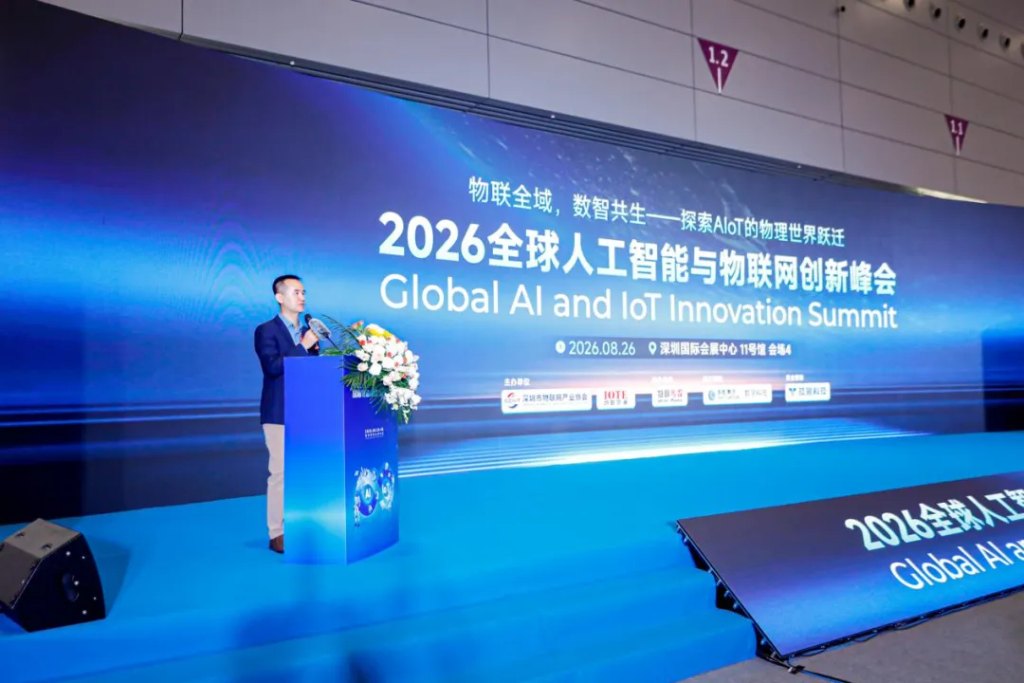
At the opening of the forum, Yang Weiqi, Executive Chairman of the Shenzhen Internet of Things Industry Association, delivered a keynote address.
He noted that the IOTE International IoT Exhibition has grown into one of the world’s leading IoT trade shows, with more than 20,000 overseas registered guests for this edition. According to Yang, cross-disciplinary technology convergence has become a defining trend, with innovations such as passive cellular IoT, multi-radio technology integration, and micro-energy harvesting accelerating toward commercial deployment.
He emphasized that the convergence of AI and IoT represents one of the most significant transformations taking place across the industry. With foundation models reshaping the capabilities of connected hardware, IoT devices are entering a new era of architectural and product innovation. However, closer collaboration across the value chain remains essential.
The association, he said, will continue to build a stronger industry ecosystem and organize a wide range of online and offline activities to facilitate connections between technology providers and market demand.
Yang also announced that in 2027, the association will work with a number of global industry organizations to launch WITEX – World Intelligent Technology Exhibition in Düsseldorf, Germany. Focusing on end-to-end Physical AI solutions, WITEX will serve as a platform for China-Europe AIoT collaboration and support Chinese technology companies in expanding into international markets.
He concluded by expressing his expectations for deeper discussions on emerging areas including multi-agent systems and embodied intelligent robots, calling on industry stakeholders to work together toward a new era of globally connected intelligence.
The forum’s content unfolded progressively—from ecosystem development and industry outlooks to advances in communications technologies and computing architectures, and further into brain-computer interfaces, intelligent terminals, embodied intelligence, and space-based IoT.
Across these topics, speakers offered a multidimensional perspective on the technologies and business models driving the next stage of AIoT development.
01 | Opportunities and Growth for IoT in the Digital Era
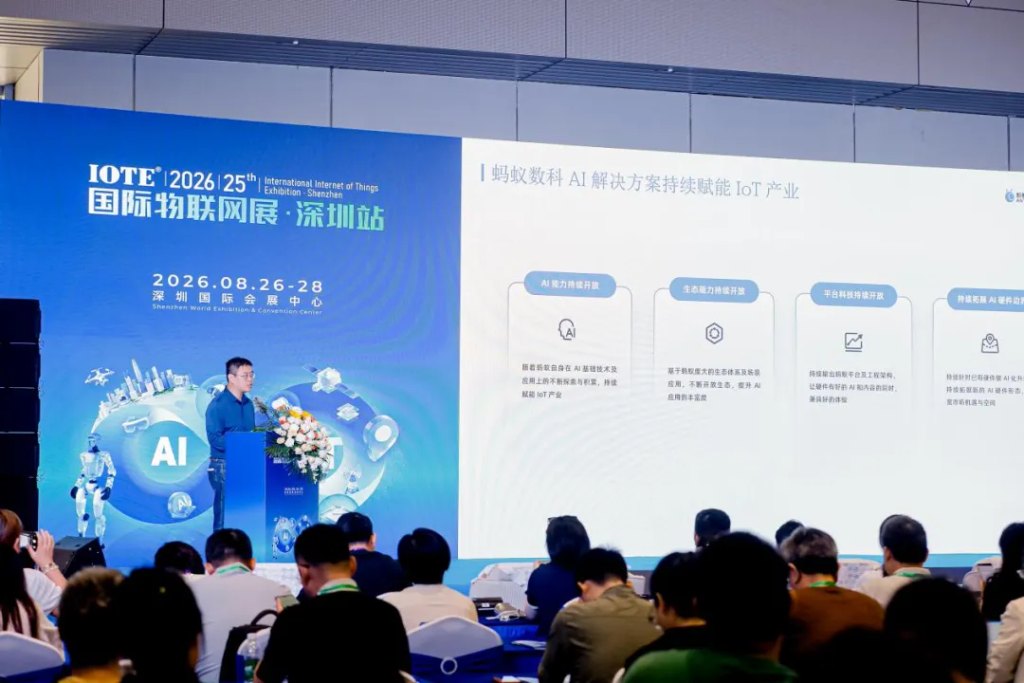
Lu Weiyi, General Manager of IoT Ecosystem Development, China Business at Ant Digital Technologies, delivered a keynote titled “Opportunities and Growth for IoT in the Digital Era.”
He shared Ant Digital Technologies’ technology foundations, multi-scenario AIoT applications, and perspectives on ecosystem development.
Lu explained that Ant Digital Technologies builds a trusted, intelligent, and collaborative technology engine around four core capabilities: blockchain, artificial intelligence, privacy computing, and AIoT. The company provides integrated software-and-hardware solutions across four key areas: IoT + Payments, IoT + AI, IoT + Intelligent Risk Management, and IoT + Blockchain.
In IoT + Payments, solutions including payment chips, tap-to-pay experiences, and offline transit QR codes are being integrated into wearable devices such as smartwatches and student cards.
In IoT + AI, applications including AI glasses, AI toys, and all-in-one AI digital human devices have been deployed across scenarios including cultural tourism, employment services, and traditional Chinese medicine and wellness. These applications are helping hardware manufacturers evolve from traditional product suppliers into broader service providers.
On the industrial side, Ant Digital Technologies’ digital key solutions are enabling intelligent upgrades for two-wheeled vehicles. The integration of blockchain and IoT has already connected more than 16 million trusted devices to blockchain-based systems. In applications including shared two-wheeler charging stations and new-energy battery swapping, trusted data flows for physical assets are helping partner companies secure financing worth hundreds of millions of yuan while reducing financing costs.
Lu noted that the AI wave is driving a new cycle of innovation in intelligent hardware, with significant opportunities emerging in areas such as the silver economy and emotional companionship. Ant Digital Technologies will continue to open up its AI, ecosystem, and platform capabilities, working with industry partners to build a trusted IoT ecosystem and bring digital technologies deeper into the real economy.
02 | AI + IoT: Industry Trends and Key Application Scenarios
Shao Xiaojing, Senior Engineer at the Data & Intelligence Business Department of the Institute of Industrial Internet and IoT at the China Academy of Information and Communications Technology (CAICT), delivered a keynote titled “AI + IoT: Industry Trends and Key Application Scenarios.”
Drawing on national policy directions and global industry data, Shao provided a systematic analysis of the transformation pathways and application opportunities emerging from the convergence of AI and IoT.
She noted that, driven by policies including China’s Action Plan for Promoting Innovative Development of the IoT Industry (2026–2028), AI is pushing IoT beyond large-scale deployment toward a new phase of intelligent transformation.
As global IoT connectivity continues to expand, data generation is shifting from a sensing-driven model toward a computing-driven model, while AI agents are emerging as a major new area of industry development.
Shao identified smart cities, smart energy, and smart agriculture as three key application areas.
In smart cities, AI is helping cities move from digital twins toward coordinated, city-wide governance, enabling automated event detection and closed-loop response.
In smart energy, AI is supporting dynamic, adaptive balancing across generation, grid, load, energy storage, and charging.
In smart agriculture, AI is helping move agricultural operations beyond experience-based cultivation toward integrated air-space-ground sensing and increasingly autonomous operations.
Shao also highlighted China’s growing efforts in international standardization. Through initiatives including ITU-T SG20 and the FGAI4SSC Focus Group, research and standardization work is progressing in areas such as AI agents, distributed IoT, the low-altitude economy, and smart agriculture.
She emphasized that the industry needs a positive feedback loop between market demand, technology development, and standards. By connecting innovation with real-world deployment and enabling AI and IoT to reinforce each other, the industry can unlock the next phase of high-quality growth in the intelligent connected world.
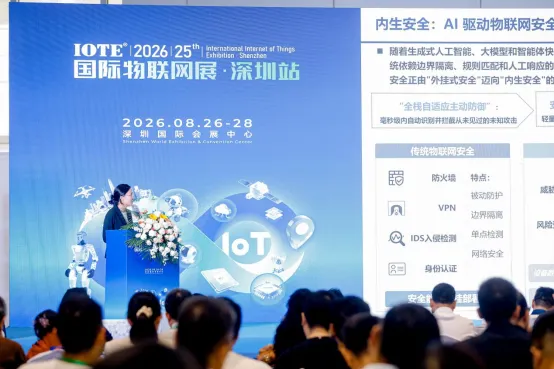
03 | A Network Agent Architecture for Personalized User Services
Professor Yang Yang, Director of the Shanghai HKU Education Centre, delivered a keynote on “A Network Agent Architecture for Personalized User Services.”
Focusing on user-centric digital services and cloud-edge-device collaborative multi-agent technologies, Professor Yang explored the technical challenges and emerging solutions for intelligent services in the era of foundation models.
He highlighted several limitations of purely cloud-based multi-agent architectures. Centralized deployment can result in high costs and substantial power consumption, while also raising concerns around privacy, service latency, and quality of service.
To address these challenges, his team developed the NASCA network-agent architecture for customized services, connecting intelligent agents across four layers—devices, edge nodes, fog nodes, and the cloud—to establish an end-to-end workflow spanning sensing, resource allocation, guidance, and execution.
The architecture enables computing resources to be dynamically allocated according to demand while balancing privacy protection, latency control, and service quality.
During the forum, Professor Yang demonstrated a self-developed AI-native wireless network testing platform and conducted real-world tests on two types of tasks: compute-intensive image-based mathematical problem solving and latency-sensitive robotic-arm control.
The experimental results showed that compared with purely cloud-based approaches, NASCA can achieve a better overall balance across privacy risk, total power consumption, token usage, and response latency.
Looking ahead, he emphasized that intelligent services need to integrate sensing, storage, communications, computing, and control rather than simply pursuing larger model sizes. A hybrid cloud-edge-device multi-agent architecture designed around users’ multidimensional experience requirements will be essential for applications such as AR/VR, mobile finance, and embodied robots.
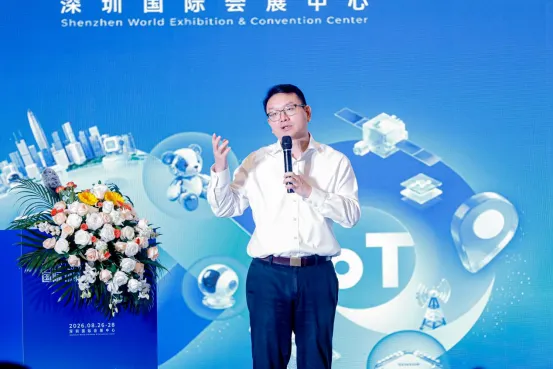
04 | Techphant Open Source: Redefining the Communication Range of FSK Chips
Liang Jufa, General Manager of the Product Business Division at Guangzhou Techphant Technology Co., Ltd., presented “Techphant Open Source: Redefining the Communication Range of FSK Chips.”
The presentation introduced Techphant’s technology achievements based on its internationally pioneering S-FSK technology architecture, offering a new domestically developed approach to low-cost, long-range networking for massive IoT deployments.
Liang explained that Guangzhou Techphant Technology Co., Ltd. is a high-tech enterprise established through the commercialization of research achievements and mixed-ownership reform initiatives associated with China Electronics Technology Group Corporation (CETC).
The company has developed the TPUNB ultra-narrowband IoT system. Its third-generation flagship chip, Xiangxin 3 (TP6300), is based on S-FSK technology and has been assessed by an academician-led expert panel as reaching an internationally advanced level of overall technical performance.
The chip delivers receiver sensitivity of up to −140 dBm, a maximum link budget of 160 dB, and concurrent access capacity that is 4–6 times higher than mainstream international solutions. It also features defense-grade security protection, physical-layer watermarking, and ultra-low sleep power consumption, making it suitable for complex IoT environments including industrial monitoring, smart communities, and smart-city sensing.
Liang also introduced the company’s open-source S-coding algorithm, which can run on the main MCU without hardware modifications or RF chip replacement. Existing FSK devices can simply integrate the software algorithm to gain more than 10 dB of link improvement, extending the communication range of traditional low-power wireless devices to the kilometer level.
This approach enables near-zero-cost upgrades for existing IoT devices and helps unlock the value of the installed base of connected hardware.
Compared with traditional CSS spread-spectrum approaches, the SIMS spread-spectrum modulation architecture of S-FSK delivers improved BLER performance while supporting parallel multi-user transmission, physical-layer security authentication, and covert communications.
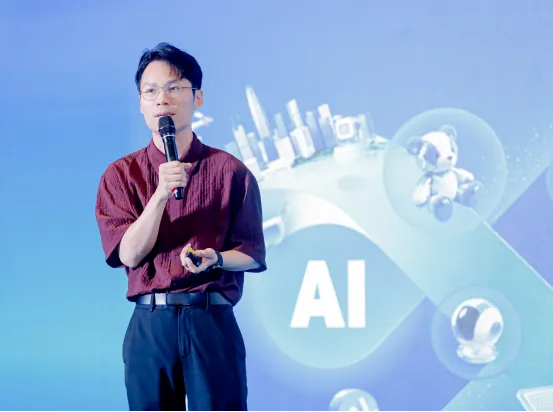
05 | The Evolution of Connectivity Technologies for Next-Generation Intelligent Terminals: Insights from Humanoid Robots
Lu Shanwei, Senior Sales Manager of the Digital Data Networks business at TE Connectivity, delivered a keynote on “The Evolution of Connectivity Technologies for Next-Generation Intelligent Terminals: Insights from Humanoid Robots.”
His presentation explored the development of the humanoid robotics industry, key connectivity challenges, and TE Connectivity’s full-stack solutions.
Lu noted that AI is rapidly expanding the application landscape for humanoid robots. Continuous machine-learning capabilities allow robots to evolve over time, while advances in batteries and power management are extending operating time. At the same time, wireless and cloud technologies are enabling coordination across subsystems.
These developments place increasingly demanding requirements on connectivity technologies, including high-speed, low-latency data transmission; resistance to vibration and harsh operating conditions; compact and highly integrated designs; and reliable wireless connectivity.
For the four major systems of humanoid robots—visual perception, control and communications, power distribution, and motion execution—TE Connectivity offers a comprehensive portfolio of connectivity solutions.
These include fine-pitch board-to-board connectors, FPC solutions, high-density mezzanine connectors, miniature high-current hybrid connectors, as well as antenna solutions covering UWB, Wi-Fi, Bluetooth, and Non-Terrestrial Networks (NTN).
Together, these technologies address the challenges of space-constrained integration, high-speed signal transmission, and reliable operation in demanding environments.
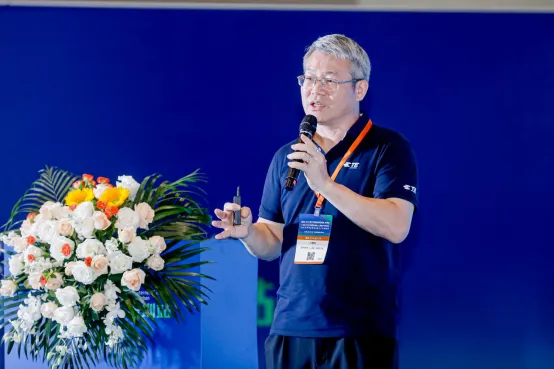
06 | The Evolution of Multimodal Vision Models and Brain-Computer Interfaces: Building a Full-Stack Commercial Ecosystem for BCI
Zhong Chongliang, Dean of the Intelligent Innovation Research Institute at ZKTeco, delivered a keynote titled “The Evolution of Multimodal Vision Models and Brain-Computer Interfaces: Building a Full-Stack Commercial Ecosystem for BCI.”
Focusing on the convergence of AI and brain-computer interfaces (BCI), Zhong explored the path from laboratory research to large-scale commercial deployment.
He explained that after more than two decades of work in multimodal BioCV (biometric computer vision), ZKTeco has accumulated extensive expertise in “understanding identity.” BCI technologies are now opening a new chapter—“understanding the brain”—enabling machines to interpret human emotions, intentions, and cognitive states.
This represents a transition from physical identity recognition toward neural-intent recognition.
Zhong noted that purely vision-based AI lacks a complete biological cognition loop, while traditional BCI technologies are often constrained by limited signal modalities and challenging deployment requirements. He believes that a BioCV + BCI multimodal architecture could provide a breakthrough by connecting external environmental perception with neural cognition, potentially creating a new growth curve for the industry.
ZKTeco has developed a full-stack BCI capability covering chips, algorithms, sovereign cloud platforms, hardware terminals, and application scenarios.
For commercialization, the company is focusing on non-invasive BCI as a key market opportunity, developing solutions for smart education, industrial safety, healthcare and rehabilitation, workplace applications, and consumer electronics.
Its product portfolio includes EEG headbands, EEG headphones, and smart safety helmets, supporting integrated medical-engineering services both inside and outside clinical environments.
Zhong emphasized that competition in the BCI industry is no longer about individual hardware components or algorithms alone. Instead, it is increasingly a competition between full-stack ecosystems.
Through joint laboratories, industry-academia-research collaboration, and open SDKs, ZKTeco aims to work with global industry partners to build an innovation ecosystem for BCI applications, accelerate the broader adoption of BCI technologies, and help usher in the era of cognitive intelligence.
07 | The Evolution of Physical AI: Making Hardware Understand You Better
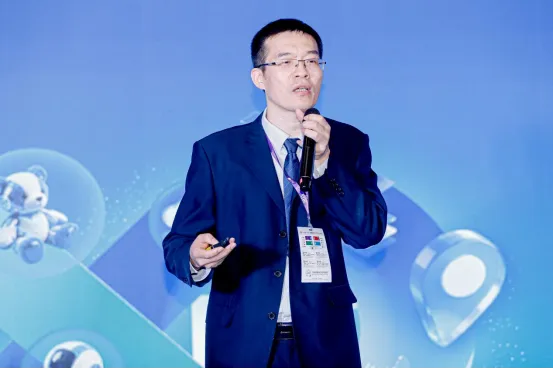
Zhang Tao, Head of the AI Audio & Video Business at Hangzhou Tuya Information Technology Co., Ltd., delivered a keynote titled “The Evolution of Physical AI: Making Hardware Understand You Better.”
Zhang pointed out that AI companion hardware currently faces a number of challenges, including product homogenization, high short-term user churn, weak emotional connections, and low conversion to paid services.
For many products, user interest declines within just a few days of purchase, resulting in short product lifecycles.
Powered by Tuya’s global AI + IoT cloud platform and comprehensive global security and compliance framework, the Tuya AI Agent Development Platform enables manufacturers to rapidly equip physical devices with multimodal capabilities—including the ability to listen, see, communicate, reason, and act.
The platform supports a wide range of applications, including AI toys, smart homes, wearable devices, educational interaction, and workplace productivity.
Tuya has also introduced an emotional-engagement framework designed around progressive capability development. Through a three-tier model covering free foundational functions, companion capabilities unlocked through user progression, and premium VIP features, the platform creates a clearer path toward commercialization.
According to the platform’s projections, products adopting this model can achieve a 7-day retention rate of up to 68%, helping increase user interaction frequency and improve Net Promoter Scores (NPS).
The solution has already entered scaled deployment. Tuya has worked with brands including Kidswant and ROBOTERA’s FuZai to bring AI companion products into mass production, and has served more than 150 customers in the AI toy sector.
Zhang said Tuya will continue to lower the barriers to developing and mass-producing physical AI hardware. By leveraging its capabilities in multimodal interaction, character customization, content ecosystems, and device orchestration, Tuya aims to help more companies build differentiated intelligent hardware with genuine emotional value—bringing AI beyond virtual conversations and into physical products, and accelerating the commercialization of Physical AI.
08 | The Global Satellite IoT Landscape and Emerging Opportunities
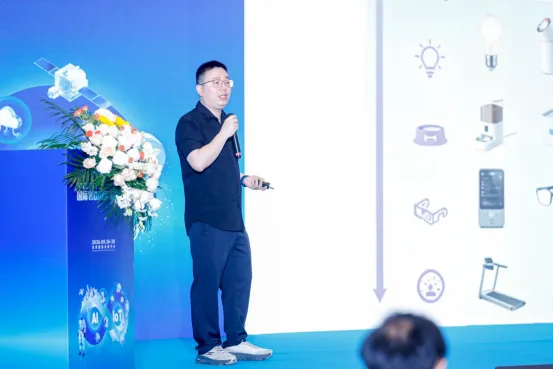
He Yiming, Deputy General Manager of Beijing Guodian High-Tech Technology Co., Ltd., provided an in-depth analysis of the global satellite IoT landscape, exploring the technological advantages, commercialization progress, and future development of China’s low-Earth-orbit narrowband satellite IoT technologies.
He noted that approximately 80% of the world’s land area and 95% of its oceans remain outside the coverage of terrestrial cellular networks, leaving significant gaps in ground-based IoT monitoring.
While broadband satellite systems primarily address high-speed connectivity for people, low-Earth-orbit narrowband satellite IoT is designed for massive numbers of connected devices, offering low power consumption, compact form factors, lower deployment costs, and high reliability.
It therefore represents a key pathway for addressing monitoring gaps in remote areas and an important growth segment within the commercial space industry.
Internationally, constellations such as Iridium and Globalstar have already achieved commercial scale, while companies including SpaceX and Amazon are accelerating the development of integrated broadband and narrowband satellite systems. Competition for orbital and spectrum resources is also intensifying.
According to He, the Tianqi Constellation, operated by Beijing Guodian High-Tech Technology Co., Ltd., is China’s first completed low-Earth-orbit satellite IoT constellation. It currently comprises 41 satellites and provides near-real-time global services.
In May 2026, the company received approval from China’s Ministry of Industry and Information Technology (MIIT) to conduct a two-year commercial trial of satellite IoT services, becoming the first domestic operator in the sector to receive such approval.
He also outlined plans for the second phase of the Tianqi constellation. The company aims to complete a 56-satellite constellation by 2028, introduce inter-satellite links, increase communications capacity by more than tenfold, and support international IoT NTN standards to enable seamless global real-time coverage.
He emphasized that low-Earth-orbit satellite IoT could become a key breakthrough point for the satellite internet industry. Looking ahead, the company will continue to develop an integrated ecosystem connecting terrestrial, aerial, and space-based networks, supporting the large-scale deployment of IoT across land, air, and sea.
09 | Bringing Embodied Intelligence into the Physical World
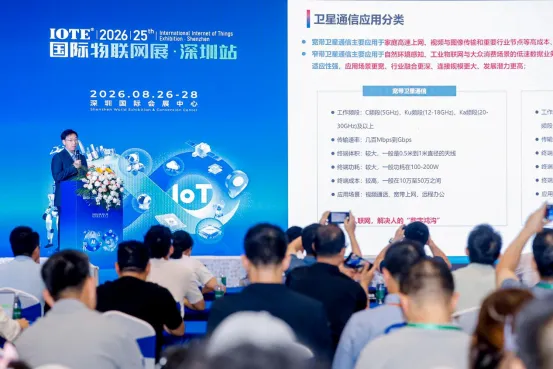
Liu Shijun, CTO of Zhongyi (Shenzhen) Information Technology Co., Ltd., delivered a keynote titled “Bringing Embodied Intelligence into the Physical World.”
Liu provided an in-depth analysis of the current state of the embodied intelligence industry and its deployment challenges, while sharing practical approaches to building an industry ecosystem.
He noted that 2026 is widely regarded as a potential inflection point for commercial robot applications. The global embodied intelligence market is entering a period of rapid expansion, with China emerging as the world’s largest single application market and humanoid robots becoming a major growth engine for the industry.
However, significant “last-mile” challenges remain.
The physical world lacks unified interfaces and standardized abstractions for real-world objects, making it difficult for AI systems to directly control physical infrastructure such as elevators, access-control systems, and robots.
At the same time, protocols remain fragmented across robot brands, preventing heterogeneous robots from working together effectively within the same environment. This creates a “one scenario, one codebase” development model that requires repeated debugging for every new deployment.
High procurement costs and immature maintenance ecosystems are also making intelligent transformation difficult for many small and medium-sized enterprises.
Liu argued that while the first phase of the industry focused primarily on robot hardware, the next phase will be defined by the commercialization of real-world application scenarios.
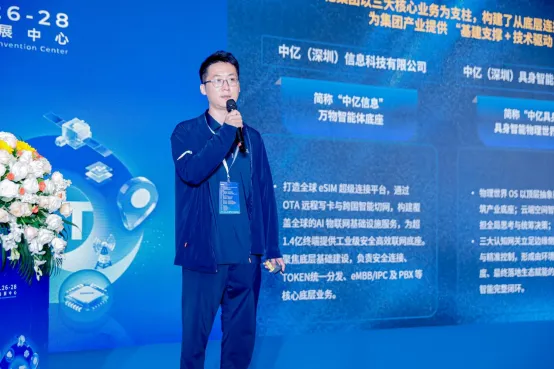
Zhongyi Group has positioned itself around the principle of “not building robot bodies, but serving as the industry connector.” The company is developing an integrated ecosystem spanning underlying connectivity, collective intelligence, and full-lifecycle operational services.
It has independently developed what it describes as China’s first Physical World OS for embodied intelligence, supported by a cloud-based spatial intelligence hub and three cognitive gateways covering perception, control, and access.
The architecture enables coordinated operation across heterogeneous robot fleets from multiple brands, helping break down barriers to interoperability.
To date, the company has served more than 300 robotics companies and brought together more than 100 ecosystem partners, with deployments across office buildings, industrial parks, factories, and other scenarios.
Liu called for closer collaboration across the industry to establish technical standards, strengthen industry-academia-research integration, and capture the opportunities emerging from this trillion-yuan market.
The ultimate goal, he said, is to enable embodied intelligence to create tangible value across industries and foster a new generation of benchmark companies.
10 | Conclusion
Throughout the summit, technological breakthroughs were closely connected with real-world industry challenges, while emerging concepts were examined alongside practical implementation.
A common view among the speakers was that the high-quality development of the AIoT industry requires not only continued advances in chips, communications, and computing, but also deeper ecosystem collaboration.
Breaking down the barriers between technologies, brands, and application scenarios will be essential to bringing emerging innovations into the real economy at scale.
IoT professionals, AI developers, business leaders, academic and research representatives, and investment institutions attending the summit engaged in extensive discussions and business exchanges, facilitating the flow of ideas, resources, and potential partnerships.
Although the summit has come to a close, the exploration of intelligent connectivity continues.
The technological insights, implementation cases, and industry consensus generated during the event will continue to provide valuable reference points for the development of AIoT.
Looking ahead, as sectors such as space-based IoT, embodied intelligence, and brain-computer interfaces continue to advance, the integration of digital technologies with the physical economy will enter a deeper phase.
Industry stakeholders will continue to work together to address deployment challenges, build open and collaborative ecosystems, and unlock new opportunities for AIoT to empower the real economy across a broader range of applications.
Looking forward, the Shenzhen Internet of Things Industry Association (SZIOT) and Ulink Media will continue to serve as key industry bridges and ecosystem platforms.
They will deepen their work across the full AIoT value chain and develop a sustained portfolio of high-level platforms for technology exchange, technology commercialization, and resource matchmaking.
By connecting high-quality resources across industry, academia, research, application, and investment, they will continue to focus on real industry challenges and business needs while delivering practical industry insights, emerging technology trends, and implementation-oriented solutions.
These efforts will support technological innovation, strengthen industry ecosystem collaboration, and accelerate the growth of the AIoT sector across the Guangdong–Hong Kong–Macao Greater Bay Area.
Ultimately, the goal is to help drive the large-scale commercialization of AI and IoT technologies across China and advance the next stage of intelligent transformation across industries.