
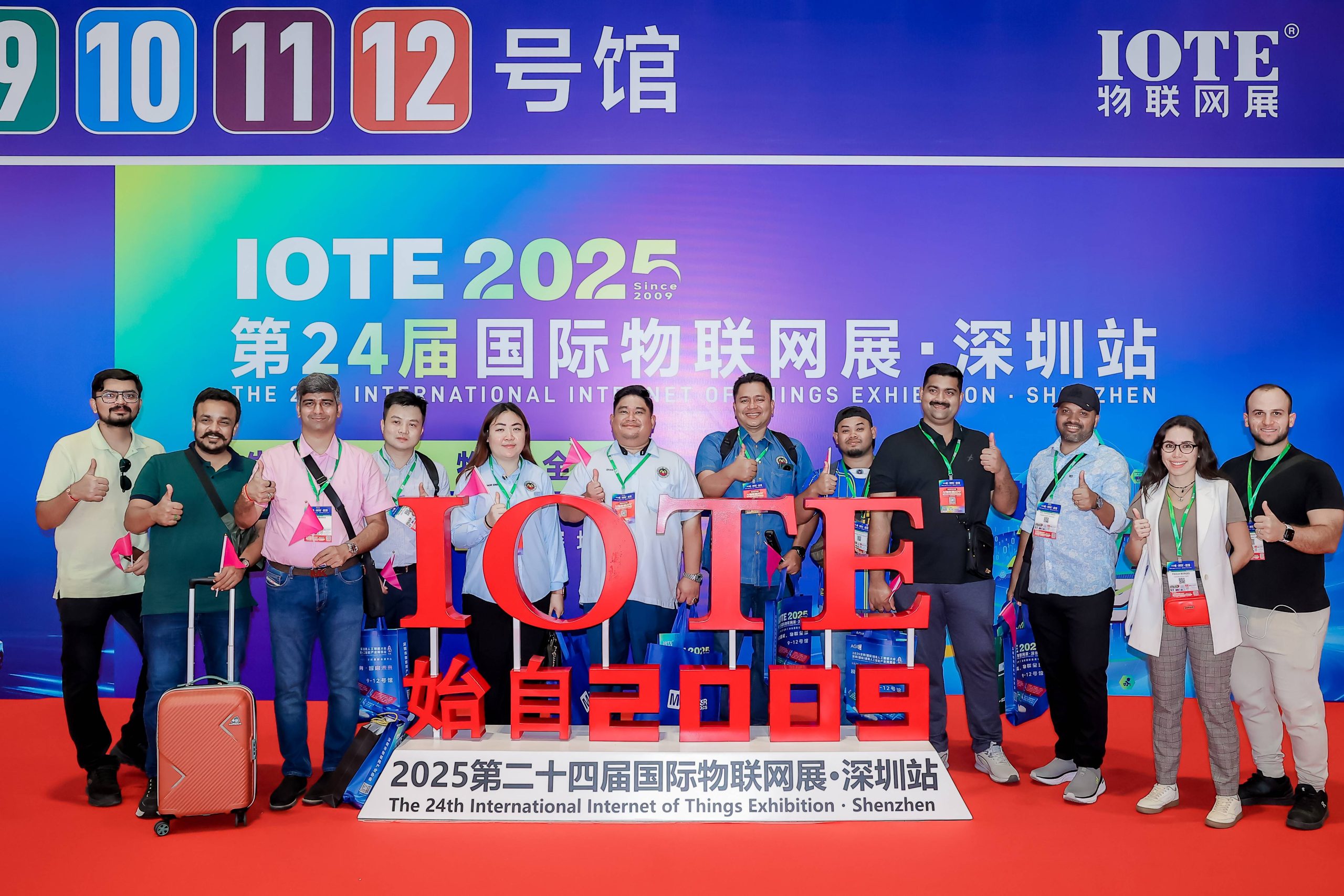
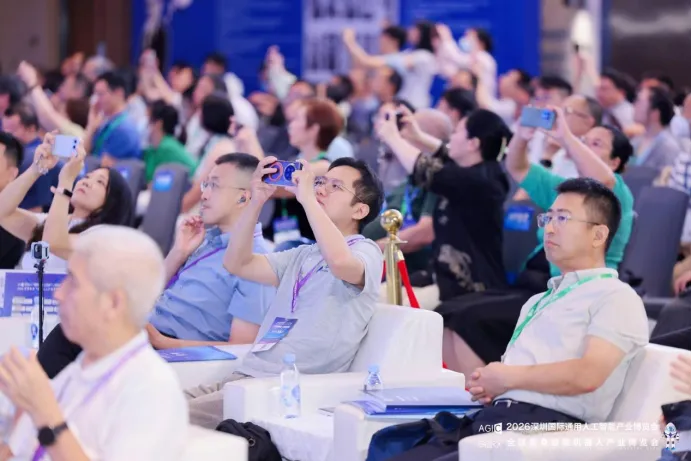
On the morning of August 27, 2026, the 2026 China’s Homegrown AI Computing Infrastructure and Ecosystem Collaboration Forum was held at Mangrove Hall, Shenzhen World Exhibition & Convention Center (Bao’an).
Focusing on the open-source RISC-V architecture, the development of homegrown AI computing infrastructure, and collaborative innovation across the AI ecosystem, the Forum brought together representatives from industry associations, government agencies, enterprises, research institutions, and leading technology companies. Participants explored pathways for advancing domestic computing technologies, deploying them in real-world applications, and building a collaborative ecosystem in the era of AI agents. The discussions aimed to accelerate the transition of China’s homegrown AI computing capabilities from individual technological breakthroughs to large-scale commercial deployment and broader industry adoption.
Opening Remarks | Building Consensus on Computing Infrastructure and Industry Collaboration
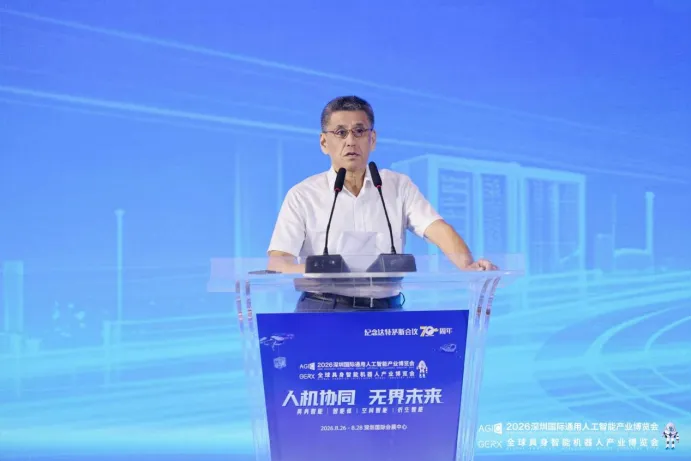
Shi Xiaoguang, Chairman of the Telecommunication Terminal Industry Forum Association (TAF), and Li Min, First-Level Researcher at the Shenzhen Municipal Administration of Government Services and Data Management, delivered opening remarks.
Drawing on their respective perspectives on the development of the terminal industry and the application of government data, they shared their expectations for innovation in the Greater Bay Area’s homegrown computing industry and the RISC-V open-source ecosystem. Their remarks helped establish a shared vision and set the direction for stronger industry collaboration.
White Paper Launch | Building a Shared Vision for the RISC-V Industry in the Greater Bay Area
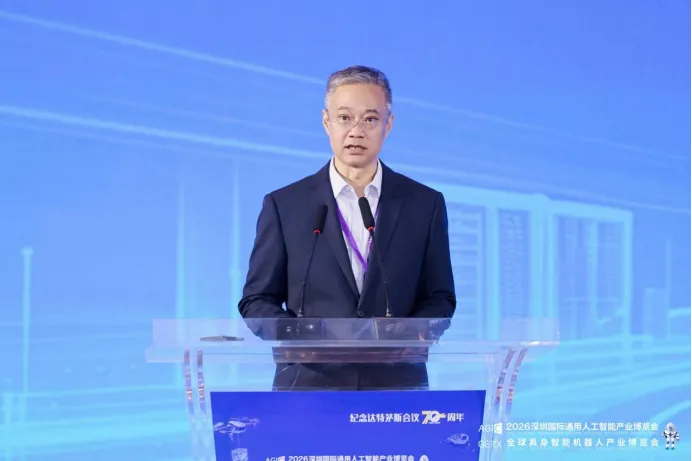
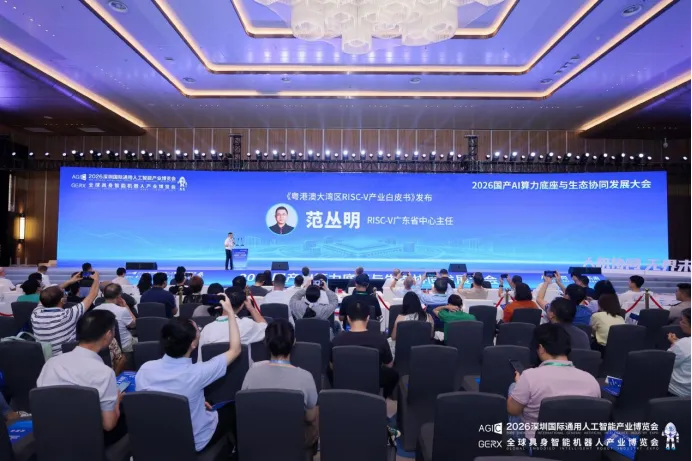
One of the key outcomes of the Forum was the official release of the RISC-V Industry White Paper for the Guangdong-Hong Kong-Macao Greater Bay Area.
Fan Congming, Director of the Guangdong RISC-V Center and Executive Vice President of the Shenzhen Artificial Intelligence Industry Association, unveiled the white paper.
The publication provides a systematic overview of the region’s RISC-V industry, covering chip research and development, instruction set ecosystem development, technology validation, and application scenarios. It also assesses emerging industry trends and offers an authoritative reference for advancing the standardization, collaboration, and scaling of the region’s open-source chip industry. The release marks another step toward a more structured and coordinated RISC-V ecosystem in the Greater Bay Area.
Keynote Presentations | From Core Technologies to Real-World Urban Applications
The keynote session featured presentations exploring foundational technologies, architectural innovation, technology convergence, and product commercialization.
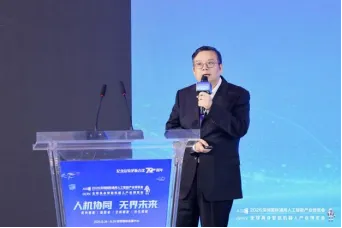
Tang Dan, President of the Beijing Institute of Open Source Chip, examined the strategic value of the RISC-V instruction set in the AI era, emphasizing that open instruction set architectures are essential to securing greater control over the future development of the intelligent technology industry.
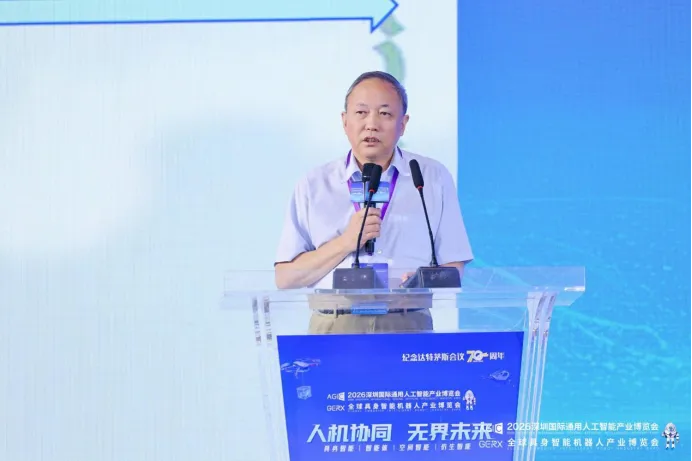
Guo Yuansheng, Academician of the National Academy of Artificial Intelligence Sciences, Fellow of the Royal Society of Medicine, and Executive Vice President of the China Sensor and Internet of Things Industry Alliance, focused on innovation at the intersection of AI and sensing technologies. He highlighted the importance of real-world application scenarios as a driving force behind technological advances and new approaches to innovation.
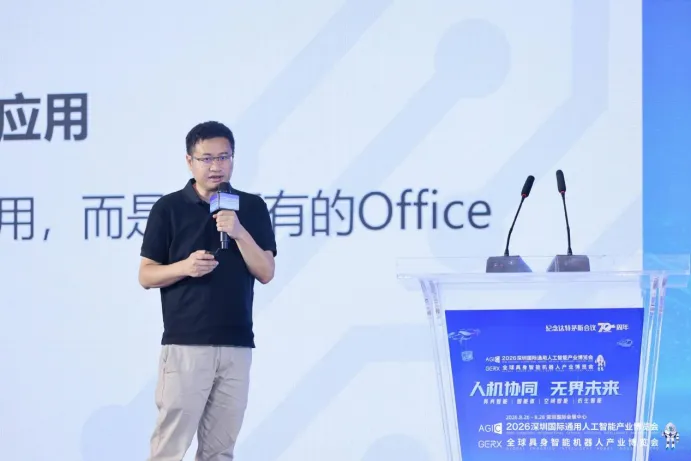
Su Zhong, Senior Technical Expert at Alibaba DAMO Academy, explored the directions in which RISC-V architecture could evolve in the era of AI agents. He discussed its potential to move beyond embedded applications and become a general-purpose foundation for intelligent computing.
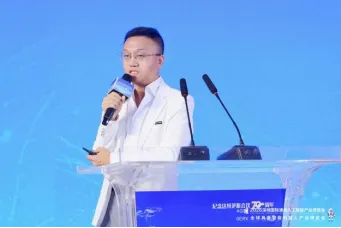
A Vice President of Shenzhen Intellifusion Technologies Co., Ltd. discussed AI computing applications in smart cities, examining the practical value and future potential of Token-based computing systems in urban governance.
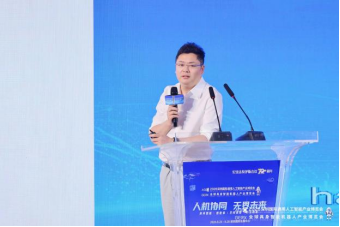
Xu Qingwei, Head of Marketing for the Lanxin Computing ecosystem, introduced the LX500 product and demonstrated how the integration of RISC-V and AI architectures can support the development of a new generation of computing infrastructure.
Cai Wanlin, President of the Product Division at Sophgo, focused on the requirements of large language model applications and discussed how intelligent hardware chips can be adapted to meet these demands, as well as the implications for future chip research and development.
Roundtable Discussion | Opportunities and Challenges for China’s Homegrown Computing Industry
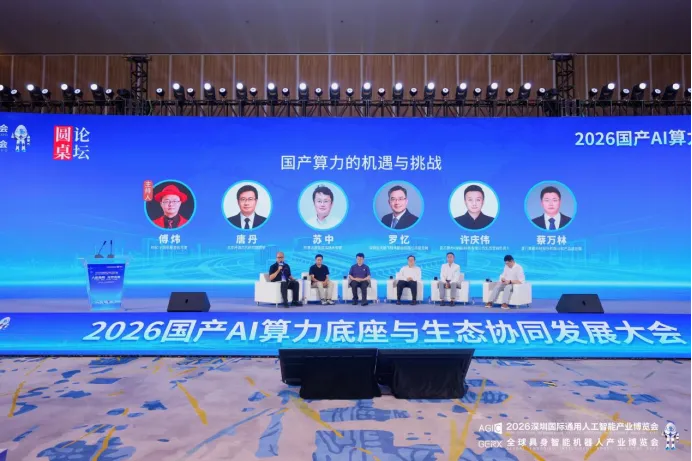
The Forum concluded with a roundtable discussion moderated by Fu Wei, Ambassador of RISC-V International. Five guests — Tang Dan, Su Zhong, Luo Yi, Xu Qingwei, and Cai Wanlin — exchanged views on the opportunities and challenges facing China’s homegrown computing industry.
The discussion highlighted how the evolution of global open-source ecosystems, combined with the rapid development of AI foundation models, is creating a valuable window of opportunity for independent innovation in domestic computing technologies.
At the same time, several challenges remain, including gaps in development toolchains, difficulties in quantifying and evaluating on-device inference performance, insufficient hardware-software compatibility, and an ecosystem that is still maturing.
Drawing on the Greater Bay Area’s industrial experience, participants noted that the region has strengths spanning the entire value chain — from instruction set development and chip design to end-device applications and deployment in urban environments.
Looking ahead, closer collaboration among industry, academia, research institutions, and end users will be essential. Real-world application scenarios should help drive continuous technological improvement, while advances in computing efficiency and reductions in deployment costs will be critical to overcoming barriers to large-scale commercialization. These efforts will contribute to an open, compatible, and independently developed ecosystem for China’s AI computing infrastructure.
Through technical discussions, the release of industry research, and in-depth dialogue on industrial collaboration, the Forum helped clarify development pathways for the RISC-V industry and strengthen the connection between homegrown computing technology development and real-world applications.
Building on Shenzhen’s industrial strengths and diverse application scenarios, the Greater Bay Area is well positioned to continue advancing open-source chips and homegrown computing technologies. Through sustained innovation in core technologies and stronger ecosystem collaboration, the region will help establish a solid computing foundation for the high-quality development of China’s artificial intelligence industry.