
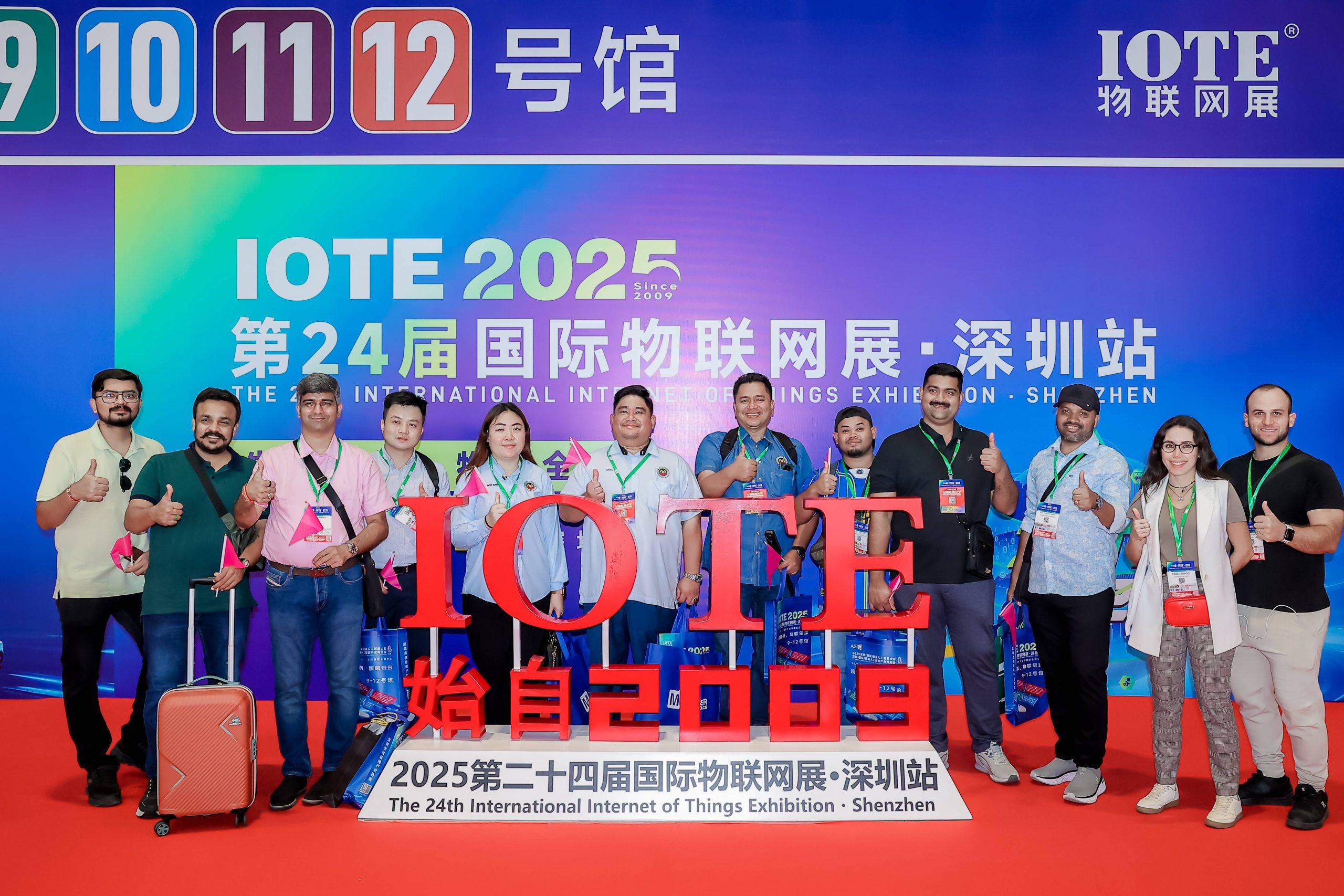
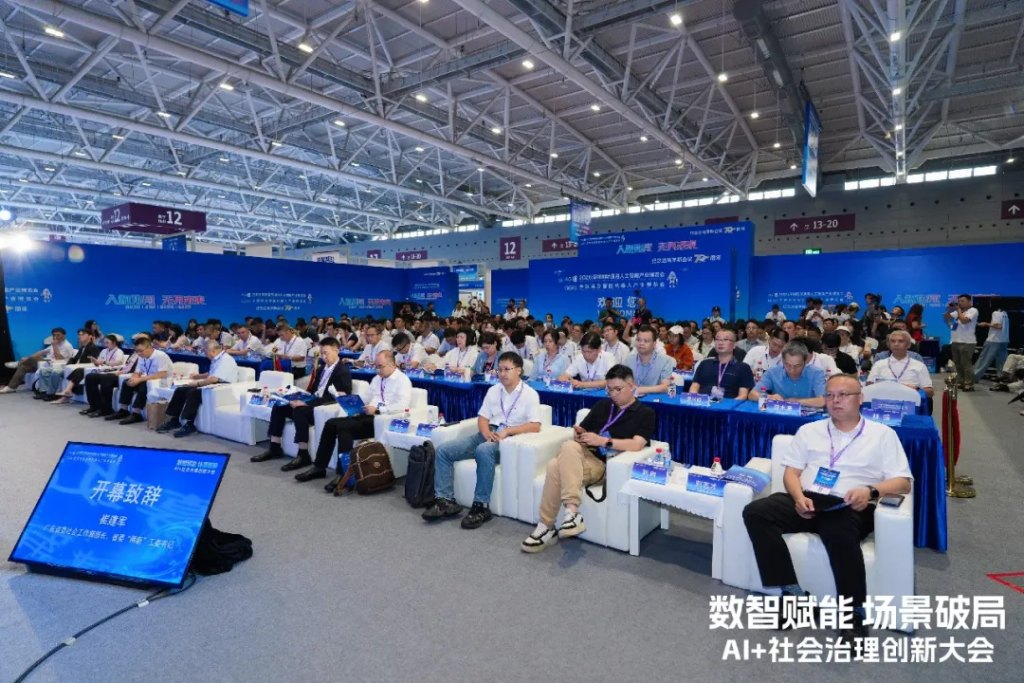
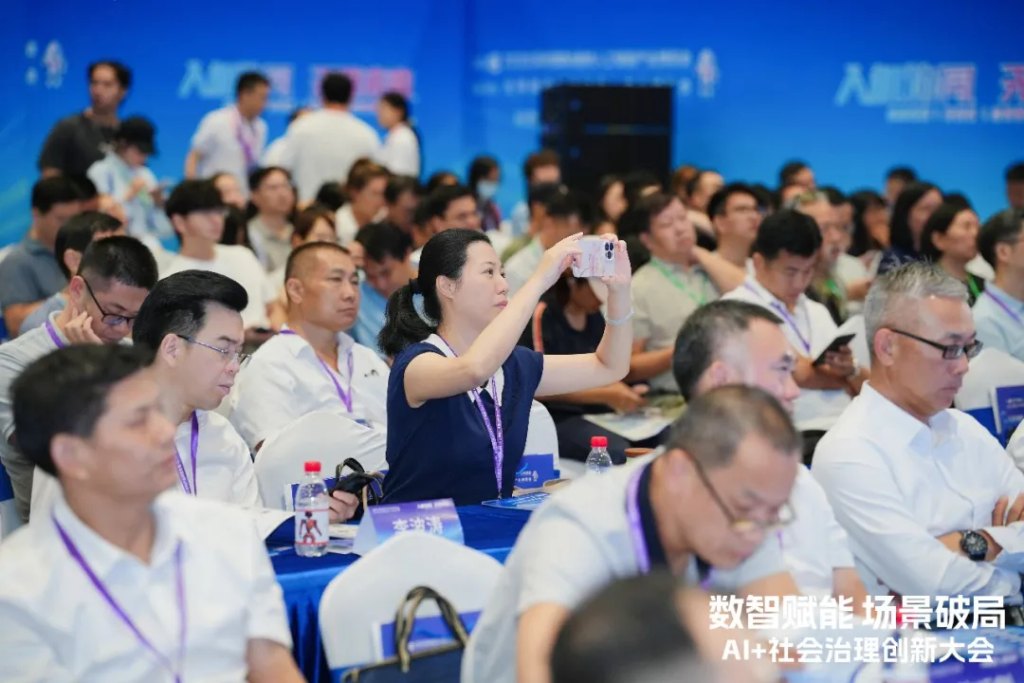
On the afternoon of August 27, the AI + Social Governance Innovation Conference, themed “Turning Digital Intelligence into Real-World Impact,” was successfully held at Shannon Hall, Hall 12, Shenzhen World Exhibition & Convention Center (Bao’an).
The conference brought together government officials, leading experts, and technology companies to explore emerging trends, technological advances, and real-world applications of AI in social governance. Through in-depth discussions on technology innovation, practical implementation, and cross-sector collaboration, participants shared insights and solutions for accelerating the integration of AI into social governance.
Government Leadership Calls for AI-Driven Innovation in Social Governance
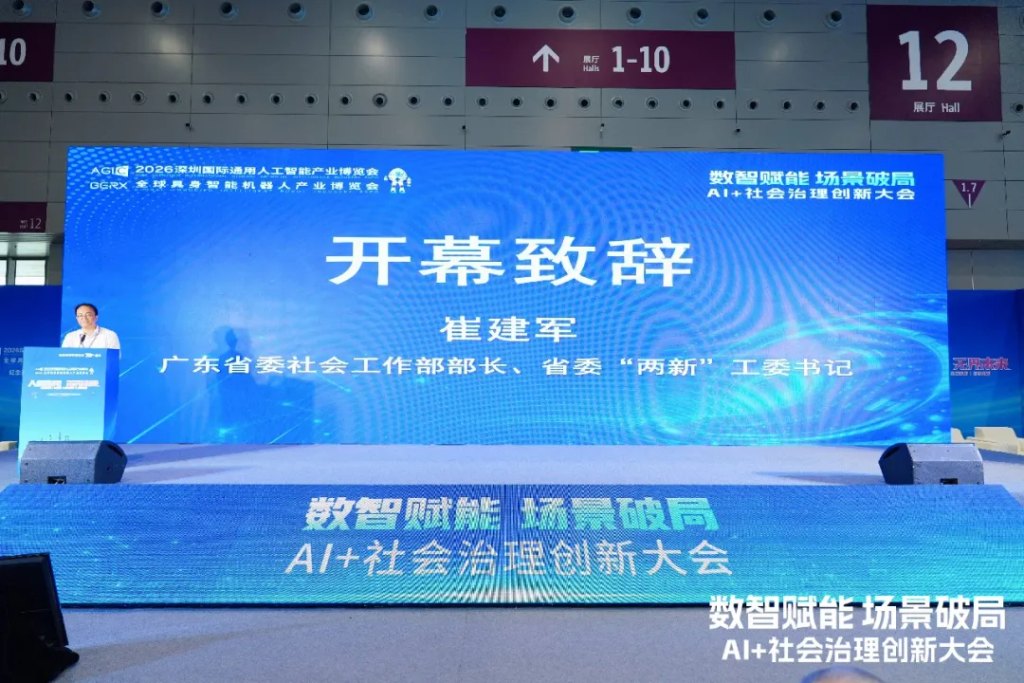
Cui Jianjun, Director-General of the Department of Social Work of the CPC Guangdong Provincial Committee and Secretary of the Provincial Working Committee for Non-Public Sector Organizations, attended the conference and delivered the opening address.
He noted that artificial intelligence, as a strategic technology driving a new wave of scientific and technological revolution and industrial transformation, is reshaping the concepts, models, and approaches of social governance.
He emphasized the importance of implementing the central government’s policy directives on the healthy and orderly development of AI, maintaining an application-oriented approach, and building collaborative platforms connecting industry, academia, research institutions, and end users. He also called for further exploration of AI applications in grassroots governance, public administration, and public services, using digital intelligence to make social governance more refined, efficient, and intelligent.
Technology in Action: AI-Powered Innovation for Social Governance
The first half of the conference focused on “Technology Empowerment and Real-World Applications: How AI Is Driving Innovation in Social Governance.”
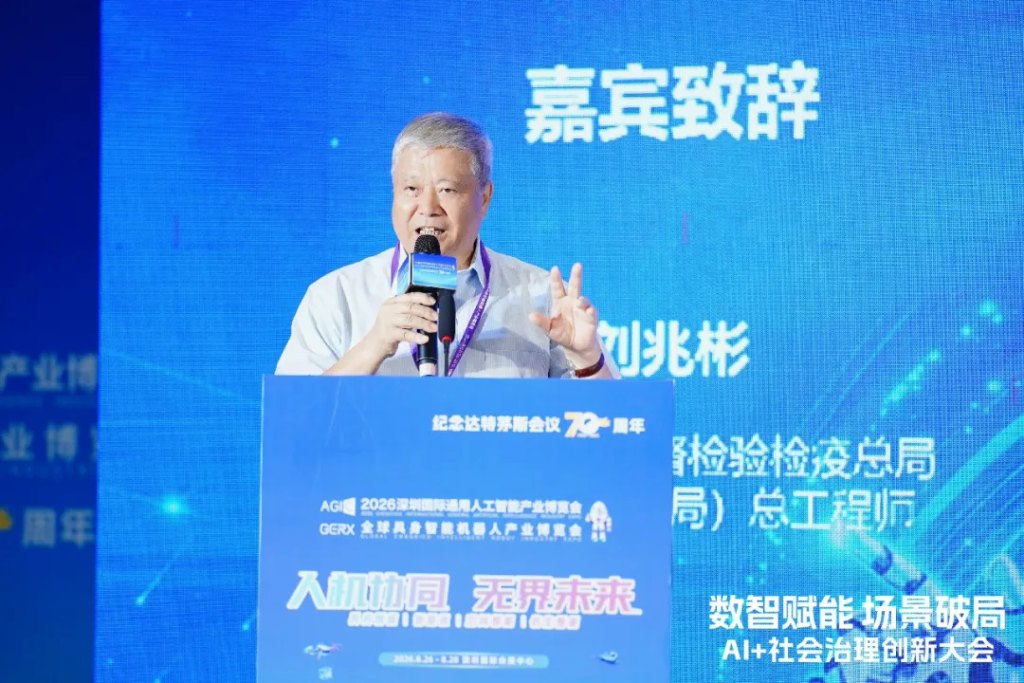
Liu Zhaobin, former Chief Engineer of the former General Administration of Quality Supervision, Inspection and Quarantine of China (AQSIQ), delivered opening remarks and presented a keynote titled “AI for Social Governance: Building a New Smart Quality Ecosystem.”
Drawing on China’s strategy to strengthen the country through quality, Liu explored the potential of AI in quality supervision, standards development, and credit systems. He highlighted how AI can drive innovation in quality governance models and help establish a smart quality ecosystem, providing a stronger foundation for the modernization of social governance.
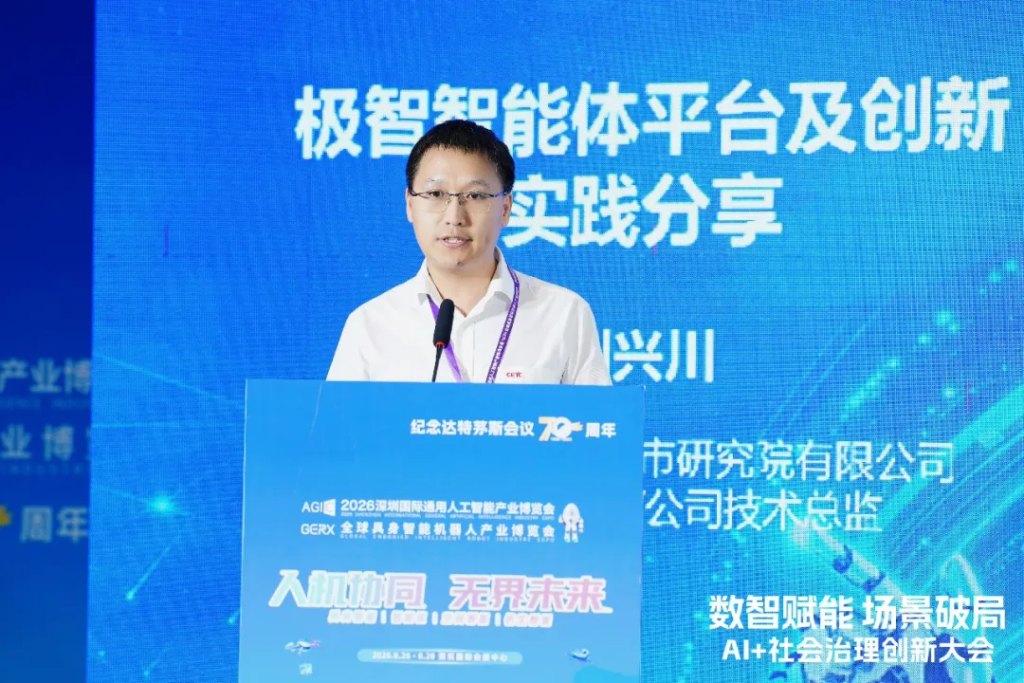
Liu Xingchuan, Technical Director at CETC’s New Smart City Research Institute, presented “The Jizhi Intelligent Agent Platform and Its Innovative Applications.” He introduced the institute’s progress in developing intelligent agent platforms for smart cities, as well as their practical applications in urban governance, public safety, and emergency management.
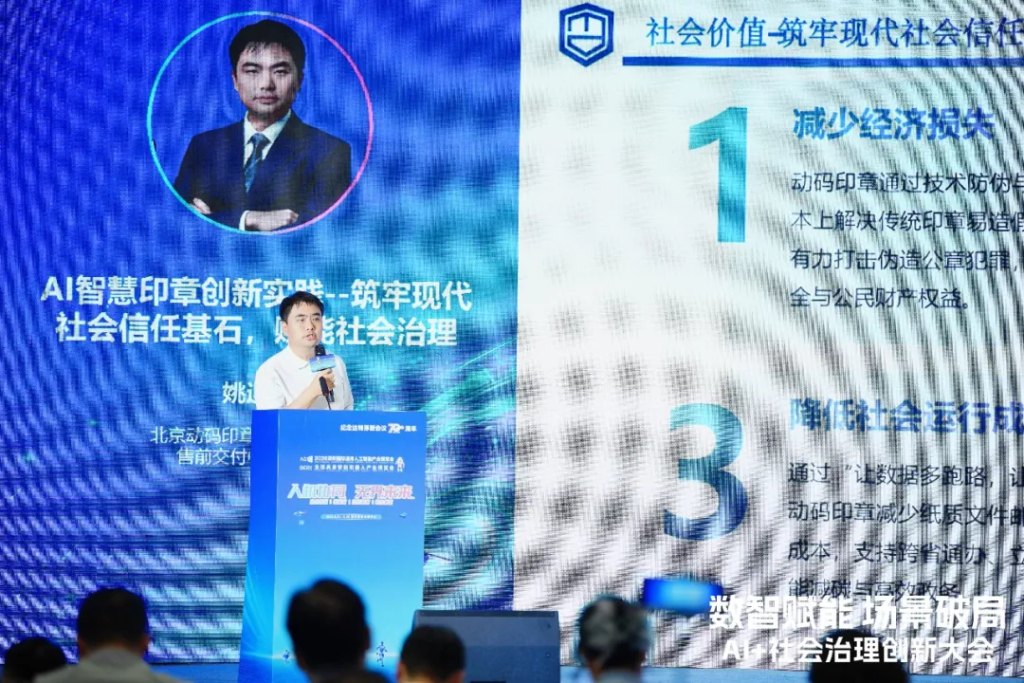
Yao Yingbo, General Manager of the Pre-Sales and Delivery Center at Beijing Dynamic Code Seal Technology Co., Ltd., delivered a presentation titled “AI-Powered Smart Seals: Strengthening the Foundations of Trust in Modern Society and Empowering Social Governance.”
He shared practical applications of AI-enabled smart seal technology in social credit systems, government services, and commercial activities, demonstrating how digital technologies can strengthen the infrastructure of trust across society.
Global Connectivity: Advancing Cross-Border AI Collaboration
The second half of the conference focused on “Global Connectivity and International Expansion: Collaborative Innovation in AI Agents.”
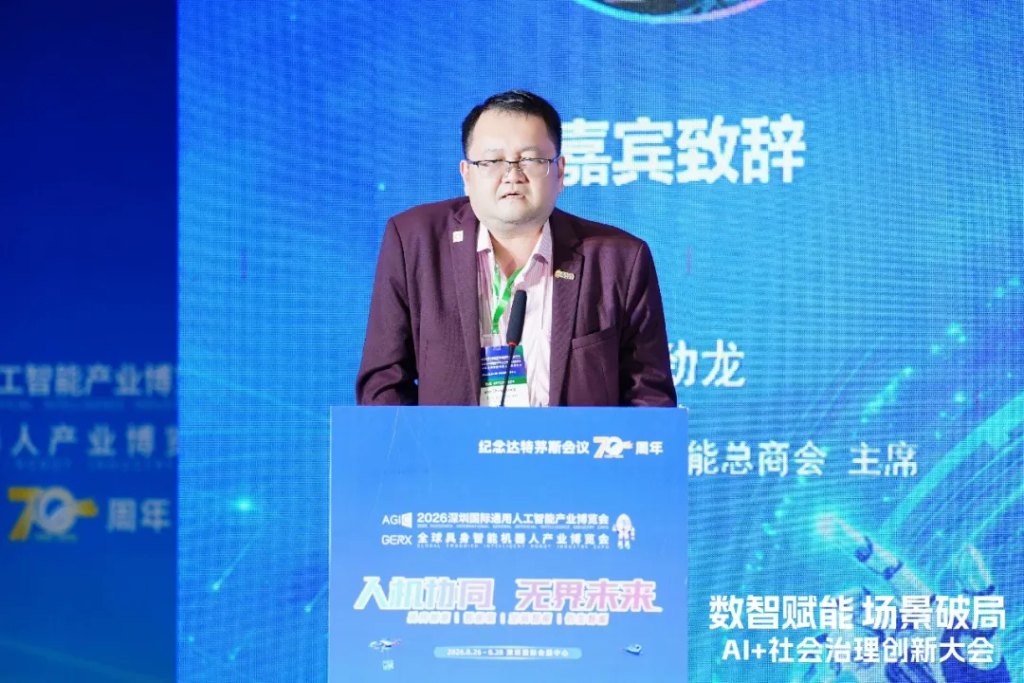
Fu Jinlong, Chairman of the Malaysian Association of Artificial Intelligence Technology and Innovation (MAAI), delivered a guest address. He highlighted the importance of strengthening international and cross-regional exchanges in artificial intelligence, accelerating the practical adoption of AI technologies, mobilizing innovation resources, deepening technological collaboration, and expanding application scenarios to unlock new opportunities for the industry.
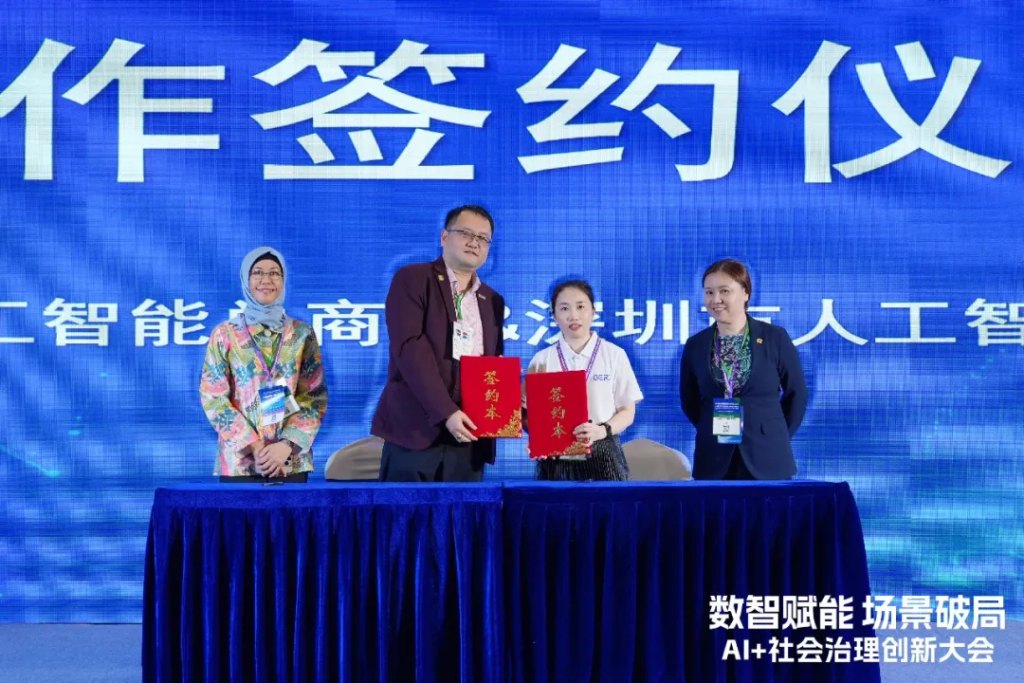
Following his address, Fu represented MAAI in signing a cooperation agreement with the Shenzhen Artificial Intelligence Industry Association.
The partnership aims to strengthen AI industry collaboration between China and Malaysia, facilitate the two-way flow of talent, technology, and market resources, support Chinese AI companies in expanding into international markets, and contribute to the continued development of Malaysia’s digital industry. Through closer cooperation, both sides seek to build a mutually beneficial framework for long-term industrial growth.
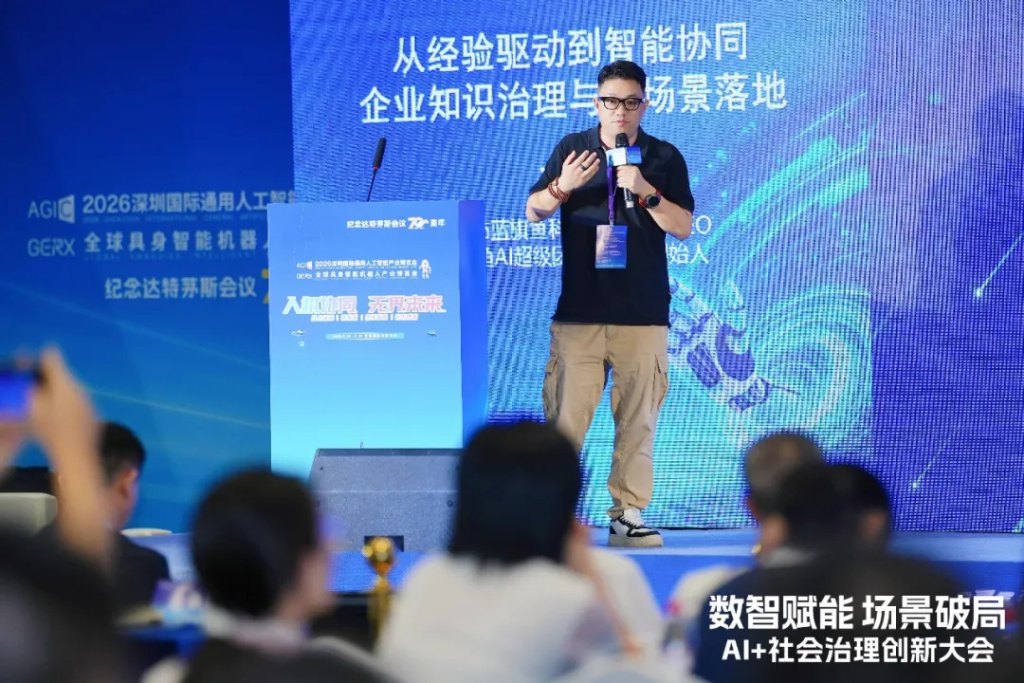
Liu Xiang, CEO of BLUEFIN and Founder of the Bluefin AI Super Team Agent Platform, delivered a presentation titled “From Experience-Driven Operations to Intelligent Collaboration: Enterprise Knowledge Governance and Real-World AI Applications.”
He shared practical examples of how enterprise AI agents can support organizational management and decision-making, offering new perspectives on how AI can improve organizational efficiency and governance capabilities.
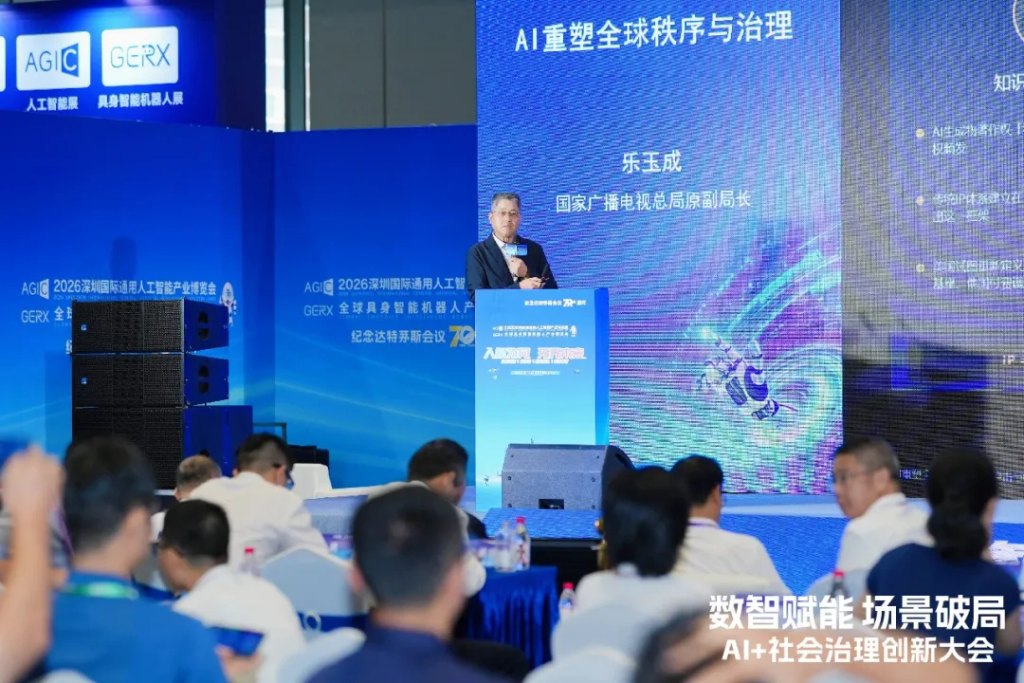
Le Yucheng, former Deputy Director of China’s National Radio and Television Administration, presented “How AI Is Reshaping the Global Order and Governance.”
Taking an international perspective, he examined the profound impact of artificial intelligence on global governance systems, industrial divisions of labor, and international competition. He emphasized the importance of contributing Chinese insights to global AI governance and promoting an open, inclusive, and balanced framework for international AI governance.
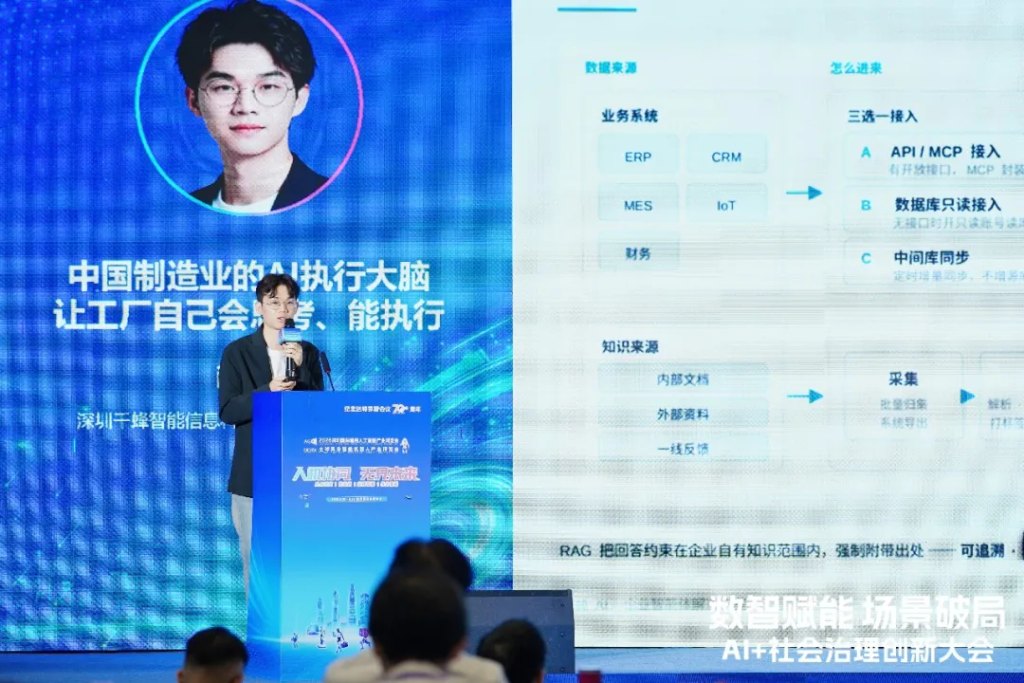
Xiao Chengze, Co-Founder of Shenzhen Qianfeng Intelligent Information Technology Co., Ltd., presented “The AI Execution Brain for China’s Manufacturing Industry: Enabling Factories to Think and Act.”
Drawing on common challenges faced by manufacturers in their digital transformation journeys, he introduced Qianfeng’s five-layer architecture for an AI-powered manufacturing execution brain. The presentation showcased practical experience in applying AI to manufacturing operations and offered a systematic approach to improving the deployment and effectiveness of AI across industrial workflows.
Building a Collaborative Ecosystem for AI-Enabled Governance
The conference served as a practical platform for advancing the State Council’s Opinions on Further Implementing the “AI+” Initiative, particularly its policy direction on “AI + Governance Capabilities.”
By bringing together government, academia, and industry, the event established a high-level platform for dialogue and collaboration, helping build broader consensus on the role of AI in social governance.
The discussions and real-world case studies highlighted how AI can move beyond technological innovation to deliver practical results, accelerating the development of new applications and deeper industry integration. The conference also reinforced the importance of cross-sector collaboration in unlocking the value of AI and supporting the high-quality development of the industry.