
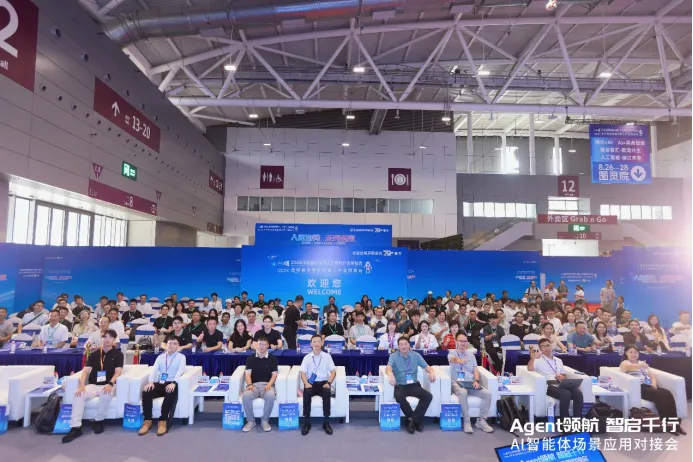
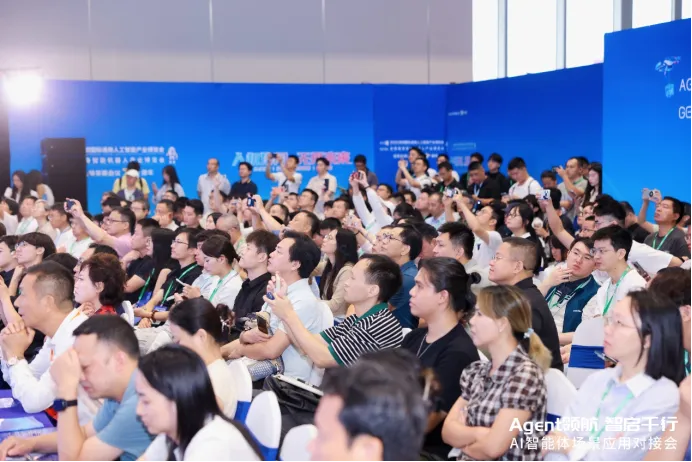
On the morning of August 26, 2026, the “Agent-Powered Innovation, Unlocking Opportunities Across Industries” AI Agent Application Conference was held as one of the parallel forums at the Ximengyuan venue of AGIC 2026 at the Shenzhen World Exhibition & Convention Center (Bao’an).
As part of AGIC 2026’s three-day program featuring 48 themed forums, the event brought together 1,012 brands and more than 500 industry leaders and experts. Focusing specifically on the rapidly developing AI agent sector, the conference explored how agent technologies are moving from technological breakthroughs toward practical deployment across industries—echoing AGIC’s broader focus on advancing both technology innovation and real-world application.
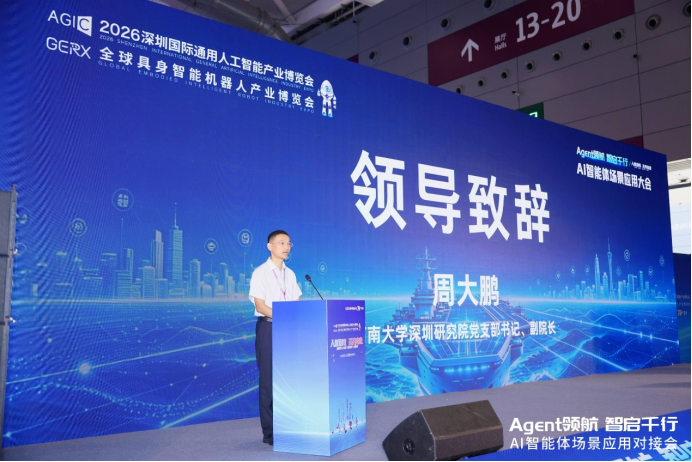
Zhou Dapeng, Party Secretary and Deputy Dean of the Shenzhen Research Institute of Henan University, delivered the opening remarks.
Focusing on the transition of AI agents from the laboratory into real-world industries, Zhou highlighted the institute’s role in connecting university research with the industrial ecosystem of the Greater Bay Area. He emphasized the potential of large-scale AI agent deployment to accelerate regional industrial transformation and upgrading.
The conference then featured a series of presentations covering the full AI agent value chain—from underlying architectures and technical paradigms to practical industry applications.
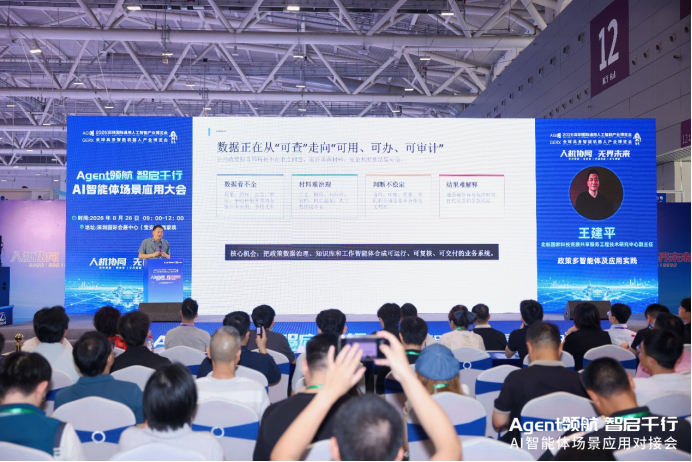
Policy Multi-Agent Systems: Turning Policy Intelligence into Action
Wang Jianping, Deputy Director of the Engineering Technology Research Center for National Science and Technology Resources Sharing Services at Beihang University, presented “Policy Multi-Agent Systems and Applications.”
He emphasized that a policy agent is much more than a search tool for government documents. Instead, it needs to integrate data collection, data governance, knowledge organization and workflow execution into an operational and verifiable system.
Built on more than 40 million policy data records and over 80,000 information sources, the system can transform policy intelligence into actionable business processes, supporting applications such as insurance opportunity identification, education policy management, and talent and human resources services.
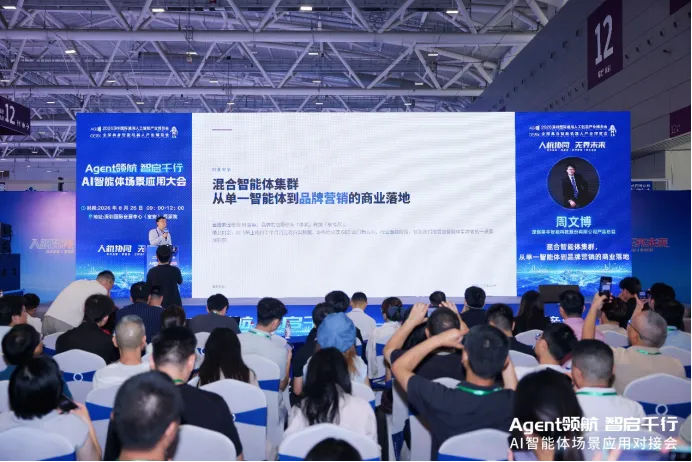
Hybrid AI Agent Clusters: From Individual Agents to Scalable Delivery
Zhou Wenbo, Product Director at Zeroth AI, explored the development of hybrid AI agent clusters.
Using brand marketing as an example, he demonstrated how multiple AI agents can collaborate across content creation, media placement and conversion, creating coordinated workflows rather than isolated AI tasks.
The discussion highlighted a broader shift in enterprise AI: moving from AI that can “operate independently” to AI systems capable of coordinated, large-scale delivery, opening the door to more scalable commercial applications.
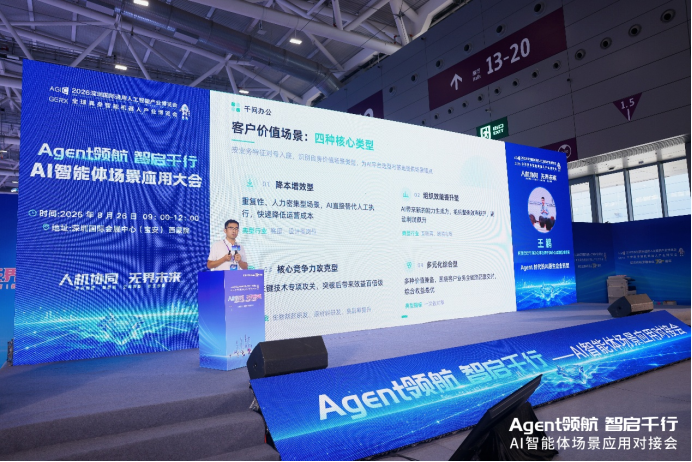
Building AI-Native Enterprises in the Agent Era
Wang Peng, Shenzhen Regional Manager for Qwen Office at Alibaba’s Qwen Office Business Unit, shared his perspective on AI-native enterprise transformation in the Agent era.
He proposed a three-stage approach:
1. Make existing systems agent-ready
Upgrade existing enterprise systems so AI agents can access and operate them.
2. Integrate agents into business workflows
Enable AI agents to function as “digital employees” within day-to-day business processes.
3. Build an organization-level intelligence layer
Ultimately evolve toward an “organizational brain” capable of continuous learning, collaboration and decision support.
This progression reflects a fundamental shift in enterprise AI—from using AI as an individual productivity tool to embedding intelligence directly into organizational operations.
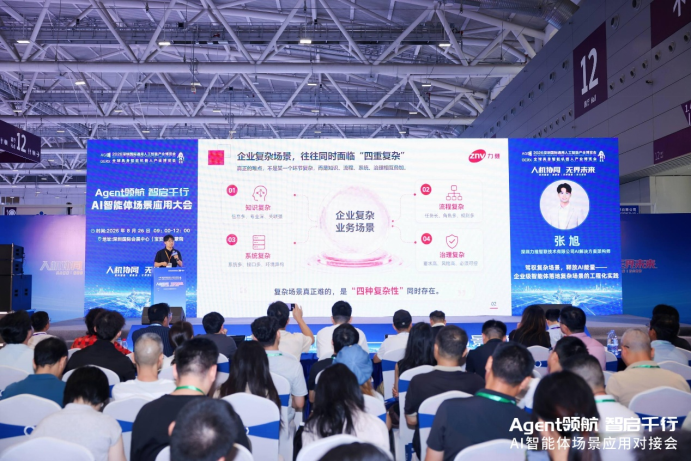
Engineering AI for Complex Enterprise Scenarios
Zhang Xu, AI Solutions Architect at Shenzhen ZNV Technology Co., Ltd., examined the challenges of deploying AI in complex enterprise environments.
He noted that real-world enterprise applications often face four layers of complexity: knowledge, processes, systems and governance.
Successfully deploying AI in these environments requires the coordinated integration of large-model intelligence, platform capabilities and deep scenario understanding.
ZNV has embedded these capabilities into platforms including AgentCube, DSML and CPS, and has developed practical applications across four major scenarios:
- Nuclear power plant maintenance
- Production scheduling
- Emergency response and command
- Clinical trials
These applications demonstrate how AI capabilities can move beyond technical demonstrations and create measurable business outcomes.
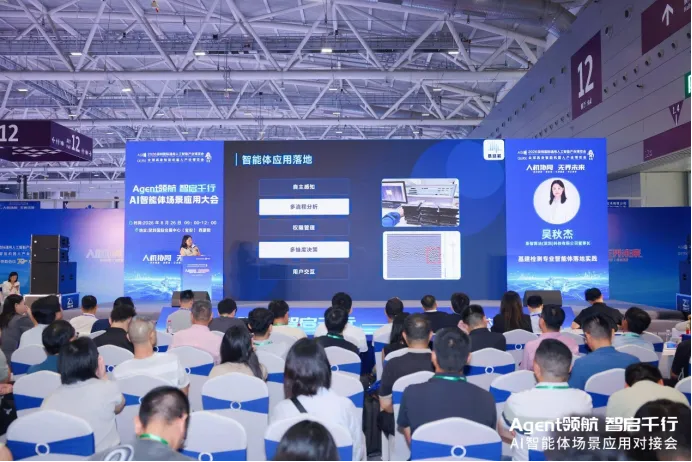
AI Agents for Road Infrastructure Inspection
Wu Qiujie, Chairman of Sizi Algorithm, presented Yilujie, a specialized AI agent for non-destructive ground subsidence detection.
Powered by proprietary AI models, the solution allows ground-penetrating radar data to be uploaded once and then automatically processed through a six-stage workflow.
According to the company, the solution can significantly reduce the workload and reporting cycle of a typical project, which previously required approximately 12 person-days and 13 days for reporting, while achieving an overall efficiency improvement of around 70×.
Its ambition can be summarized in one clear proposition:
Make professional road-condition inspections affordable for every kilometer of road.
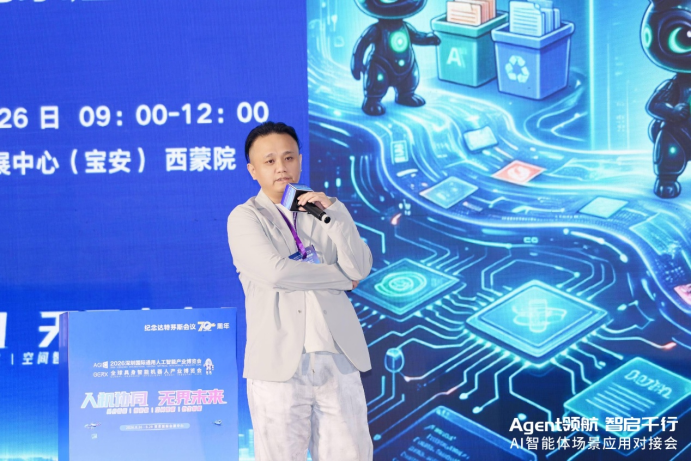
Billus AI: Building Industry-Specific “Super Employees”
Lü Jia, General Manager of Billus AI, introduced the company’s approach to building industry-specific AI “super employees.”
Billus AI has accumulated more than 2.7 million open-source data downloads and 4.5 million real-world sales validations, and has completed both algorithm and ICP filings.
Its proprietary Super Agent architecture is designed to move AI beyond simply answering questions toward directly delivering business outcomes.
The goal is to create enterprise-grade digital employees that can perform specialized tasks, integrate into real business workflows, and ultimately deliver measurable results.
From AI That Computes to AI That Makes Decisions
As an AGIC parallel venue, Ximengyuan is committed to advancing AI from simply “computing” toward “decision-making,” serving as a bridge between fundamental research and enterprise deployment.
The discussions at the conference highlighted a clear shift in the AI industry.
As AI agents move from conceptual demonstrations into production environments and real business workflows, the ability to translate technological capabilities into reliable, scalable and measurable outcomes is becoming one of the industry’s defining challenges.
From policy intelligence and brand marketing to enterprise transformation, infrastructure inspection and industry-specific digital employees, the applications showcased at the conference demonstrate how AI agents are beginning to move across a much wider range of industries.
As AI agents evolve from concepts into production, “Agent-Powered Innovation, Unlocking Opportunities Across Industries” points to where the next stage of AI competition will take place: not simply in how intelligent an agent can be, but in how effectively it can create real-world value.