
Embodied Intelligence is reaching a critical turning point, transitioning from technological exploration toward real-world industrial deployment. How can the barriers between physical hardware and intelligent “brains” be overcome to create a new generation of robots that are deployable, verifiable, and capable of continuous evolution? This has become a shared challenge for the entire industry.
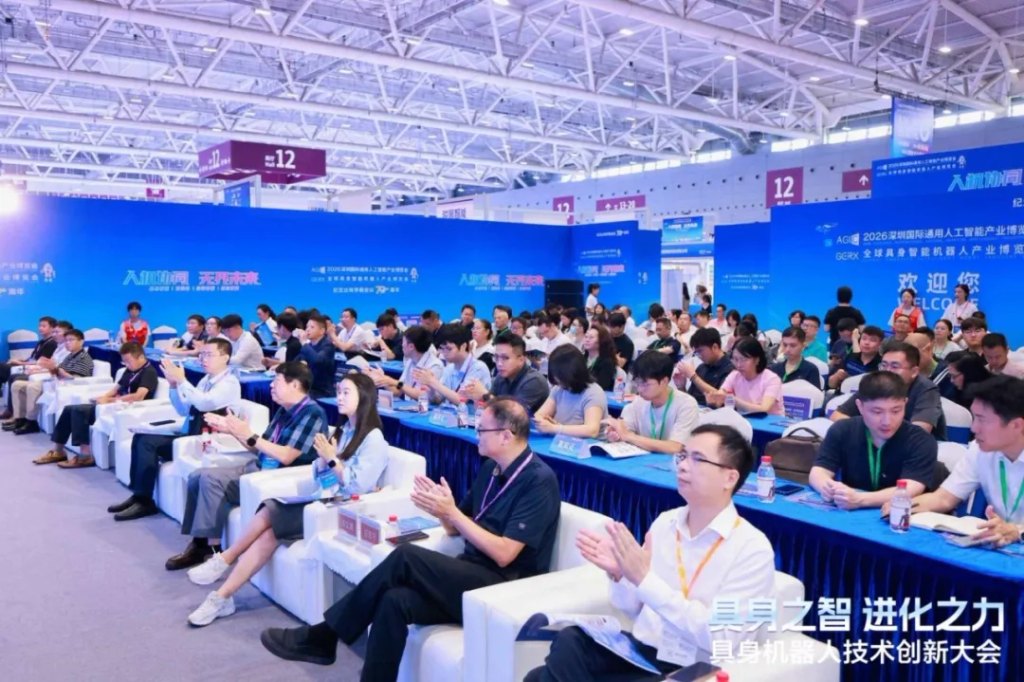
On August 26, the Embodied Robotics Technology Innovation Conference, themed “Embodied Intelligence, Evolving Capabilities,” was successfully held at Shannon Hall in Hall 12 of the Shenzhen World Exhibition & Convention Center. Government representatives, academic experts, and industry leaders gathered to explore innovation pathways for embodied robotics and the future of the industry.
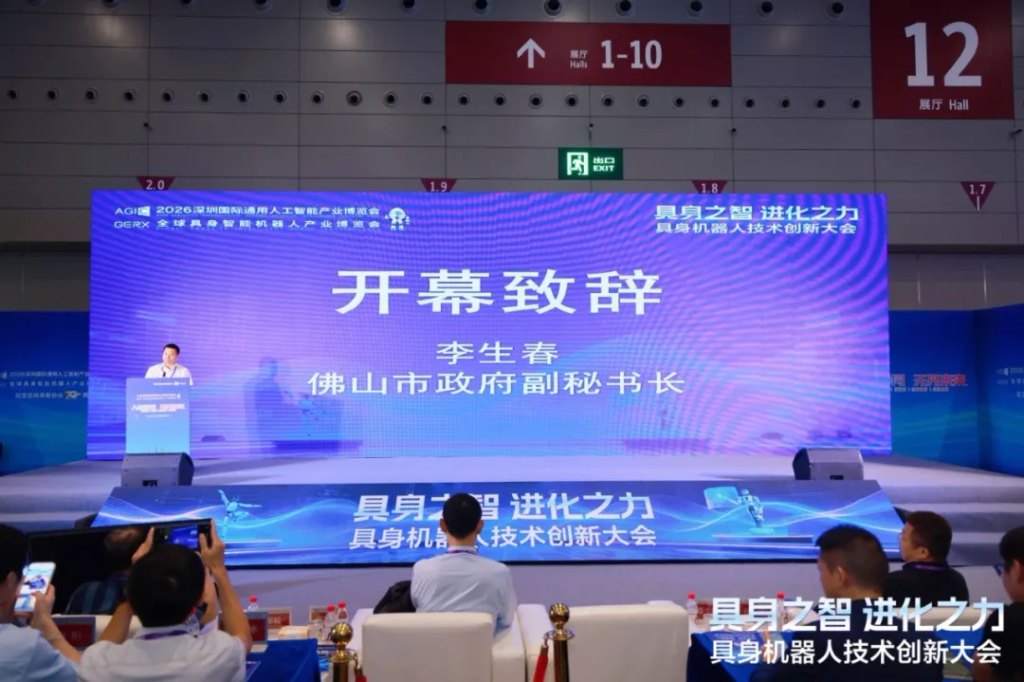
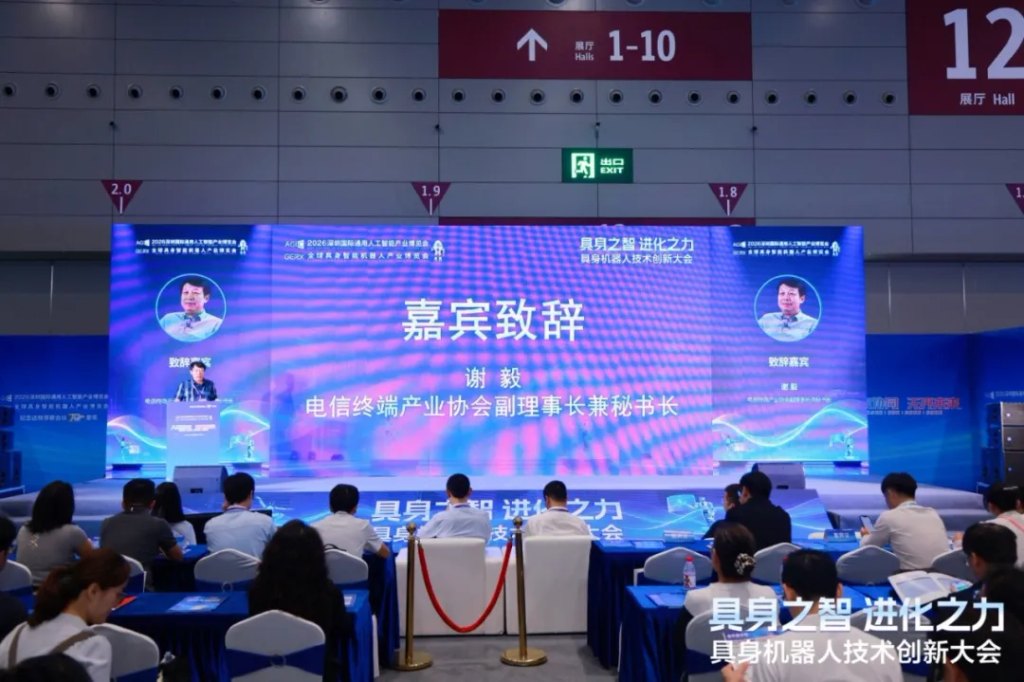
Following the opening remarks by Li Shengchun, Deputy Secretary-General of the Foshan Municipal Government, Xie Yi, Vice Chairman and Secretary-General of the Telecommunications Terminal Industry Association, delivered remarks on industry ecosystem development. From the perspectives of policy guidance and ecosystem building, both speakers expressed strong expectations for the embodied intelligence sector. They emphasized that the development of intelligent robotics should not be the pursuit of a single city or a handful of companies, but rather a coordinated effort involving innovation forces across the country. Stronger collaboration among industry, academia, research institutions, and end users is essential to strengthen the supporting industrial ecosystem and accelerate the commercialization of technological achievements.
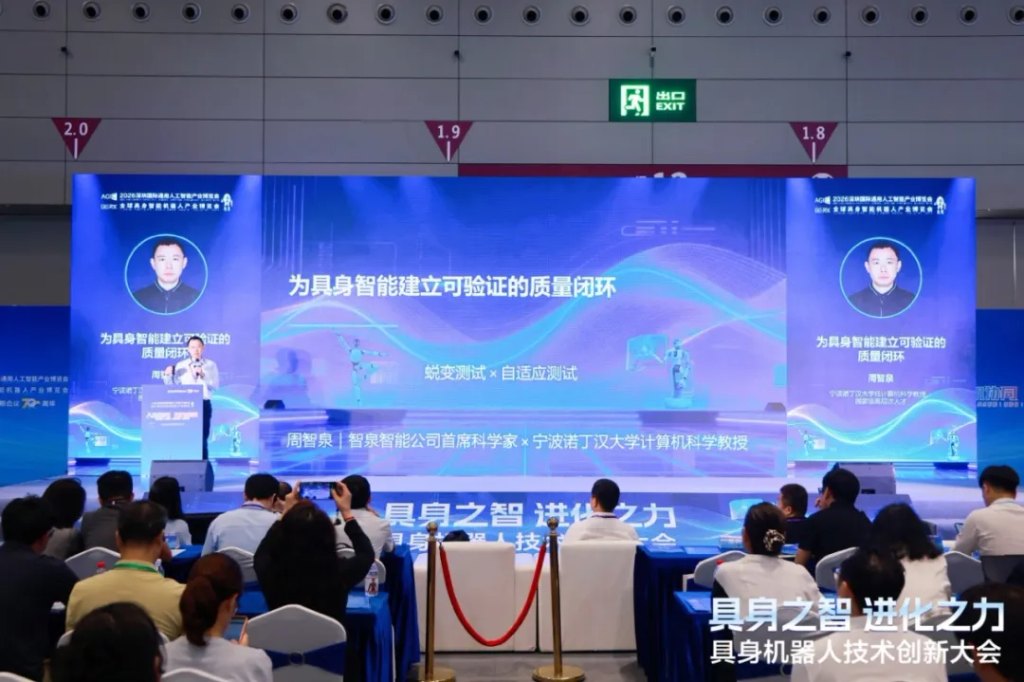
Building a Verifiable Quality Loop for Reliable Embodied Robots
During the keynote sessions, Professor Zhou Zhiquan of the University of Nottingham Ningbo China explored the importance of a verifiable quality loop for embodied intelligent robots.
He highlighted the multiple challenges that embodied robots face in real-world environments, including uncertainty in perception, deviations in physical actions, and performance degradation over long-term operation. Establishing a verifiable, end-to-end quality loop covering data collection, model training, deployment validation, and continuous iteration is essential to systematically improve the stability and reliability of robots in complex scenarios.
Such a quality framework can provide a critical foundation for safety and reliability as embodied intelligence moves from the laboratory toward large-scale commercial deployment.
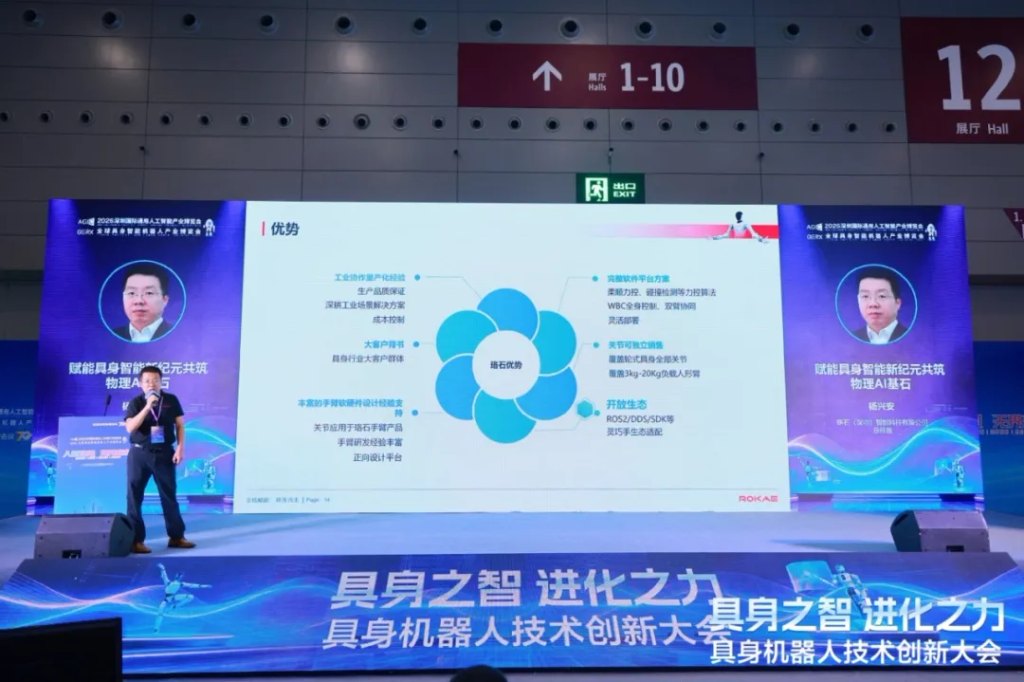
Building the Physical AI Foundation for Scalable Robotics Innovation
Yang Xing’an, General Manager of ROKAE Intelligent Technology, shared his perspective on the importance of a robust technological foundation for embodied intelligence.
He emphasized that the development of embodied intelligence requires a comprehensive technology stack covering robot operating systems, motion-control algorithms, simulation and training platforms, and standardized hardware interfaces.
By building a unified and open Physical AI foundation, the industry can significantly lower the development barriers for embodied intelligence applications and accelerate collaborative innovation across different scenarios and robot forms. This foundation can provide the underlying technological infrastructure needed to support the large-scale development of the robotics industry.
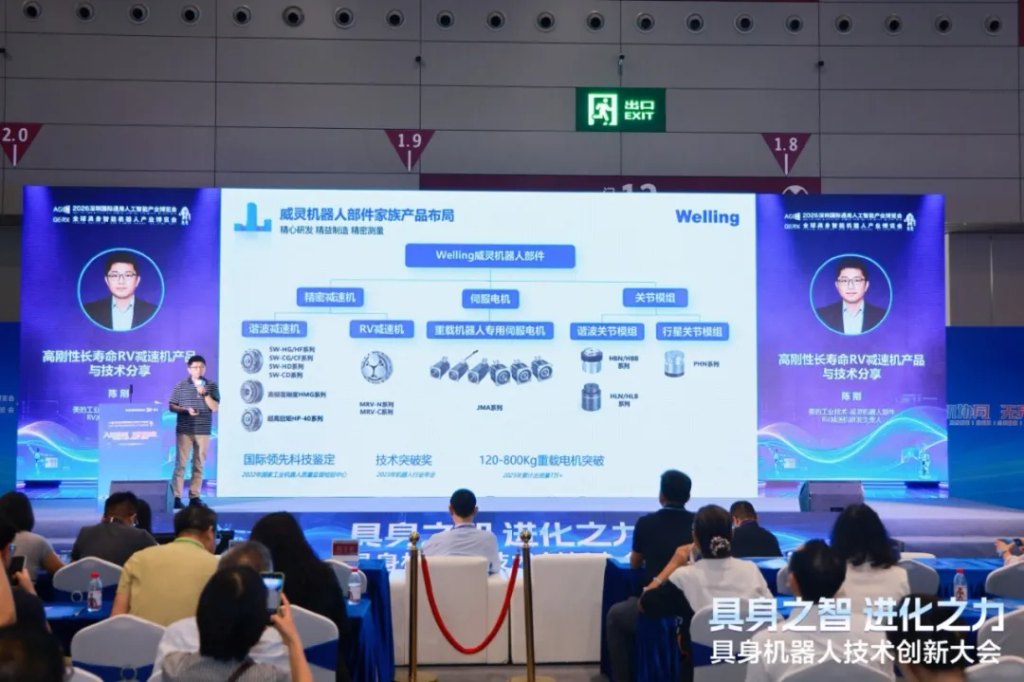
RV Reducers | A Critical Component for High-Performance Industrial Robots
Chen Gang, Head of Robot Component R&D at Welling, focused on one of the critical components at the heart of an industrial robot joint—the RV reducer.
The precision, rigidity, and service life of an RV reducer directly influence the overall performance and reliability of a robot. Drawing on its capabilities across the entire technology chain—from material selection and gear-tooth optimization to heat-treatment processes and assembly precision—Midea Industrial Technology has pursued breakthroughs in the development and manufacturing of high-performance robot components.
These advances demonstrate a pathway toward the domestic development of high-rigidity, long-life products, helping strengthen the technological capabilities and supply-chain resilience of the robotics industry.
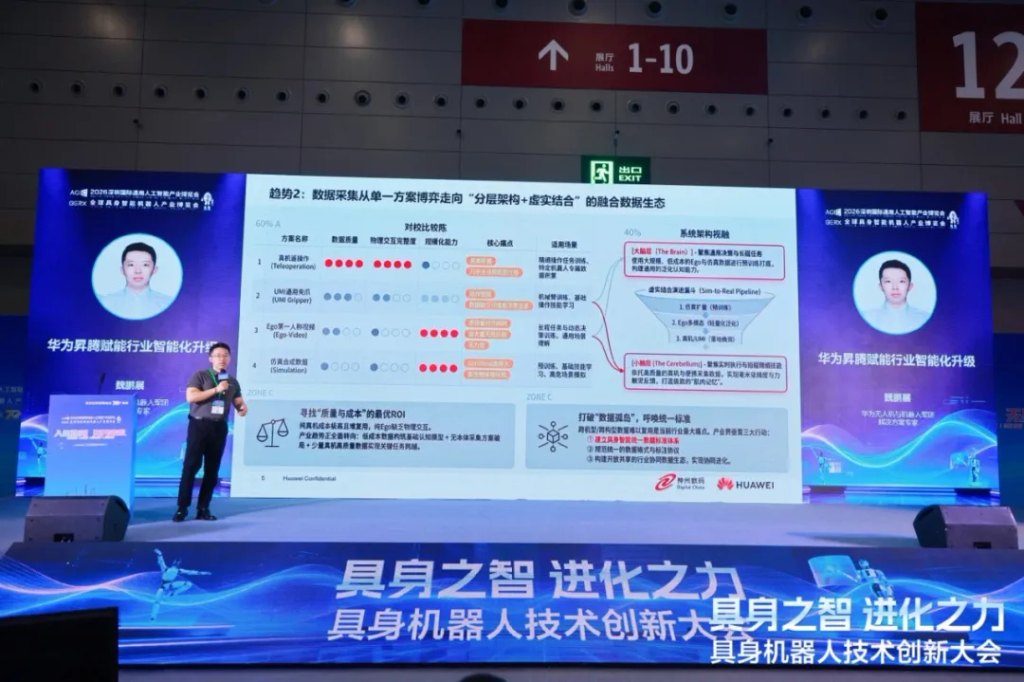
Computing Power for Embodied Intelligence | From Training to Edge Inference
Wei Pengzhan, Solution Expert at Huawei’s Drone and Robotics Business Unit, focused on computing power as a fundamental engine for intelligent transformation.
He noted that the computing requirements of the embodied intelligence era are undergoing a fundamental shift. Robotics systems require high-density computing resources for foundation-model training, while also demanding low-latency inference capabilities at the edge and on the device.
Huawei Ascend addresses these requirements through a full-stack computing architecture spanning training clusters and edge modules. Combined with technologies such as model lightweighting and multimodal fusion, this computing infrastructure provides an efficient, stable, and scalable foundation for deploying embodied intelligence across manufacturing, logistics, services, and other industries.
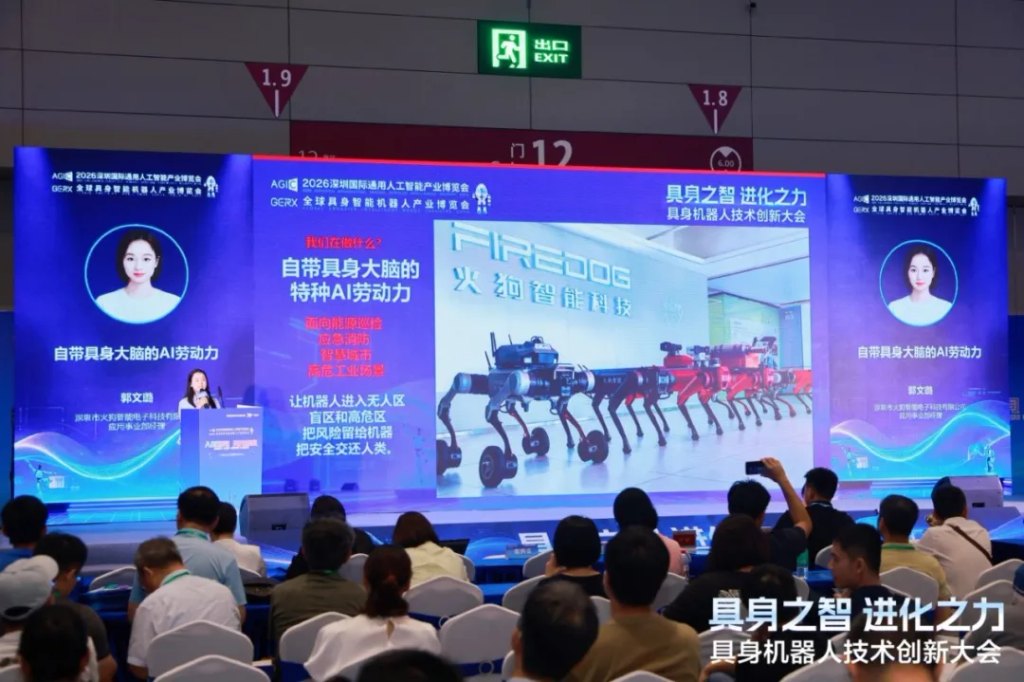
AI Workforce with an Embodied Brain | Bringing Robots into Real-World Production
Guo Wenlu, Manager of the Application Business Division at Huogou Intelligent, explored the future of robots becoming deeply integrated into real-world production through the concept of an “AI workforce with an embodied brain.”
She argued that next-generation robots should evolve beyond mechanical systems that simply execute predefined instructions. Instead, they should possess autonomous capabilities for perception, decision-making, and learning.
With an embodied AI brain, robots can understand complex tasks, adapt to changing environments, and continuously optimize their performance through human–robot collaboration.
This represents a fundamental shift—from robots serving as automation tools for individual workstations to intelligent systems capable of supporting entire production processes. Such capabilities could create new opportunities for the flexible and intelligent transformation of the manufacturing industry.
From Brain to Joints, Computing Power to Applications | Building the Full-Chain Innovation Ecosystem
The Embodied Robotics Technology Innovation Conference brought together perspectives spanning frontier theory, advanced hardware, computing infrastructure, and real-world applications, connecting the full innovation chain of embodied robotics—from “brain” and joints to computing power and application scenarios.
Participants agreed that Embodied Intelligence is not simply a competition between individual technologies. Rather, it represents a process of coordinated evolution across the entire industrial chain.
Looking ahead, industry stakeholders will continue working to close the technology loop, overcome critical technical challenges, and bring truly useful AI-powered workforces into a wide range of industries—opening a new chapter for intelligent industry.