
As Shenzhen’s “20+8” industrial clusters enter a new phase of development, the competitive landscape of manufacturing is being reshaped. The next stage of competition will be defined by how effectively companies integrate data, algorithms, and real-world application scenarios into an intelligent engine that drives industrial operations and decision-making.
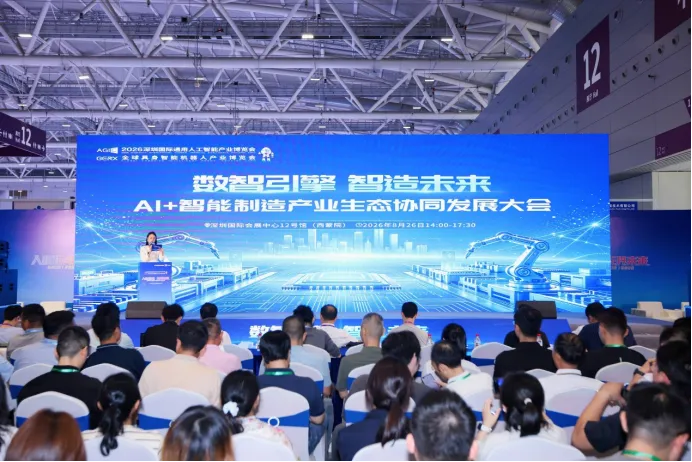
On the afternoon of August 26, the AI + Intelligent Manufacturing Industry Ecosystem Collaboration Forum, themed “AI-Powered Intelligence | Shaping the Future of Smart Manufacturing,” was held at Simon Hall of the Shenzhen World Exhibition & Convention Center (Bao’an). As one of the parallel forums of AGIC 2026, the event brought together industry experts and technology leaders to explore how AI can accelerate manufacturing transformation and strengthen collaboration across the industrial ecosystem.
Industry Perspectives | Understanding the Future of AI-Driven Manufacturing
Gong Xiaofeng, Dean of the Institute for Emerging Industries Development of the Guangdong-Hong Kong-Macao Greater Bay Area at Shenzhen University, delivered the opening address. Under the theme “The Dynamics and Logic Behind the Rise and Fall of Enterprises and Industries in the Age of Artificial Intelligence,” he examined the forces shaping business and industrial development from the perspectives of industrial evolution and regional innovation.
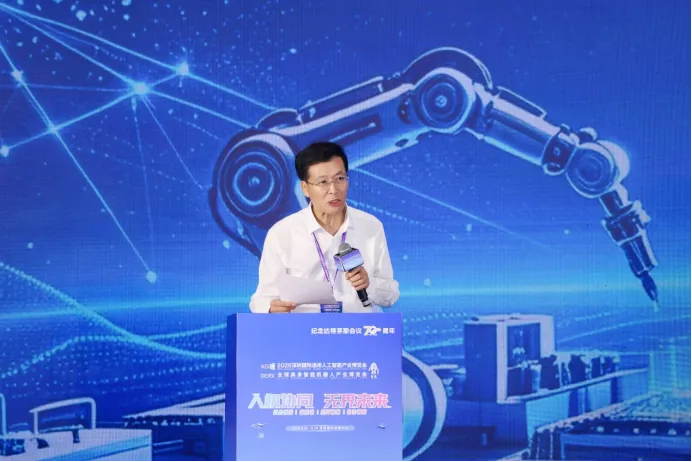
Li Yaping, Honorary President of the China Association of Mechatronics Technology and Applications and former Deputy Party Secretary of the China Academy of Machinery Science and Technology Group, followed with remarks themed “Harnessing the Power of Digital Intelligence to Build the Future of Smart Manufacturing.” Drawing on his industry experience and broader understanding of the manufacturing landscape, he shared insights into the development trajectory of intelligent manufacturing.
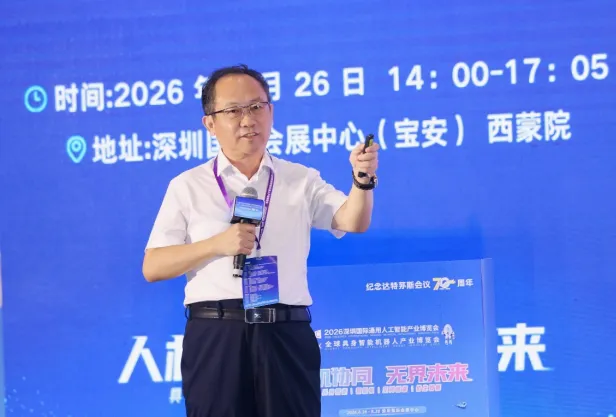
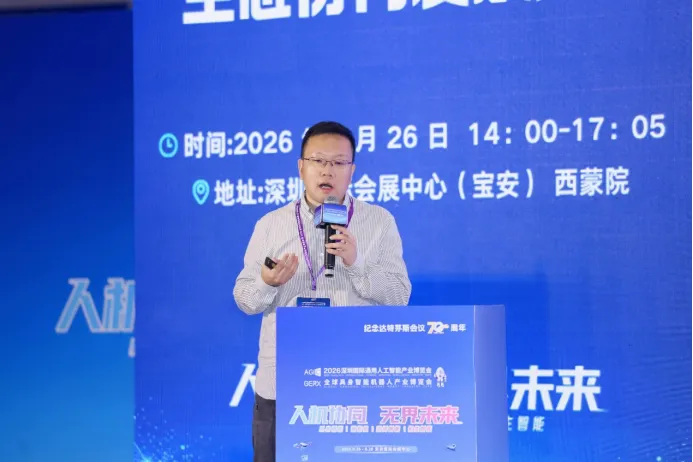
He Bo, Vice President of the Shenzhen Artificial Intelligence Industry Association, delivered a keynote presentation titled “Multidimensional Perception: Powering Industry with AI.”
He emphasized that for AI to create value in real-world industrial applications, it must first be able to perceive and understand its surroundings. Multidimensional perception serves as the bridge connecting algorithms with the physical world, enabling intelligent systems to interpret their environments before making informed decisions.
From Data to Intelligence | Building the Foundation of the Digital Intelligence Engine
Moving from perception to computation, a truly effective digital intelligence engine must start with data at its core. Data needs to be transformed into a valuable asset, made reliable and accessible, and connected to hardware and production lines. Ultimately, it must become actionable intelligence embedded in business systems and deployed through AI agents.
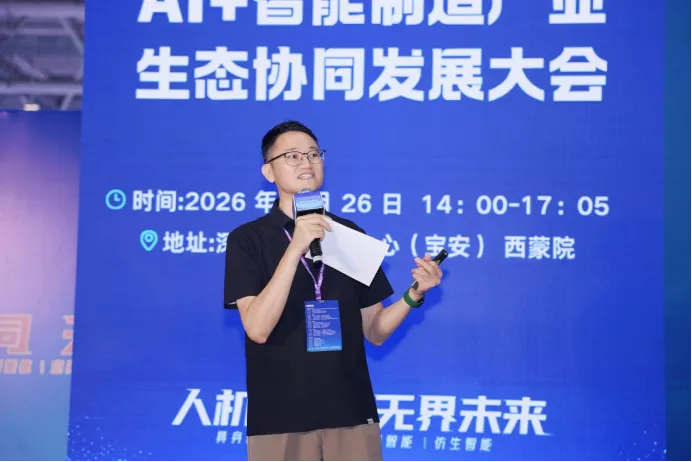
Hua Rui, Vice President of Product at ShanYan Data (English company name to be confirmed), brought the discussion back to one of manufacturing’s most fundamental challenges: data.
He introduced the company’s IDM data platform, which uses AI-powered lossless compression to reduce the storage footprint of original quality-inspection images by 90%. It also shortens quality traceability processes from days to minutes and reduces storage costs by 55% compared with traditional NAS solutions.
The platform is built around four core capabilities: storing massive volumes of data, managing data efficiently, putting data to intelligent use, and enabling flexible connectivity. Together, these capabilities help manufacturers turn growing volumes of industrial data into accessible and actionable business resources.
Trusted Data | Giving Chinese Manufacturers a Global Business Identity
For data to circulate effectively, it must first be trusted.
Feng Zhikai, Product Director at Dun & Bradstreet (D&B), shared findings from a survey covering more than 10,000 companies across 32 countries. While 76% of surveyed businesses reported measurable returns from AI adoption, only 6% believed their data was sufficiently prepared to support it.
D&B’s Commercial Graph, built around the D-U-N-S® Number, connects more than 640 million business entities worldwide and performs 100 billion data quality checks every month. By establishing reliable, verifiable business identities, the platform helps Chinese manufacturers strengthen their credibility and build trust with global partners.
AI + Hardware | Transforming Both Products and Production Lines
Data and trust ultimately need to translate into capabilities at the hardware level.
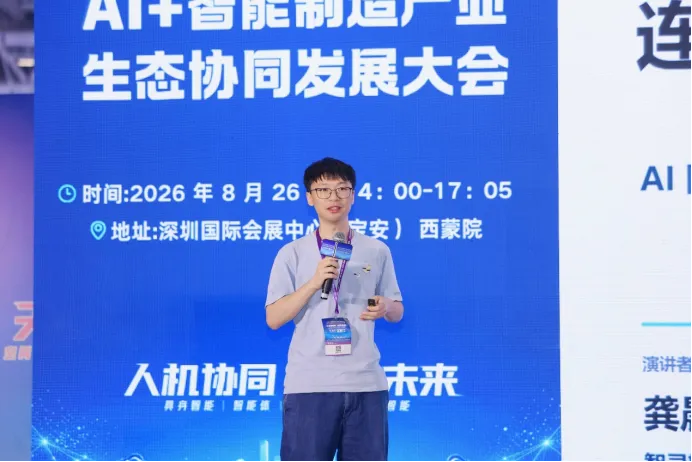
Gong Chen, General Manager of Shenzhen Zhiling Qingyu Technology Co., Ltd. (official English company name to be confirmed), argued that AI + hardware is not simply about installing AI models in devices. It requires a fundamental transformation of both the product itself and the factory that manufactures it.
Using the Note Pro voice recorder and Action Pro device with a dedicated “Action Button” as examples, Gong illustrated how AI can turn simple recording into contextual understanding, while enabling users to generate actionable plans through natural-language instructions.
For AI-powered hardware to succeed commercially, its value proposition must be practical, scalable, and compatible with mass production and repeatable manufacturing processes.
At its core, AI + hardware represents the combined transformation of product innovation and production-line upgrading.
AI Agents in Manufacturing | Turning Intelligence into Production-Line Execution
Once data, trust, and hardware capabilities are in place, the real challenge is translating them into operational execution on the production line.
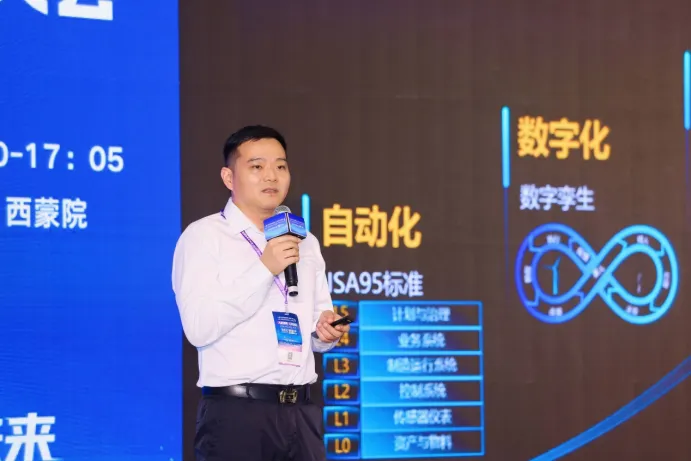
Zhu Yi, Senior Technical Expert at INSPUR GROUP CO., LTD., outlined a practical roadmap for deploying AI agents in manufacturing. He emphasized that industrial agents must be integrated with core enterprise systems such as PLM, MES, and ERP, supported by a coordinated cloud-edge-device architecture.
He identified five key application areas: R&D, production scheduling, quality management, operations and maintenance, and energy and carbon management.
Drawing on Inspur’s own digital transformation experience, Zhu also shared how the company had achieved a 35%–45% improvement in development efficiency. Together with its YuanNao Ecosystem, these examples demonstrated how AI agents can move beyond isolated experiments toward practical, engineering-driven deployment in manufacturing.
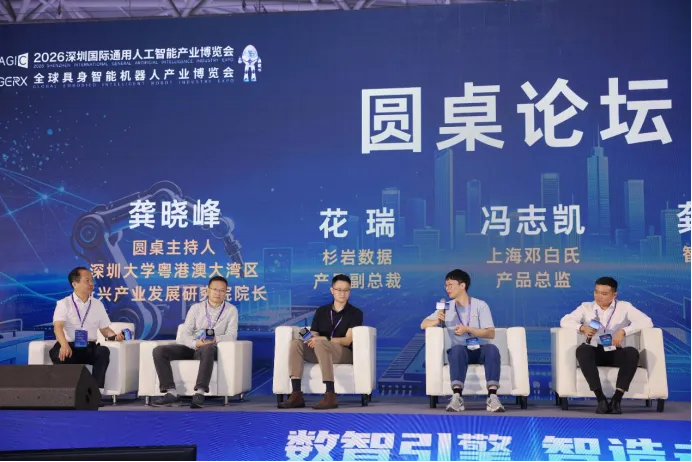
Roundtable Discussion | Industry Leaders Driving Ecosystem Collaboration
The forum concluded with a roundtable discussion titled “Industry Leaders and Ecosystem Collaboration | Advancing AI Integration Across the Enterprise Management Industry Chain.”
Moderated by Gong Xiaofeng, the discussion brought together representatives from ShanYan Data, Zhiling Qingyu, Dun & Bradstreet, and Inspur.
Opening the conversation with his characteristic humor and engaging style, Dean Gong guided the panelists through the connections between data, trust, hardware, and AI agents, bringing these seemingly separate capabilities together into a broader picture of industrial collaboration.
One key message emerged: no single company can independently build the entire value chain. The successful adoption of AI in manufacturing depends on coordinated efforts across technology providers, hardware developers, data platforms, and industrial application partners.
From Computing to Decision-Making | Building the Next Generation of Smart Manufacturing
As one of AGIC’s three dedicated conference venues, Simon Hall stood alongside Turing Hall and Shannon Hall. The three venues pay tribute to pioneering figures in computing theory, information theory, artificial intelligence, and decision science.
With its focus on AI and decision science, Simon Hall addressed a critical transition in manufacturing: moving beyond systems that can simply calculate and process information toward intelligent systems capable of understanding situations and making decisions.
As intelligent agents move from concept demonstrations onto real production lines, the ecosystem collaboration highlighted at the AI + Intelligent Manufacturing Industry Ecosystem Collaboration Forum is becoming a defining force in the next stage of smart manufacturing.