

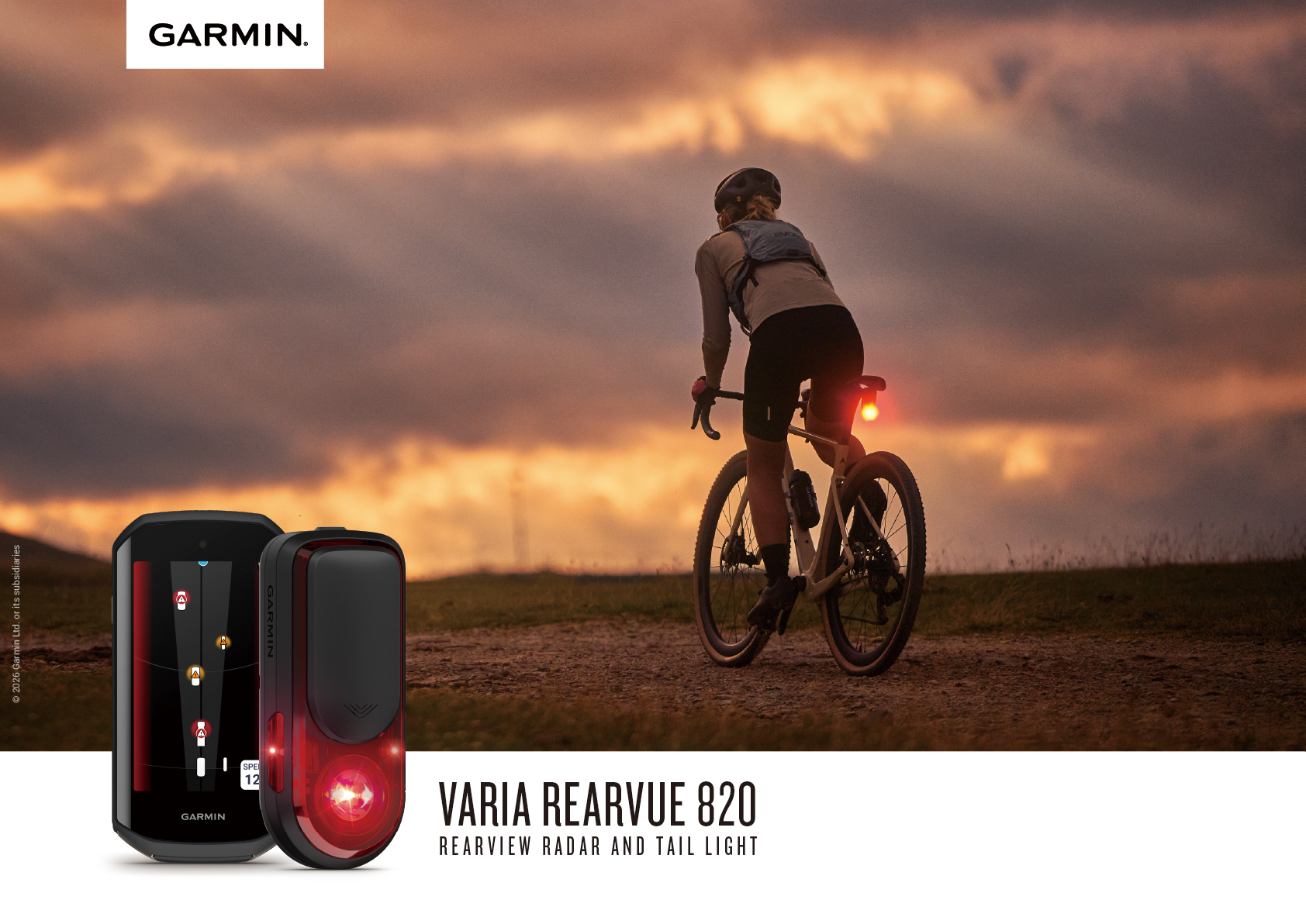
Garmin, the world’s leading cycling computer brand, launched the new Varia™ RearVue 820 bicycle radar tail light in February 2026.
Priced at $299.99, the RearVue 820 comes in at around RMB 2,013, nearly RMB 675 more than the previous-generation RTL515.
Garmin describes it as featuring “the most powerful and precise radar we’ve ever developed.”
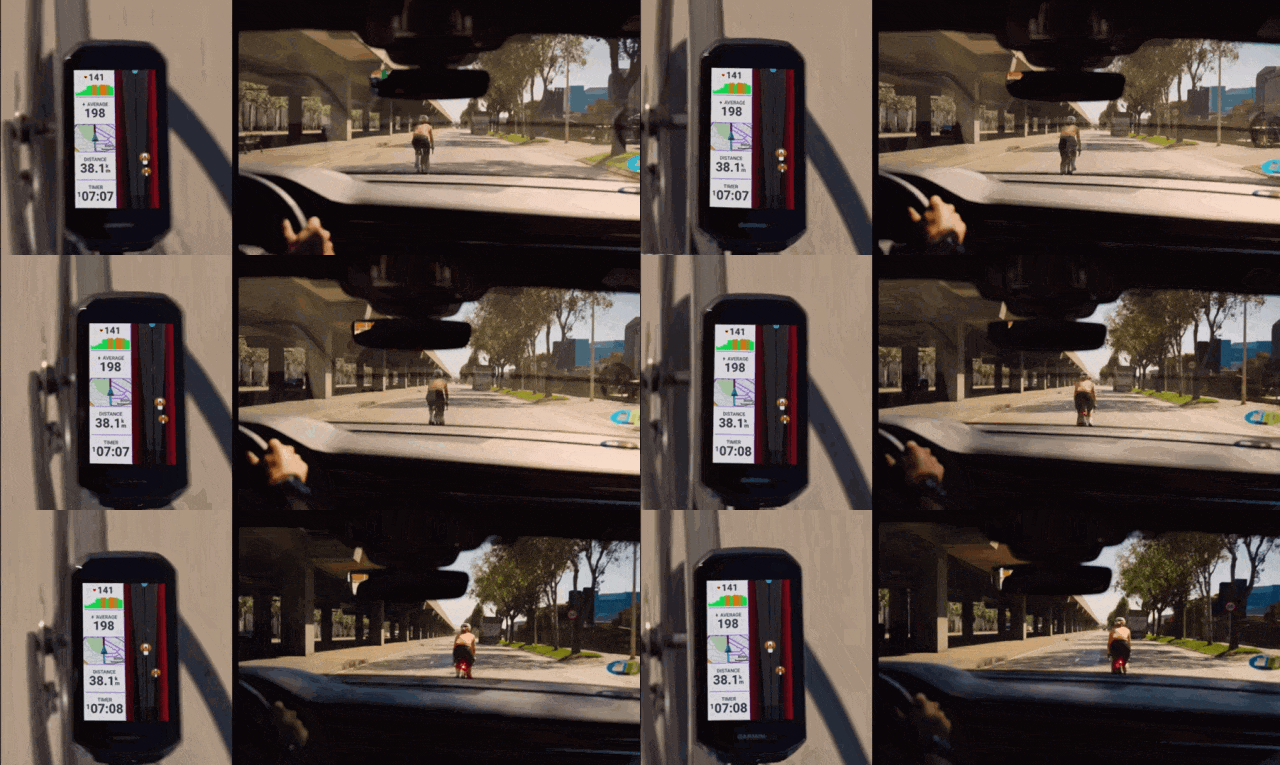
▲ Radar-based vehicle detection and alerts, with the tail light flashing to warn approaching traffic
Graduated Alerts Based on Vehicle Size and Speed
The RearVue 820 is the first Varia radar tail light to feature a 60 GHz millimeter-wave radar, offering a detection range of up to 175 meters.
It can detect approaching vehicles traveling at speeds of up to 170 km/h, track up to eight vehicles simultaneously, and provides a 60-degree field of view designed to improve coverage across multiple lanes, curves, and other complex road conditions.
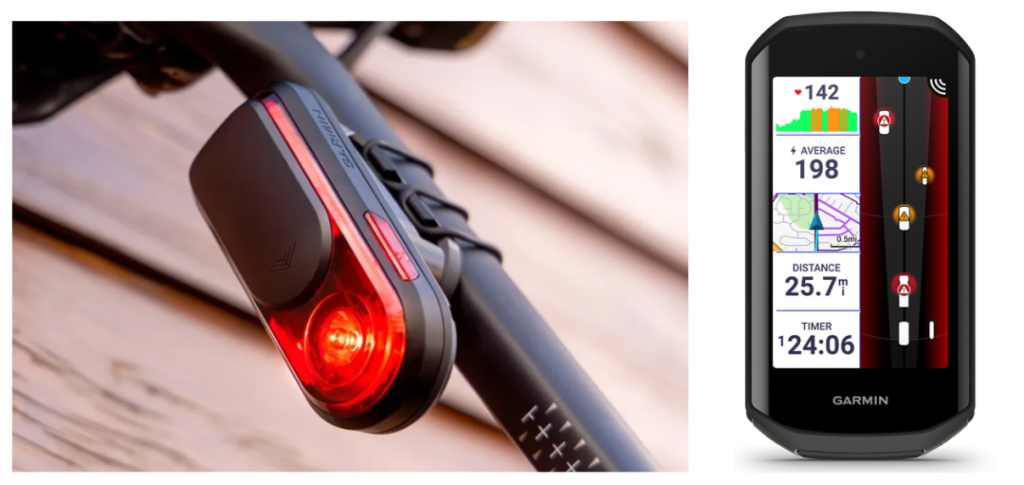
▲ 90 g weight; operating frequency of 57–59.4 GHz
The RearVue 820 can analyze a vehicle’s speed, trajectory, and size—categorized as small, medium, or large—and use this information to assign different levels of threat and issue corresponding alerts.
Cyclists can view approaching vehicles on compatible cycling computers, smartwatches, smartphones, and other devices, including information on whether a vehicle is changing speed, when it may change lanes, and how close it is.
The system provides both visual and audible alerts, while compatible devices can display a radar-style visualization similar to the rear parking sensors found in modern cars.
Garmin describes the RearVue 820 as “our most innovative radar tail light yet,” designed to help cyclists “stay more aware and be more visible on the road.”
Tackling the “Ghost Car” Tracking Problem
Garmin has also introduced a new “same-speed tracking” algorithm with the RearVue 820.
The system continuously uses previously collected data on a vehicle’s speed, distance, and lateral position, together with ongoing weak radar reflections, to maintain its track on the target.
In other words, once a vehicle has been detected, the system can continue tracking it even if it slows down and reaches roughly the same speed as the cyclist, preventing the vehicle from disappearing from the radar display.
This is not an easy problem to solve.
Radar tail lights typically rely on the Doppler effect to detect moving vehicles by measuring the frequency difference between transmitted and reflected signals. When there is little or no relative motion between the radar and the target, the frequency shift can become too small for conventional radar processing to reliably distinguish the vehicle from the background.
When this happens, the vehicle may disappear from the radar display—a phenomenon cyclists commonly refer to as a “Ghost Car.”
More importantly, a vehicle slowing to match a cyclist’s speed can be a critical moment on the road. Following at a similar speed may indicate that a driver is waiting for an opportunity to overtake.
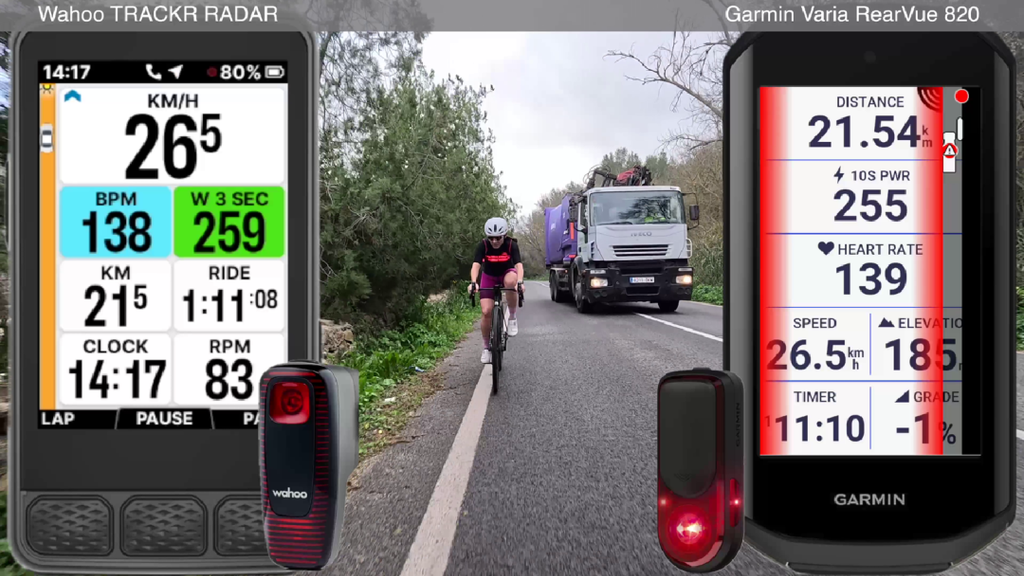
▲ A large, fast-moving vehicle triggers the highest red threat level
Garmin also makes one point clear in its official product documentation: no smart device can replace the cyclist’s own awareness, judgment, and attention to the road.
The Premium Pricing of Sports Accessories
In 2015, Garmin introduced the first Varia rear-view radar, bringing radar-based technology into the cycling safety market.
Since then, the product category has largely evolved along two directions:
① Greater functional integration
Radar, tail lights, cameras, brake lights, and other functions are increasingly being combined into a single device.
② More capable millimeter-wave radar hardware and software
Manufacturers continue to improve detection range, accuracy, tracking algorithms, and the ability to interpret surrounding traffic.
In the Chinese market, brands such as Magene, XOSS, and Magicshine are among the key players. Many products in this segment use 24 GHz FMCW millimeter-wave radar, with prices generally ranging from around RMB 400 to RMB 800.
This highlights an important characteristic of the sports accessories market: sensor-based hardware can command a significant premium.
For serious athletes and enthusiasts, precision, responsiveness, and the level of detail provided by monitoring systems matter more than simply having a feature that is “good enough.”
When a product is directly related to safety, comfort, or competitive performance, the traditional “good enough” approach to consumer electronics becomes less relevant.
Instead, users increasingly look for technology that can match their own level of skill, training, and performance requirements.
As a result, pricing in the sports technology market is increasingly divided into distinct tiers: entry-level, enthusiast-level, and professional-level.