
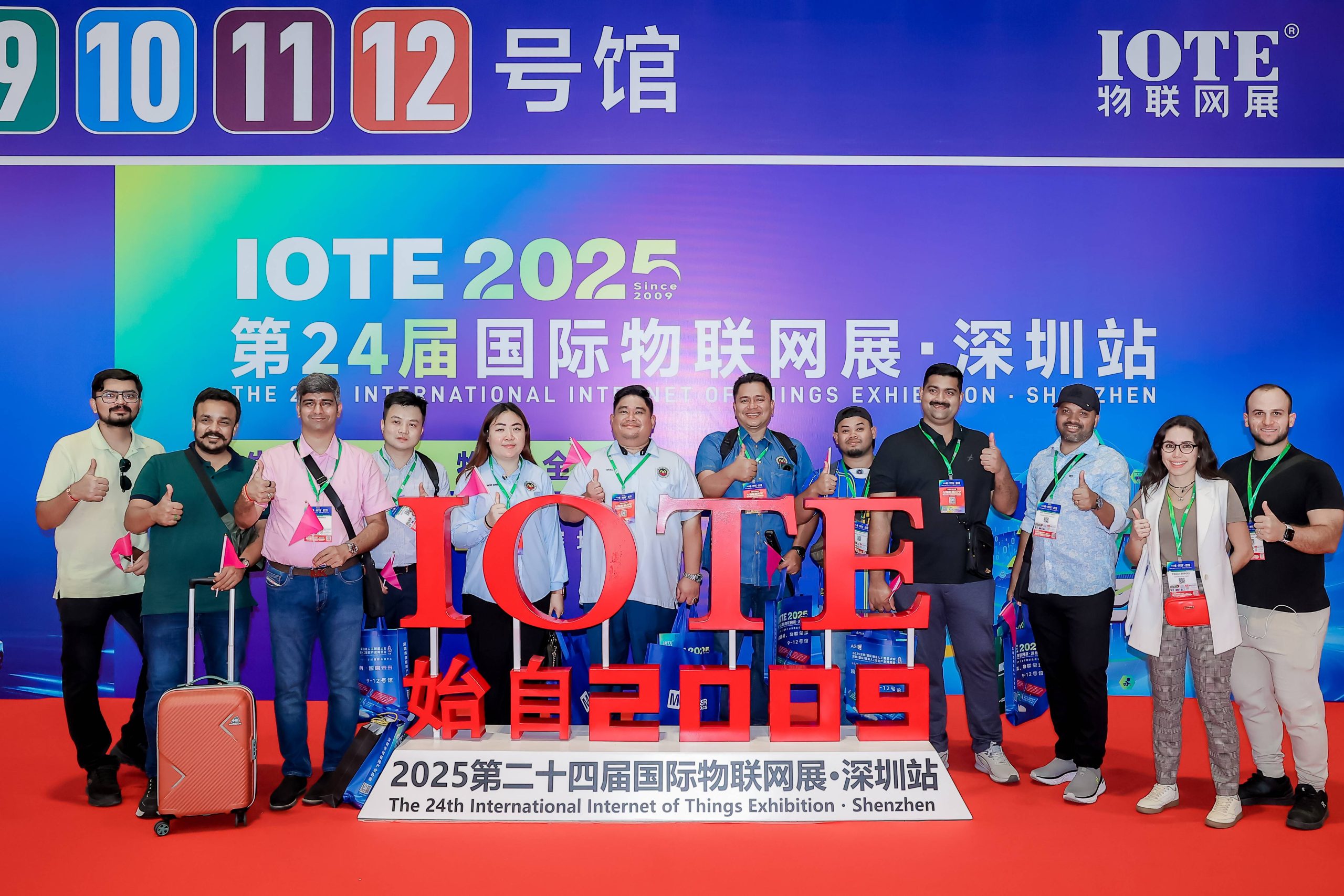
On August 28, 2026, the Intelligent Computing Terminals × Token Economy Industry Development Conference was successfully held at the Shannon Institute, Shenzhen World Exhibition & Convention Center (Hall 12), under the theme “Intelligent Terminals, Collective Intelligence, and a New Era of Tokenization.”
The event brought together leading experts, scholars, and industry leaders from academia and industry to explore key topics including innovation in intelligent computing terminal technologies, the development of the Token economy ecosystem, and AI security and privacy protection. Through in-depth discussions and exchanges, participants shared insights and explored new pathways for the high-quality and sustainable development of the artificial intelligence industry.

The conference opened with a welcome address by Ren Tiemin, Specially Appointed Research Fellow at the Research Center for Rural Economy of the Ministry of Agriculture and Rural Affairs of China. He extended his warm congratulations on the successful opening of the conference and noted that the deep integration of AI technologies with the real economy has become a key driver of industrial transformation and upgrading. He expressed the hope that participants would use the conference as an opportunity to build consensus, strengthen collaboration, and contribute their expertise to the healthy and sustainable development of the intelligent computing industry and the Token economy.
01 | Keynote Presentations
The keynote session featured a distinguished lineup of experts who shared forward-looking perspectives and practical insights into the latest developments in AI and intelligent computing.
Peng Shaoliang, Deputy Director of the National Supercomputing Center in Changsha, Chang Jiang Scholar, and Professor and PhD Supervisor at Hunan University, delivered a keynote presentation titled “Integrated Computing and Power: Taking Computing Power Global — Open-Source AI Foundation Model Agents: Technologies and Applications.”
In his presentation, Professor Peng provided an in-depth analysis of the technical advantages of integrated computing-and-power architectures, while exploring the application potential and future development of AI agents powered by open-source foundation models. His insights highlighted a forward-looking pathway toward the full-stack integration of supercomputing and intelligent computing, providing a solid technological foundation for the next stage of industry development.

Zhang Yinqian, Professor at the Southern University of Science and Technology and an ACM Distinguished Scientist, delivered a keynote presentation titled “Token Privacy: Privacy Risks and Security Protection in Large Language Model Inference.”
In his presentation, Professor Zhang provided a systematic analysis of the privacy leakage risks arising during large language model (LLM) inference and proposed targeted approaches to strengthen security and privacy protection. His insights underscored the critical importance of privacy and security in the AI era, while offering valuable guidance for the trusted and responsible development of the AI industry.

Industry representatives also took the stage to share their latest achievements and practical innovations in AI applications.
He Xiaojiang, General Manager of Huazi, a subsidiary of Shenzhen Sitong Technology Holdings Co., Ltd. , and Founder & CEO of Shen Butler AI Digital Employees, delivered a presentation titled “Shen Butler AI Digital Employees: Fewer Tokens, More Work.”
He showcased the significant impact of AI digital employees in reducing costs and improving operational efficiency, offering a compelling real-world example of how businesses can accelerate intelligent transformation in the emerging Token economy.

Mai Qiang, Chief Digitalization and AI Officer at China Greatwall Technology Group Co., Ltd., delivered a keynote presentation titled “AI-Powered Innovation for a Secure Intelligent Industry Ecosystem.”
Taking a strategic perspective on the security of China’s information technology innovation (IT innovation) industry, Mai examined the pivotal role of AI technologies in building a secure, self-reliant, and controllable intelligent industry ecosystem, highlighting how AI can empower innovation while strengthening the foundations of industrial security.

Zhang Yu, Head of Computing Solutions at Inspur Electronic Information Industry Co., Ltd., delivered a keynote presentation titled “From Computing Power to Productivity: Building an Infrastructure Framework for the Agent Era.”
Drawing on Inspur’s extensive expertise and innovative practices in computing infrastructure, Zhang explored how next-generation infrastructure can support the rapid evolution of AI agents. He also outlined a vision for building a robust computing architecture and support system tailored to the Agent era, providing the infrastructure foundation needed to transform computing power into tangible productivity.

Liu Chunyang, CEO of China Daas Technology Co., Ltd., delivered a keynote presentation titled “Building a New AI Silk Road for Global Tokenization and Cross-Border Financial Infrastructure.”
Looking ahead, Liu explored the vast potential of AI technologies in the development of cross-border financial infrastructure, highlighting new opportunities for innovation and international expansion. His vision offered an inspiring roadmap for Chinese AI companies seeking to expand globally, while showcasing how AI could help build more efficient and interconnected financial infrastructure across borders.


As large language models (LLMs) and AI agent technologies continue to evolve at an unprecedented pace, computing power is emerging as a core driver of the digital economy. At the same time, the Token economy, as a new model for measuring and allocating value in the AI era, is poised to reshape industry ecosystems and business models in profound ways.
The successful conclusion of the conference not only created a valuable platform for intellectual exchange and industry collaboration, but also generated new momentum for the global expansion and innovative development of Shenzhen’s AI industry. Looking ahead, as intelligent computing terminal technologies continue to advance and the Token economy ecosystem matures, the AI industry is set to unlock even greater opportunities for growth and transformation.
The 2026 AGIC & GREX Shannon Institute Forum Series has now come to a successful close. Across five progressively structured forums, the series explored five key areas at the forefront of AI development: embodied robotics, collaborative computing, world models, AI governance, and intelligent computing terminals and the Token economy. By bringing together expertise from academia, industry, and research institutions, the series fostered the exchange of cutting-edge ideas, clarified pathways from technological innovation to real-world applications, and established a high-quality platform for dialogue and collaborative innovation across the AI ecosystem.
Building on the momentum of this series, the Shannon Institute will continue to advance innovation across the AI value chain, promoting the deeper integration of breakthrough technologies with real-world applications.
We are also pleased to announce that the 2027 AGIC & GREX Shannon Institute Forum Series will return as scheduled. The next edition will continue to spotlight emerging trends and critical developments across the AI industry, bring together innovators and technology leaders, explore new opportunities for AI advancement, and work together to shape the next chapter of intelligent industry.